
AI isn’t taking your job

…at least not yet.


I use AI almost every day to assist with work and learn new topics (as part of my job) that I’m unfamiliar with. I read diligently to stay up-to-date on the latest developments, so I can learn how to use it more effectively.

AI will become (if it hasn’t already), and continue to be, a large portion of all of our lives.

However, we’re receiving a significant amount of misinformation about what’s happening and the effects it’s having on workers. Some of it is outright deception, while some is simply lazy reporting.

First, the deception.

The CEOs of these massive tech companies (e.g., Dario Amodei, Sam Altman) are brilliant business people who’ve created mind-boggling products. But they’re hemorrhaging cash trying to make their programs more powerful…

And after years of unbelievable growth and progress, they’re failing. The scaling law on which they used to project LLM growth is slowing down, and the improvements are now incremental, rather than exponential.

This is a serious financial problem for them. They need to keep their current investors engaged, and they need new investors to infuse them with additional capital. So what do they do?

They go on cable news shows or podcasts and claim that their AI software will replace all entry-level workers (10-20% of the workforce) within a matter of months.1 It just isn’t true.

But you wouldn’t know that from the news you’re consuming. They’ve bought into this story hook, line, and sinker.

Which brings me to my accusation of lazy reporting. Headlines like “Goodbye, $165,000 Tech Jobs” and “AI is Replacing 10 million Workers” (I made that one up) are attention-grabbing… But untrue.

These media companies, like the AI companies they write about, need to make money. They do that by getting as many eyes on their work as possible. And the best way to do that is to scare people into giving them attention… Even if the claims are untrue or misleading.

To paraphrase Ryan Holiday, who warned us about this years ago: “Trust them… They’re lying.”

It is true that computer science graduates are having a much harder time finding jobs at the moment. And it’s true that there have been massive layoffs in the tech sector.

It’s also true that the companies doing these layoffs are investing more of their money and efforts in AI. But AI is not the cause of this, nor is it replacing those who’ve been laid off.

Here’s what’s actually happening:

During the pandemic, these tech companies went on a massive hiring spree—they simply overhired. Now they’re bloated, and the quickest way to reduce the bloat and (temporarily) increase shareholder value is to shed programmers left and right.

At the same time, the tech sector itself is contracting, which means there are fewer jobs for all the newly minted computer science graduates.

This has historical precedence. The same thing happened in 2008 during the financial crisis. And it happened before that during the dot-com bust at the turn of the century.

The number of people entering the computer science field fluctuates in response to the economy. There’s a tech boom, prompting more people to enter the field. Then the sector contracts, and all those people get laid off, which in turn reduces the number of people entering the field.

Until the next boom.

Contrary to what many journalists have written, these people aren’t being replaced by AI. They’re simply being let go because companies overhired during the pandemic or because the companies are refocusing on AI.

However, that refocus, coupled with layoffs and fewer job openings, has led them to conflate the two, concluding that these computer science graduates are being replaced by AI.

This simply isn’t true. That may happen in the 2030s, but it’s not happening right now.

I’ve been guilty of buying into this hysteria too, as you can see in my piece on job hunting in 2025. And I’m here to tell you I was wrong in what I wrote about AI replacing workers in that piece.

All that to say this: Read AI journalism with a healthy dose of skepticism right now. And take any apocalyptic predictions with a grain of salt.


  1. Dario Amodei actually said this in an interview with Anderson Cooper and, ironically, claimed to be worried about it… Which begs the question: if you’re worried about it, why do you continue to do it?

    Why doesn’t he just stop if it actually worries him? It’s his company. ↩︎
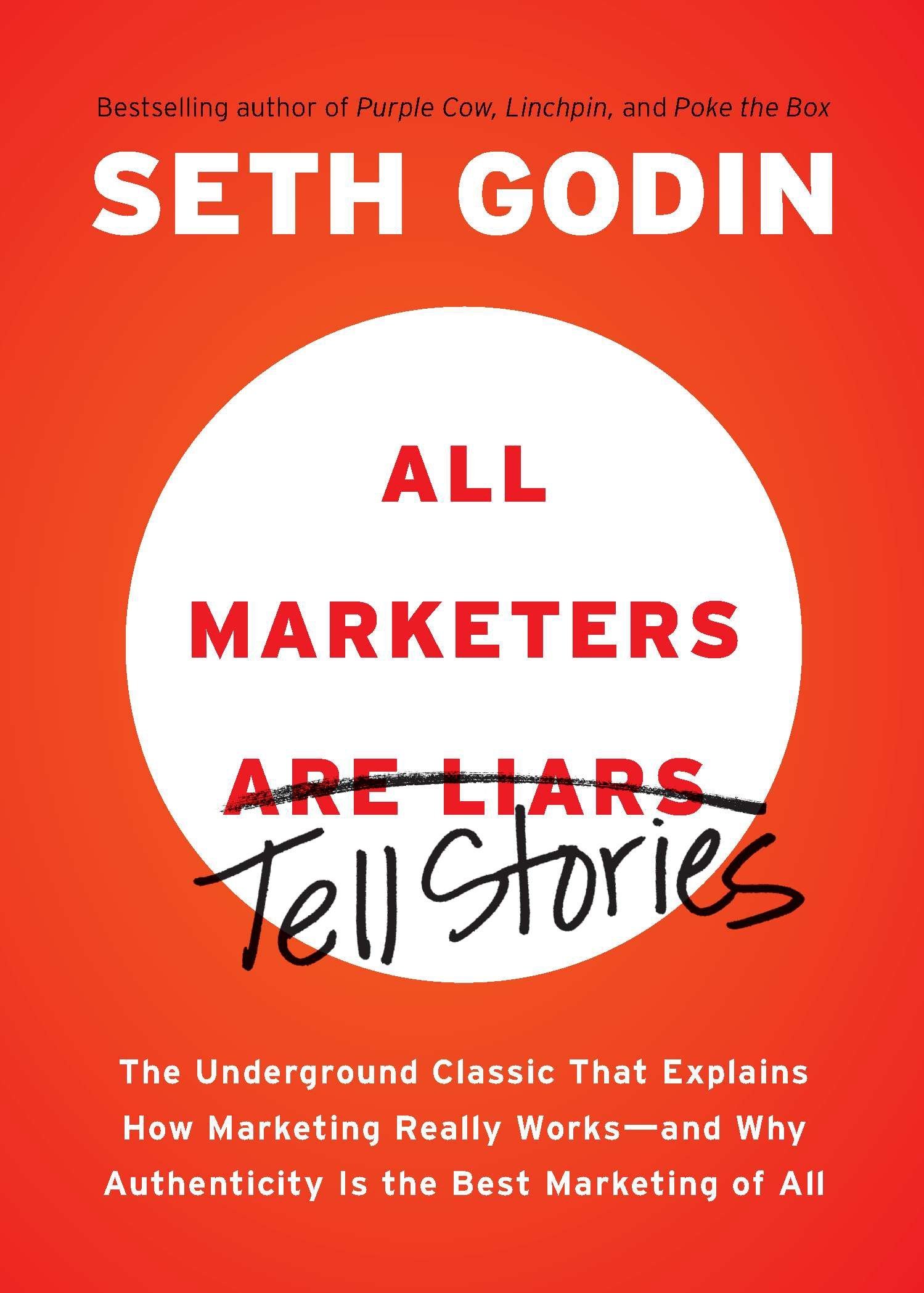
Stories sell

No one cares about the features of anything. What they want to know is how it helps them.

“What do these features do for me?”

A friend of mine was asking about the internet provider we use in our home. Naturally, I wanted to sell him on the service that we use because I think it’s the best.

So I told him, “You get up to one gig upload and download speeds.’

Then I thought about it for a second and realized this: most people don’t know what that means. More importantly, they don’t care. 

So I changed up my approach and told a story instead.

I told him that some of the projects I do each week for work have to be uploaded to Vimeo. “With our old Internet provider, I explained, “it would take me between 15 and 20 minutes to upload a single video. Now, with this new provider, it only takes me about 20 to 30 seconds to do the same thing.”

He was sold, right then and there.

Stories are how we humans make sense of the world. Stories are also what sells—anything and everything.

No matter what you’re trying to persuade someone to do, find a way to tell them a story about it.

We Are All Liars

I was flipping through books in a bookstore the other day on an Artist Date. While there, I came across one by my favorite marketing teacher Seth Godin.

Seth boldly claims that all marketers are liars because their jobs are to tell stories. As I thought about it, I realized we’re all liars.

Stories are how humans make sense of the world. It’s been that way since we were sitting around campfires, boasting about the Mastodon we brought down on the plains.

Our stories are never accurate. Our memories are fleeting, piecemeal images we try to put together into coherent statements. It’s why you can ask multiple eyewitnesses what happened at the scene of an accident and get four versions of the same crash

This does not mean there are no true stories, no facts. It just means the stories we tell ourselves and others are never the whole truth.

Fish Stories

How many times have you heard the same fish story from a relative? Did the fish get bigger with every telling?

I remember as a child sitting in the living room with my older brothers, sides splitting from tales of their recent exploits and the ridiculous shenanigans they got up to.

And I remember feeling a sense of jealousy afterwards. “Why couldn’t I tell stories like that?” Stories that were as humorous, grandiose, and absolutely ridiculous.

One reason was I had not mastered telling stories (read: changing details ever so slightly to make the stories better). Another reason was I had not lived long enough to collect interesting stories.

Of course, as I got older and my contact with other strange characters in this world increased, I collected my own fair share of comedies. And now, each time I retell one, I find myself questioning the details.

Did that really happen? Did I add that tiny detail to make the story more cohesive? More enjoyable? Am I remembering it the way it really happened?

The answer, of course, is no. We never do.

We humans like stories, but the stories we tell ourselves change. They’re imprints of what actually happened, not what actually happened.

I guess that makes us all liars.

But it also makes story time much funnier.

Get more daily insights into the human condition. Subscribe below!

Verify, don’t trust.

Perhaps it is because of my history education background, but I have a pet peeve about verifying information.

Human beings love stories: we have been telling stories ever since we could draw, write, or communicate with the most basic sounds. It is part of human nature. Because we like stories so much, we also love to embellish, hyperbolize, and, frankly, make stuff up.

In times of crisis, the last point is particularly common. There is a lot of misinformation out there: cures have already been created; vaccines are readily available; drinking liquid silver and bleach will keep you from catching the notorious coronavirus that causes COVID-19; mutations are occuring; martial law is being enacted.

Humans like to tell stories, and even when it is unpleasant, humans like to have their emotions stimulated. People make up stories to trigger these emotional responses. You must be aware of this.

This is not new.

For as long as we have been telling stories, writing articles, and now, using social media, people have been sensationalizing things simply to be heard. People crave attention; they desire to be heard. Some people will do anything to make that happen.

This habit of making things up, of telling half-truths, of seeking attention from the public – it isn’t new. The difference now is scale: more people than ever before, 2 billion in fact, have a voice; not all of them use that voice for good.

You must be vigilant, and check your sources. You must also resist the urge to share every single social media post you see, especially if you haven’t verified the information you are reposting. It will cause fear, panic, and anger. This situation is bad enough as it is, and people are already feeling dread.

Why make it worse?

You are lucky to live in world now where you have a voice; 100 years ago, you would not be so blessed.

“With great power comes great responsibility.”

–Uncle Ben from Spider-Man

You have a voice: please use it responsibly.

Join 904 other subscribers