Are We Really “Born to Do” Anything?

It’s a question asked by lots of career counselors, coaches, and well-meaning advisors.

“What do you feel you were ‘born to do?'”

What if the honest answer is we aren’t born to do anything specific?

There is an entire area of philosophy dedicated to this idea that was first theorized by John Locke. (You can check out the basics here.) But I’m focusing on talents and passions today.

Was Van Gogh born to paint? Was Steve Jobs born to create the iPhone? Seth Godin would argue no. His answer to this question is simple. Here’s how I understand it:

No one is predetermined to use a certain medium for his or her art. We simply adopt the means and medium of whatever is available to us in our time.

In one of his podcast episodes, Seth says he doesn’t believe that Van Gogh would have painted with oils had he been born in the 20th century. Nor would Steve Jobs have created the iPhone had he been born in the 1700s (the resources and advancements in science were not available for that to have been possible).

And yet, each of us is genetically unique. You have never occurred before and will never occur again in this universe. Surely that means that we are born with innate talents and leanings.

Part of me thinks that’s true. And yet part of me also believes, as career coach Dan Miller says, “Passion is more developed than discovered.”

By this, he means we become passionate about things we engage with over and over again.

I find this idea incredibly liberating. Why? It means if we aren’t satisfied with what we are doing—if our passions are no longer feeding or fueling us—we can choose a new passion. We can develop it to something that feels like we were born to do it.

Maybe, in the end, it all comes down to choice and what’s available to us in our time.

What do you think? Were you born to do something? Leave a comment today!

We Are All Liars

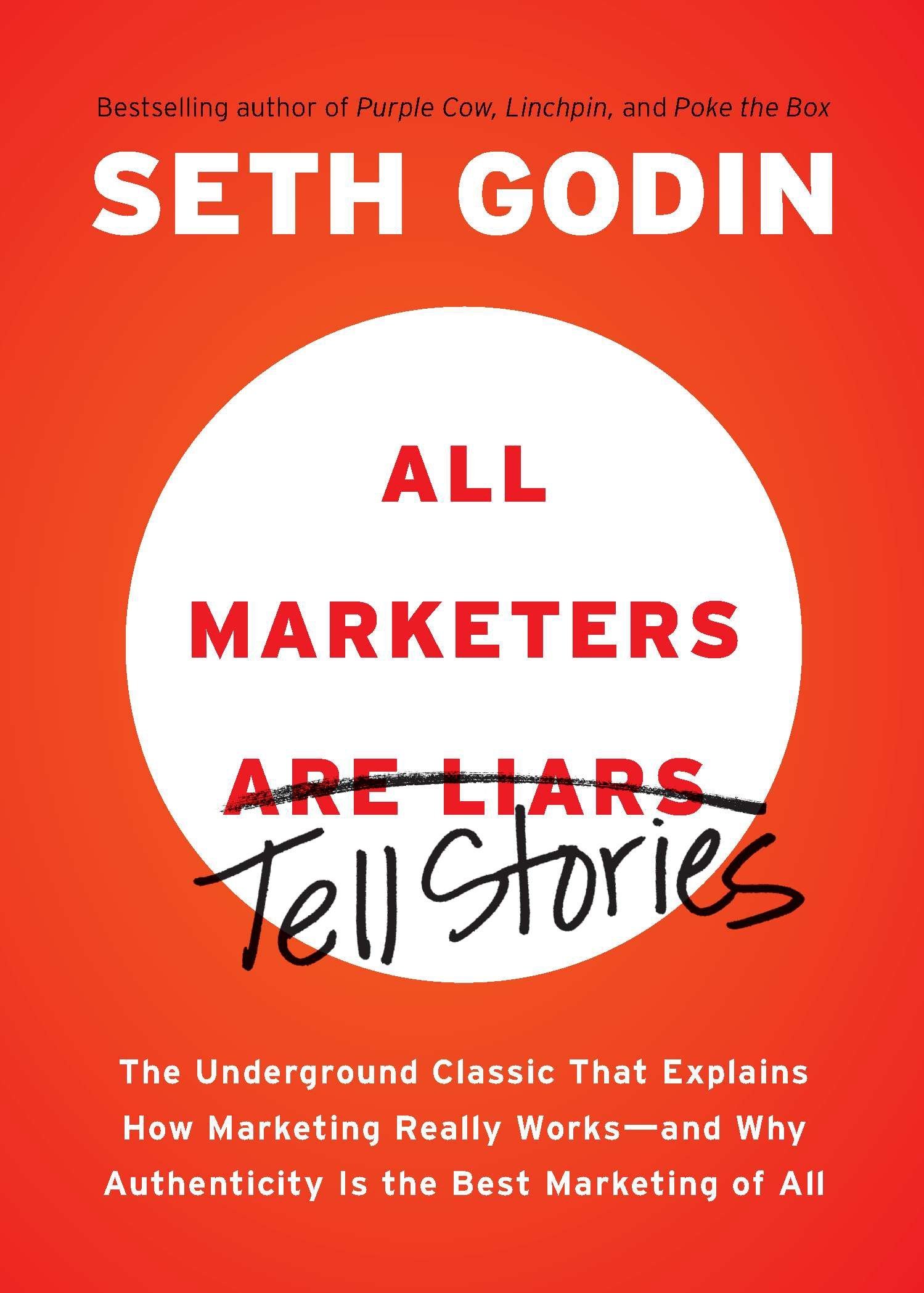
I was flipping through books in a bookstore the other day on an Artist Date. While there, I came across one by my favorite marketing teacher Seth Godin.

Seth boldly claims that all marketers are liars because their jobs are to tell stories. As I thought about it, I realized we’re all liars.

Stories are how humans make sense of the world. It’s been that way since we were sitting around campfires, boasting about the Mastodon we brought down on the plains.

Our stories are never accurate. Our memories are fleeting, piecemeal images we try to put together into coherent statements. It’s why you can ask multiple eyewitnesses what happened at the scene of an accident and get four versions of the same crash

This does not mean there are no true stories, no facts. It just means the stories we tell ourselves and others are never the whole truth.

Fish Stories

How many times have you heard the same fish story from a relative? Did the fish get bigger with every telling?

I remember as a child sitting in the living room with my older brothers, sides splitting from tales of their recent exploits and the ridiculous shenanigans they got up to.

And I remember feeling a sense of jealousy afterwards. “Why couldn’t I tell stories like that?” Stories that were as humorous, grandiose, and absolutely ridiculous.

One reason was I had not mastered telling stories (read: changing details ever so slightly to make the stories better). Another reason was I had not lived long enough to collect interesting stories.

Of course, as I got older and my contact with other strange characters in this world increased, I collected my own fair share of comedies. And now, each time I retell one, I find myself questioning the details.

Did that really happen? Did I add that tiny detail to make the story more cohesive? More enjoyable? Am I remembering it the way it really happened?

The answer, of course, is no. We never do.

We humans like stories, but the stories we tell ourselves change. They’re imprints of what actually happened, not what actually happened.

I guess that makes us all liars.

But it also makes story time much funnier.

Get more daily insights into the human condition. Subscribe below!

Failure and Success Are the Same Thing (Eventually)

The best teacher in the world is failure. Nothing teaches us more or faster than trying and failing at something.

It’s how we learn to walk. It’s how we learn to speak.

What keeps failure from becoming success is a lack of perseverance. We fail once and assume we’ll fail if we try again.

Thomas Edison failed more than 10,000 times in creating the incandescent lightbulb. But he failed differently each time.

When asked about this by a reporter, Edison said, “I have not failed 10,000 times. I have found 10,000 ways that don’t work.” He implied that each failure got him closer to his eventual success.

Had he tried making his lightbulb the same way 10,000 times, he would have been living out Einstein’s definition of insanity. But he didn’t. Instead he chose to keep trying 10,000 different ways.

Failure is a reality, but it’s also a choice. We can choose to learn from it, change things up, and try again. That option will eventually lead to success.

Or we can choose to fail and accept it as a permanent part of our lives.

You’ll find life is much better when you look at failure and success as learning experiences.

Learn more ways you can succeed every day. Subscribe below!

What Has 2020 Shown You?

2020 sucks. That doesn’t need to be said anymore. But a post from a gentleman whom I follow on LinkedIn made me rather introspective this morning. Here was my response to his post.

2020 showed me that life was more uncertain and fragile than I’d ever realized. I lost two of my closest relatives. My family suffered unimaginable heartache.

I discovered I’d been living life out of fear, looking at everything through a lens of safety. So I started asking myself, “if I died tomorrow, would I be satisfied with what I’ve accomplished? Would I be okay with how I left things for my wife and family?”

With that mindset, I’ve approached my days differently, dancing with fear and taking action in the face of it. Making definite choices rather than hesitating or hedging my bets.

In short, I’m bolder.

As I’ve learned from Zig Ziglar, if I fail I learn. If I learn, I grow. If I grow, I succeed.

What about you? What has 2020 shown you? Comment below.

P.S. Don’t forget to subscribe!

Should You Get Paid Every Time You Send an Email?

Wouldn’t it be great if you got paid every time you sent an email? I dunno about you, but I’d love to live in that world. 

I send hundreds each week. If I earned the price of a postage stamp on each one, I could make a pretty easy living.

Am I Devaluing Myself?

I’m an up-and-coming copywriter. To make a living, I spend several hours each week reaching out to potential clients, offering them my services as a writer and marketer. I do this because I’m a salesperson. And if you’re trying to make a living in a similar way, so are you. 

I recently came across a Twitter post telling me that I was devaluing my work by selling myself. To sum it up, the writer said I should either:

  1. Have clients beating a path to my door willing to pay me, OR 
  2. I should get paid every time I send an email, proposal, or pitch to a potential client before any work is done. 

I understand the author’s point. My time is valuable, and it stinks when I feel I’ve “wasted” my time pitching to someone who doesn’t buy. But I 100% disagree.

Sales Professionals Don’t Get Paid to Prospect

How do professional salespeople get paid? They sell a product and get paid a commission. They don’t get paid when they prospect or send proposals to customers. The only way they make money is by closing a sale. 

I sell a service, and I only get paid if I provide that service. And that service is not pitching ideas. If it was, I’d be a billionaire right now because I have a few thousand ideas each day, and most of them are awful.

Selling Your Service Is Like Applying for a Job

Each time I pitch a client, I’m putting in a job application. Think about all the jobs you’ve applied for in your adult life. What if you got paid for every job application you ever completed? Wouldn’t that make for an awesome career?

Often we don’t have a lot of experience for the jobs we are applying for, especially if we are new to the workforce or a field. When asked what a beginner should do, the Tweeter said, “get paid to pitch.”

We’ve all gotten those phone calls from sleazy salespeople. Does this sound familiar?

“I’ve got this great new system that will keep you from paying any taxes this year. But I can only tell you what it is if you sign a non-disclosure agreement and pay me $2,000 upfront.”

You know you’re losing money and going to jail if you get in bed with that guy. You don’t want to have anything to do with an idea you can only hear after signing an NDA and paying upfront.

How to ACTUALLY Get Paid to Pitch 

There are two parts to this tactic:

  1. Charge higher prices to compensate for the inevitable rejections you’ll get.
  2. Overdeliver to your clients and customers so it’s worth paying you higher prices!

One of my favorite phrases comes from the marketing genius Seth Godin:

“You’ll pay a lot, but you’ll get more than you paid for.”

That is the only way this guy’s Tweet works. 

Selling Is Tough

I get it. Creating proposals, pitching to customers, and facing possible rejection—it really stinks. It takes a lot of time and hard work. It’s frustrating. 

But let me be clear: THAT DOESN’T MEAN ANYONE OWES YOU ANYTHING!

The world doesn’t work that way. We are all in sales, and much of that involves reaching out to others. It means facing the very real possibility of rejection coupled with no monetary gain. 

So go ahead and pitch. And if you want to get paid for that, build the cost into your pricing structure. 

But make sure you overdeliver on that promise to your customer. 

Feeling inspired? Like, comment, and share so others can benefit! And subscribe below!

Why Do We Say “You’re Welcome”?

When you think about it for any length of time at all, it’s utter nonsense.

“Thank you,” says your customer.

“You’re welcome,” you reply.

You’re welcome….to what? You’re welcome to ask for help again in the future? You’re welcome to more of the same?

Why aren’t people shouting, “What am I welcome to?!”

There are so many options available to us other than an automatic “You’re welcome.” The phrase is automatic and useless. I’ve always wondered why we use it.

We can say, “It was my pleasure,” implying that you genuinely enjoyed helping them. Chick-fil-A’s employees are getting it right. (And yes, I realize it’s engrained in them and automatic, much like “You’re welcome.” It may not actually be their pleasure to help me. That’s a subject for a different post.)

Or my favorite: “I’m happy to help.” When I say it, I genuinely mean it. And by saying it, I actually feel happy that I helped that person.

It’s time to do away with this nonsensical phrase and replace it with something genuine and meaningful.

Get more thought-provoking material in your inbox. Subscribe today!

Who do you want to be when you grow up?

“What do I want to do when I grow up?”

We have all asked, or been asked, this question.

But it’s the the wrong one—it has multiple answers that change much too often.

Instead, ask yourself : “who do I want to be?”

How do I want to contribute?

What legacy do I want to leave when I am gone?

It might be part of what you do for a living, but it might not.

More likely, you will approach everything you do in life—your job and your personal relationships—with a new sense of wholeness and possibility.

If we start by asking the wrong question, we will never get the right answer.

But if you ask the right question, you’ll at least be on the path to the right answer.

Was this post helpful? Like it, share it, and subscribe!

We Are at War! (A Content War, That Is)

There is a war going on, a content war—one of which we are all a part. If you are on social media or have a smartphone, you now have a voice.

We have two choices:

We can sit on the sides and watch passively, soaking up everyone else’s content and letting it sway us one way or another.

Or we can choose to create, contribute, and add our voice to the mix and try to be heard. To change someone for the better. To make a difference however small. 

It’s true you may never be noticed. You might be drowned out by all the other voices. But doing the work is still worth it—in fact, it’s all that matters.

If we do not speak up, there is no chance that we can improve anything. And those that seek to make things worse will overtake those who want to make things better. 

Never miss an update. Subscribe below!

Which emotions are you feeding?

“My friends, love is better than anger. Hope is better than fear. Optimism is better than despair. So let us be loving, hopeful and optimistic. And we’ll change the world.”

—Jack Layton

Feelings becomes actions.

We cannot always control our emotions, but we can control our actions by choosing which feelings and emotions we feed.

We always have a choice.

Never miss an update. Subscribe below!

Artists Pay Attention. Are You an Artist?

What does an artist do? What makes her an artist? It’s simple: she pays attention.

I think I’ve been overwhelming myself with ideas, people, information, podcasts, audiobooks— too many different inputs to count. If we want to be creative, we have to shut out the noise, turn off the devices, and start paying attention to the world around us.

Paying attention might be something as simple as going for a walk outside. Head to the park, and be fully present in the moment. 

Paying attention means smiling at the people that walk past you and watching their entire demeanor change. They walk a little taller; they smile back; they pick up their pace. A smile generates energy.

Pay attention when you walk past two women speaking to each other in Spanish. What happens when you say in their native tongue, “Hello! How are you?” They chuckle, both pleased with your willingness to try and humored by your pained accent. 

Paying attention is noticing the difference in sound a few dozen yards can make. One side of a park is dead quiet, while the other—less than a football field’s length away and located close to a busy road—is roaring with the cacophony of motorcycles and sports cars. 

When you pay attention over a few weeks’ time, you notice the subtle change in attire worn by those walking around you as social and health issues become more prevalent. 

Perhaps you’ll notice two small children, obviously strangers and of wildly different cultures, run towards each other on the playground to touch hands, embrace, and play together as if they weren’t the least bit different. Afterwards, you might realize that it’s all invented, the differences we’ve created that cause such terrible strife in our world. 

If you listen closely, you’ll notice the gurgling, deep-throated rumbling of a large vehicle puttering past behind you. You’ll hear the sounds of leaves underfoot and voices across the fence. 

So this is what it’s like to pay attention. This is what we miss with our headphones in and our phones out, heads down and eyes fixed, always distracted and never present. 

We miss the face of a Star Wars alien created by a fortuitous arrangement of knots on a pine tree. 

We miss the sheer exuberance of a child as she first lays eyes on the playground and sprints past. We miss her zigging and zagging and the father’s apology for her child’s excitement. Why does Dad feels guilty? Why should he apologize for his child doing exactly what a child should do?

This is what we miss when we fail to pay attention.

Never miss an update. Subscribe below!