Networking is terrible, but there is a better way.

Networking – the idea of surrounding yourself with lots of people who might be able to open doors for you and help you get jobs – is a terrible practice.

It sucks.

The premise is flawed; it goes against every notion and every principle of decency and humanity. To effectively network, it seems one must adopt the mindset of, “What can this person do for me? How can she connect me with the HR department at [insert famous company]? What resources can she offer me so that I can get better (more marketable and attractive to potential employers)?”

Take, take, take, take. It’s a very common practice in Social Networking – some will say, “Use [pick your Social Media poison] to grow as many potentially helpful connections as possible so that maybe one of them can help you get a job at a certain company.”

The selfish focus, the mindset of “me,” is horrid. What is worse: it often backfires and alienates those you are attempting to use for your own selfish gains.

You think these “connections” can’t read right through your message? You’re wrong.

A new way to network

I propose a new way to network – go on your LinkedIn profile and start going down the list of connections. For each one, ask yourself this question: “Can I make a contribution to this person today, and if so, how?”

One important note: this requires a paradigm shift – a genuine change in your way of thinking (here’s a post about paradigms). You cannot adopt this posture while thinking in the back of your mind, “How can I contribute in a way that will get me something later?” You haven’t actually changed anything about the process that way.

If you really want to test this out, find someone in your list of connections who truly cannot “do” anything for you, in the sense of making a connection, giving a recommendation, or helping you get a job. When you find this person, ask yourself what contribution you can make: maybe it’s a simple message of gratitude for something they posted; perhaps it’s asking how their business is performing during the current crisis.

It doesn’t have to be much – it only has to be genuine. Only you will know if your intentions are pure.

“Ask not what your country can do for you; ask what you can do for your country.”

–John F. Kennedy

JFK said it well, and the same message applies to networking.

Ask not what your connections can do for you; ask what you can do for your connections.
Join 845 other subscribers

How much is enough?

I asked myself this question a few days ago and elaborated on it in my journal. Specifically, I was asking myself, “How much money do I need to make to feel like I am making enough?”

Honestly, making more money right now would not bring me any more happiness. It’s not money that my conscience is crying out to gain: it is meaning, purpose, the ability to use my God-given talents and strengths to serve and help other people.

The income I make now is actually more than enough to satisfy my needs at this moment. So why am I not doing something that fills my cup?

Have you ever asked yourself what enough is? If you made $40,000 a year, could you live on that if it meant you were doing something you cared about so much and so thoroughly enjoyed you couldn’t dream of doing anything else?

My answer is yes. Yours may be different. At a certain point, making more money is just making more money. Studies tend to cap the increase in happiness that comes from money at about $75,000.

So what goal, idea, or passion is the quest for more money preventing you from pursuing?

Are you, perhaps, an artist who wants to paint? A musician who wants to play and teach? Or are you, like me, a teacher who simply wants to teach?

Ask yourself this question: could you, honestly, make a living knowing the starting or average income that job in your head receives? Could you survive, or even thrive, if it meant you were doing what you felt passionately called to do?

The irony is most of the time when you quit pursuing money and start pursuing passion in the service of others, more money than you imagined comes into your life.

How much is enough? Could you make it doing what you love?

Join 845 other subscribers

You are doing just fine. Relax.

We are constantly getting caught up – in what we don’t have, haven’t accomplished, how far we have to go, what we need to be doing next to get where we think we want to go.

It’s exhausting.

It’s also very frustrating and discouraging if you are not careful. When you find yourself getting caught up in all the stuff bouncing around your head, it helps to take a step back and look at things from a bird’s-eye view.

View your life on a timeline. I will illustrate with my own:

15 years ago, I was beginning one of the darkest periods of my life: bad relationships, growing up way too fast because my home life was falling apart, deep depression, severe anxiety – these were just a few of the treats I unknowingly had in my future.

10 years ago, I was just beginning college with an idea of what I wanted to do with my life – an idea that changed almost a dozen times in five years.

5 years ago, I was finishing my senior year of college. After graduation, I took a job making money that had me living below the poverty line in Mississippi. I was making about half of what I spent on my college education.

In the last five years, I graduated, got married, worked in five distinctly separate fields, got promoted three times, was actively recruited by a company because of skills I developed outside of college, and more than doubled my income.

It’s easy to get stuck on how far you have to go and all the things you haven’t yet accomplished. Don’t forget to look back and see how far you’ve come. The perspective will instantly change how you feel.

Relax. You’re doing just fine.

Join 845 other subscribers

What would it take to replace you?

Think about your work and personal life for a moment.

What qualities and skills would your employer look for in a new hire were she attempting to replace you?

Be that person now.

What would your spouse, significant other, or children look for in a partner or role model if you weren’t around?

Be that person now.

Start.

Be the person others in your life want and need; you will become nearly impossible to replace.

Don’t miss a thing! Subscribe below to recieve new posts as soon as they go live.

Join 845 other subscribers

What if we all just stopped?

Is every single person born with the potential to be creative?

Yes.

So if we are all creative in some unique way (and we are), what would happen if we all stopped working in areas or jobs in which we felt obligated, and we all started working in our own areas of creative genius?

Does each of us have the potential to succeed in our unique creative gift? Is it that many of us never get the chance because of environmental factors or fear?

Could the marketplace support 100% engagement by all creatives? I think so; creativity doesn’t have to be writing, art, or music. Some people are creative in areas of building, business, leadership, plumbing, carpentry, or any other area that a modern society needs in order to thrive.

Food for thought.

What are you afraid of?

Why haven’t you started yet? Why have you not launched your side-hustle? Or started tackling that new skill you need to get a new career?

Is it really the fear of failure? If you start a side-hustle and it fails, who cares? You didn’t lose your job. You aren’t out on the streets.

If you try to learn a new skill and find that you are completely uninterested or you don’t have a knack for it, why does that matter? What has it cost you? Absolutely nothing.

So is it failure that scares us, or something else?

Maybe the reality is we don’t feel like we are good enough. We feel like phonies, that if we put something out there, people will see us as such – that we are not experts. We are simply amateurs, and they might scoff at us.

Or maybe it’s the actual shipping of your idea or work that scares you. Because in order to make it work, in order to get it started, you have to tell someone about it. You have to try and get someone to bite.

And they might say no.

Why does this terrify us? It’s just one person, or two, or ten. But you only need one person to say yes in order to get the ball rolling.

And if no one says yes, then make better work, make different work, until someone says yes.

Ask yourself today what you are really afraid of, then see it for what it is and act.

Solve interesting problems

One of my passions, and pain points, is the state of modern education in the US. Everyone knows that it’s not working well: children are leaving schools, both public and college-level, less prepared for careers than ever before.

The reason is simple: schools are operating on outdated modes of education in which students are taught to sit still, obey, memorize lots of information, regurgitate it on a test, and then promptly forget everything they just memorized.

The creative ones, the wiggle worms, speakers, artists, drawers, engineers – they are all stifled in the name of obedience. Yes, I realize that to have 35 kids in a classroom, you can’t have them all doing their own weird and wacky things, but answer this question for me:

When was the last time you got paid to regurgitate information on a standardized test?

What is school for? Seth Godin asks this question often. I believe the answer should be to educate and prepare children and young adults to create, innovate, contribute, and solve interesting problems for society. It is not about asking, “Will this be on the test?”

None of the “tests” you face in real life are multiple choice, with answers you found in a textbook and memorized only to forget them a hour later. When an irate customer is standing in front of you, there is no clear, right answer. There is an answer that might make things better or not; it’s up to you to figure that out.

When a new idea is dropped on your desk by a leader, you have to collaborate with your team, find and utilize resources, synthesize information, and come up with a solution for the project. How is memorizing a bunch of unrelated information that is kept separate from other information in the spirit of division called “subjects” helpful in this regard?

Why not instead teach people how to solve interesting problems? Teach how to find answers to questions on their own, how to create connections between information across varying fields and periods of time, how to think, and more importantly, how to learn when formal education stops.

Greg McKeown triggered this train of thought for me in his book Essentialism when he wrote the following:

“What if schools eliminated busywork and replaced it with important projects that made a difference to the whole community? What if all students had time to think about their highest contribution to their future so that when they left high school they were not just starting on the race to nowhere?”

Greg McKeown, Essentialism

The Industrial Age in the United States has ended; factory work is quickly becoming a thing of the past, as much as parts of our culture want to hang on to it. Our schools cannot continue teaching in the same mold as as they used to, when everyone eventually went to work on an assembly line. Employers no longer need cogs in machines; they need creative thinkers and problem-solvers equipped with the skills of communication, collaboration, analysis, leadership, and learning (yes, it is a skill).

In short, we need to teach people how to solve interesting problems.

It may not feel like much

It may not feel like much when it’s all you can physically do.

I’m speaking, of course, on producing, practicing, or creating when there just isn’t enough time in the day to get much of anything done. On those days, all you can do is all you can do.

And all you can do is good enough.

Write a few sentences instead of fretting over not writing a chapter.

Practice your instrument for 15 or 20 minutes instead of saying, “screw it” because you didn’t master an entire piece today.

Draw a doodle comic, not some magnificent portrait.

Go for a 10 minute walk rather than beating yourself up over the fact that you didn’t spend an hour at the gym.

Incremental improvement. Streaks. Baby steps. 5 minutes here; another 8 minutes there. This is how progress is made.

Change your mindset; realize that you are building mental fortitude and creating habits when you do just a little something each day rather than adopting an all-or-nothing mindset.

You might feel like you suck. You don’t. You’re doing a heck of a lot better than the person that decided not to show up today.

And if you can’t do anything at all, wipe the slate clean and show up again tomorrow.

Why did they not follow a passion?

One of the most common subjects we talk about these days is following our passions. Some of us are passionate about music, art, or writing, while others enjoy business, finance, and marketing. Regardless of the specifics, many of the conversations among our peer groups revolve around ways in which we can pursue careers and success in these areas. It has gotten me thinking about our parents’ generation and those that came before.

Most of the media on television or the internet today lampoons the adults of the mid-20th century, who went to a white-collar office job or a blue-collar factory job every day, did the same boring thing day after day, left at 5pm, came home, and spent the rest of the evening watching television before falling asleep and doing it all over again the next day. It is obviously satirical in many cases, but it also doesn’t seem far from the truth.

Why did our parents and grandparents do that? Was that all that was available to them? Did they not have specific passions they wanted to pursue? Were they actually content with working simply to earn an income to buy a house with a two-car garage for their 2.5 children to live happily ever after in the suburbs? Did they not also spend time with their friends and family discussing art, music, or writing and how they might pursue these areas? Does that explain why so many of them are portrayed today as drinkers and layabouts at home?

I don’t have an answer to this question; it just seems to me that the idea of pursuing passion areas as a career is a relatively modern one. Perhaps it is born from the end of the industrial age where factory work (and yes, office work counts) has been replaced by information work. We are now required to be creative and unique in order to stand out and survive in a globalized economy.

I just want to know if the passion was there and got stamped out, or if passion just never entered their minds.

New toys

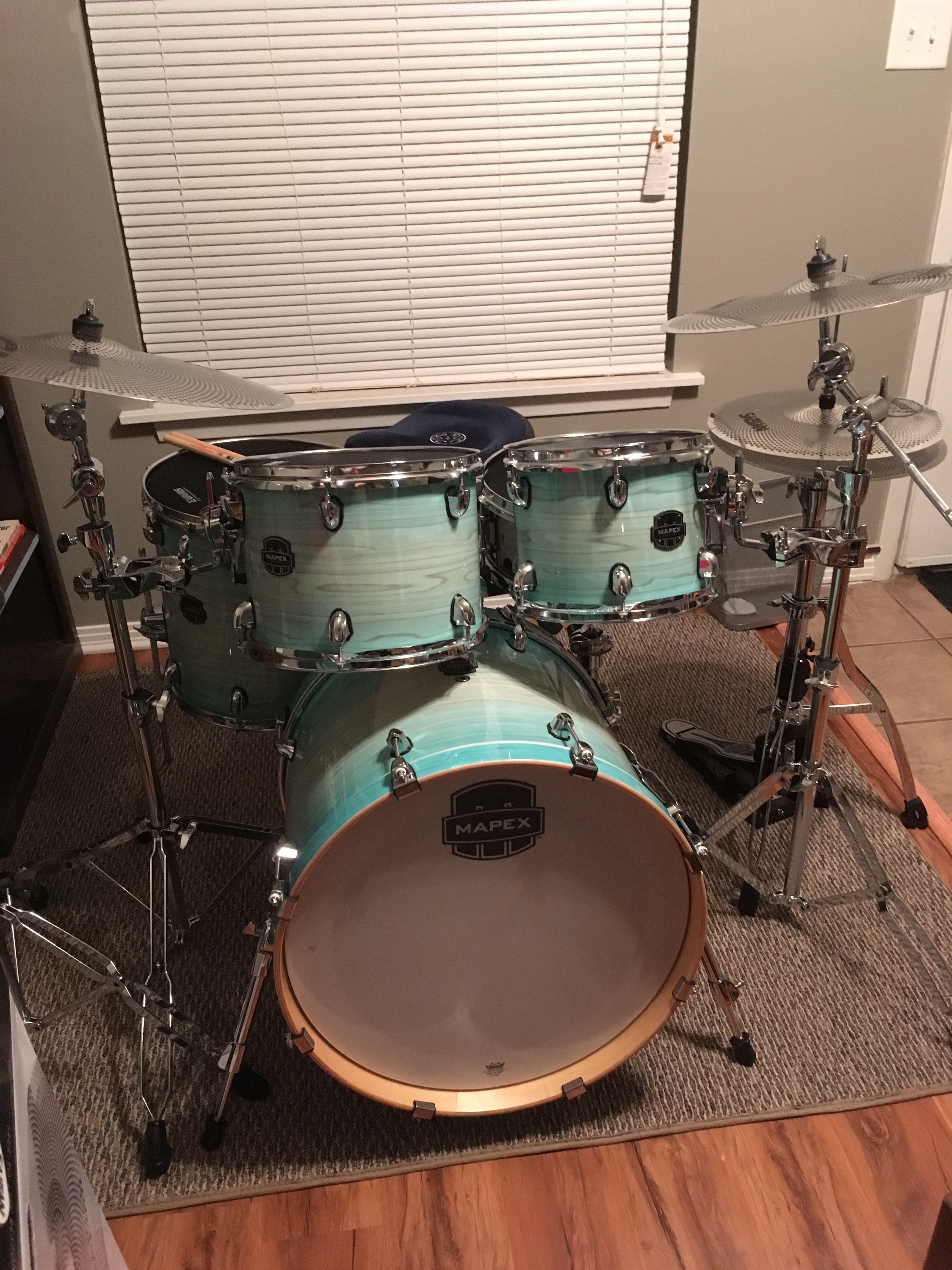
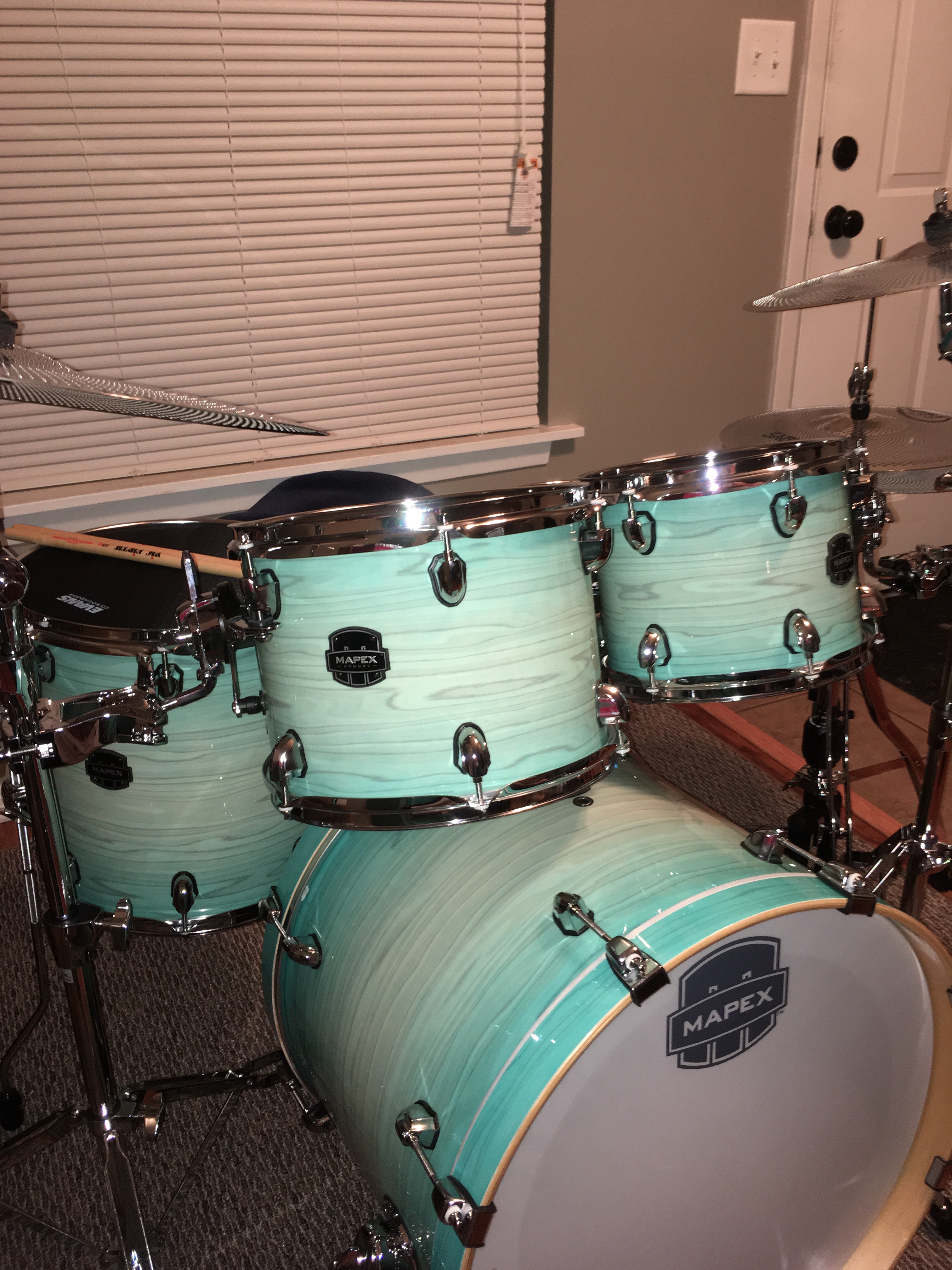
There is nothing quite like coming home and opening new toys. Even when you’re almost 30.

My new practice and teaching kit arrived today, and I could not be more thrilled.