He called me a “f@#*ing idiot”

I went to get my oil changed the other day at one of those quick-stop places that litter every metropolitan area.

As I pulled up, the gentleman at the computer started talking to me through my window to get my information. 

The man below my car (the one who would be doing the oil change), yelled up…

“Tell the idiot turn his car off!”

Okay… So I did. 

Then I was asked to pop the hood. I pulled the tab, saw the front of my car move a bit and heard a pop. I assumed that I’d popped the hood, and so did the person who’d just collected my information. 

We sat for a few seconds trying to figure out why he couldn’t open it—much too long for the gentleman waiting below. 

He stormed up the stairs, cussing at the top of his lungs, and started banging on my hood. 

That’s when I realized that I might have popped the trunk instead (all the buttons are right next to each other and my trunk doesn’t move when you pop the lock). 

So I hit the correct button. And I was greeted with the longest awkward silence of my life. 

The man looked at me, and through gritted teeth snarled, “You pressed the wrong damn button, didn’t you?”

Well, obviously I had. And he wasn’t happy—and things quickly got out of hand.

That man RAGED AND STORMED all over the garage yelling at the top of his lungs for employees and customers alike to hear.

“I’m so tired of dealing with F@#*ING IDIOTS like this!!!”

“I need these F@#*CKING IDIOTS to learn how to use their damn cars!”

“What the hell is the matter with these a@#holes today?”

He screamed, he kicked tools and tires, he sounded on the verge of murder…

After his tantrum, he stormed back down the stairs, cussing up a storm all the way. 

Now, I’ll admit—I was both angrier than I’d ever been and mortified beyond belief. 

I didn’t tip him (as I always do), but I paid my bill after the service was performed and drove away, fuming and on the verge of starting my own tantrum.

But after I’d been driving for a couple of minutes, a different thought entered my mind:

How bad had his day been to trigger a reaction like that?

What did he have going on in his life that made him HURT like that?

Because I realized (from plenty of past experience) that the only times people act that way are when they’re feeling some unbearable pain inside. 

I realized very quickly that it had absolutely NOTHING to do with me (or at least very little).

As Zig Ziglar would say, “Someone had been kicking his cat. All. Day. Long.”

I think that’s the lesson of this story:

It’s not about you.

Something else (possibly lots of things) happened before I ever showed up. There might have been trouble at home. He might have had an angry boss. Or a jerk for a customer that treated him the same way just a few minutes before I got there. 

When people act out like that, they’re hurting, insecure, scared… And emotional. 

Aren’t we all?
We Are All Liars

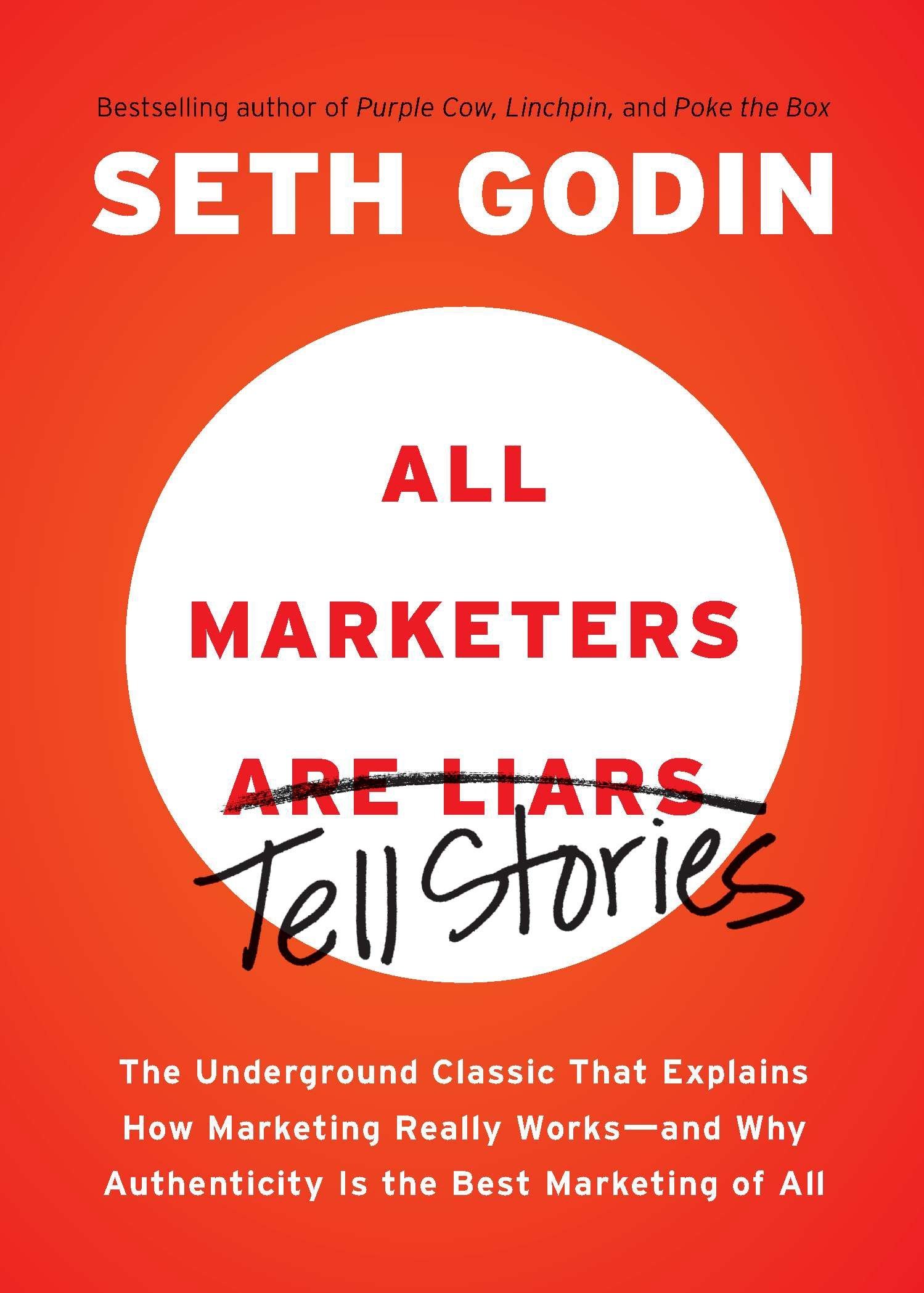
I was flipping through books in a bookstore the other day on an Artist Date. While there, I came across one by my favorite marketing teacher Seth Godin.

Seth boldly claims that all marketers are liars because their jobs are to tell stories. As I thought about it, I realized we’re all liars.

Stories are how humans make sense of the world. It’s been that way since we were sitting around campfires, boasting about the Mastodon we brought down on the plains.

Our stories are never accurate. Our memories are fleeting, piecemeal images we try to put together into coherent statements. It’s why you can ask multiple eyewitnesses what happened at the scene of an accident and get four versions of the same crash

This does not mean there are no true stories, no facts. It just means the stories we tell ourselves and others are never the whole truth.

Fish Stories

How many times have you heard the same fish story from a relative? Did the fish get bigger with every telling?

I remember as a child sitting in the living room with my older brothers, sides splitting from tales of their recent exploits and the ridiculous shenanigans they got up to.

And I remember feeling a sense of jealousy afterwards. “Why couldn’t I tell stories like that?” Stories that were as humorous, grandiose, and absolutely ridiculous.

One reason was I had not mastered telling stories (read: changing details ever so slightly to make the stories better). Another reason was I had not lived long enough to collect interesting stories.

Of course, as I got older and my contact with other strange characters in this world increased, I collected my own fair share of comedies. And now, each time I retell one, I find myself questioning the details.

Did that really happen? Did I add that tiny detail to make the story more cohesive? More enjoyable? Am I remembering it the way it really happened?

The answer, of course, is no. We never do.

We humans like stories, but the stories we tell ourselves change. They’re imprints of what actually happened, not what actually happened.

I guess that makes us all liars.

But it also makes story time much funnier.

Get more daily insights into the human condition. Subscribe below!

Verify, don’t trust.

Perhaps it is because of my history education background, but I have a pet peeve about verifying information.

Human beings love stories: we have been telling stories ever since we could draw, write, or communicate with the most basic sounds. It is part of human nature. Because we like stories so much, we also love to embellish, hyperbolize, and, frankly, make stuff up.

In times of crisis, the last point is particularly common. There is a lot of misinformation out there: cures have already been created; vaccines are readily available; drinking liquid silver and bleach will keep you from catching the notorious coronavirus that causes COVID-19; mutations are occuring; martial law is being enacted.

Humans like to tell stories, and even when it is unpleasant, humans like to have their emotions stimulated. People make up stories to trigger these emotional responses. You must be aware of this.

This is not new.

For as long as we have been telling stories, writing articles, and now, using social media, people have been sensationalizing things simply to be heard. People crave attention; they desire to be heard. Some people will do anything to make that happen.

This habit of making things up, of telling half-truths, of seeking attention from the public – it isn’t new. The difference now is scale: more people than ever before, 2 billion in fact, have a voice; not all of them use that voice for good.

You must be vigilant, and check your sources. You must also resist the urge to share every single social media post you see, especially if you haven’t verified the information you are reposting. It will cause fear, panic, and anger. This situation is bad enough as it is, and people are already feeling dread.

Why make it worse?

You are lucky to live in world now where you have a voice; 100 years ago, you would not be so blessed.

“With great power comes great responsibility.”

–Uncle Ben from Spider-Man

You have a voice: please use it responsibly.

Join 904 other subscribers

What makes you uncomfortable?

Resiliency is a skill that can be developed through practice. The first step is choosing to practice. 

What makes you uncomfortable? The answer to that question will help determine where to start.

I hate asking people to make special accommodations for me: I always feel I am inconveniencing the other person (I rarely am), or that I am being a very annoying customer (if they think so, that’s their choice). So when my wife and I started to drastically reduce our waste production, I was uncomfortable with some of the suggestions she made. 

A story…

My favorite example took place at our local Mexican restaurant: they have delicious salsa that we would buy in large tubs to take home and use during the week. These tubs were made of styrofoam and had plastic lids. My wife suggested that I take one of our many empty glass jars and ask for salsa to be placed inside. I was so reluctant, so uncomfortably scared to simply ask. It felt dangerous, even though the worst thing that could happen was to receive no as an answer. No danger at all, but my mind made it feel dangerous.

After numerous arguments (I was scared, remember?), I grudgingly went to the restaurant and made the request. The host looked at me curiously, but he acquiesced and placed the salsa in our jar. He even went a step further and informed me that there were no preservatives in the salsa; it would only keep for a week or so. A wave of relief washed over me. 

But wait! 

The next week, when I went back for more salsa, there was a sign on the front counter. 

“$2.99 jars of salsa to go. Bring the jar back for a $0.99 refill.”

The host, who was also the manager, bought a stock of small glass jars and decided to sell them. He was actively encouraging people to reuse the jars while also proactively choosing to reduce the waste his restaurant produced. 

By choosing (i.e. being forced by my incredible wife) to do something that made me uncomfortable, my wife and I achieved one of our small waste reduction goals. But the most inspiring thing was the change it created in someone else. 

Seek out discomfort in all areas of your life. It makes you stronger mentally. Discomfort in the gym makes you stronger physically. 

Other people avoid discomfort, which means you will be doing things others won’t. The intersection of discomfort and action creates change the world desperately needs. 

Change makes things better. Seeking out discomfort makes things better. 

What makes you uncomfortable?

Go do that.