It amazes me how many companies still require their prospective employees to hold college degrees before they’ll even CONSIDER talking to them about work…
Especially because so many companies are founded by college dropouts, straight-D students, and vocal critics of modern education.
With so much information and easily accessible methods to build the skills necessary to do competitive work, college is quickly becoming a handicap more than anything else.
It’s four years spent in a classroom accumulating information rather than developing skills, building projects, and doing actual work. (And yes, I’m a college graduate who’s criticizing EXACTLY what I went through).
Never will you be required to sit through hours of lecture and regurgitate information on tests in your working career. But that’s what I’d estimate 90% of college is.
How does that help a company looking to hire for a role? Obviously it doesn’t.
I’d like to see more companies embrace what Apple, Google, Amazon, and other big tech companies are doing:
Value competence and proven skills over accreditation and papers.
Show you can do the work and forget what your “education” was all about.
Hopefully more companies will remember their founders’ roots and get out of this antiquated industrial mindset.
You’ve been told your entire life you should do things well.
Perfectly.
Like an expert.
And if you can’t do it well, you might as well not even bother to do it at all.
That’s wrong. You can’t instantly be great at doing ANYTHING.
The only place to start is at the level we currently are.
The always relevant, and sometimes irreverent, Zig Ziglar said one of my favorite quotes of all time:
“If it’s worth doing, it’s worth doing poorly.”
What did he mean?
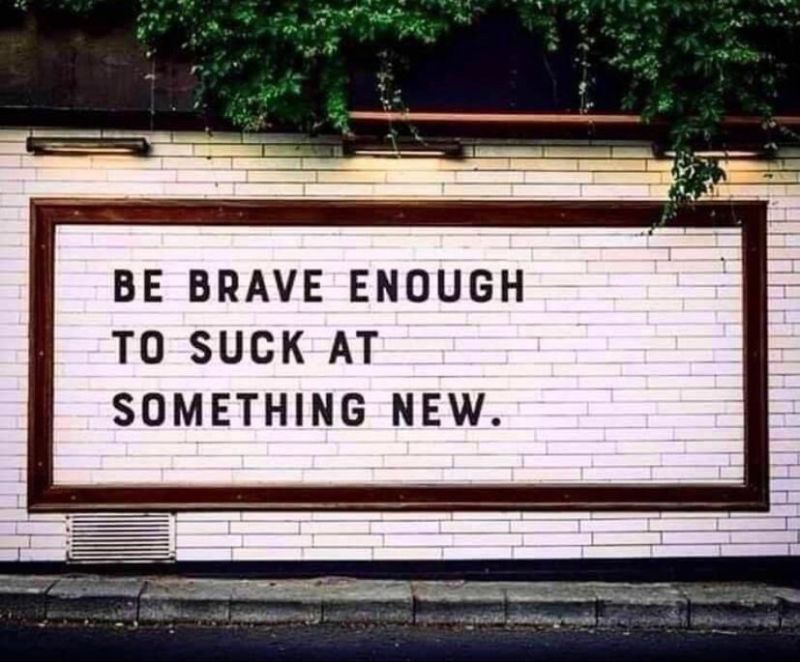
Simple: anything worthwhile requires that we start as a beginner.
Golfing, tennis, writing, painting, jazz improv… It doesn’t matter what it is.
If it’s worth pursuing, you owe it to yourself to be bad at it. And then get better at it every single day.
He uses the example of someone learning to play golf: if everyone could join the PGA Masters tour after a couple of lessons with the local pro, there’s no reason to do it.
I heard the best description of what a coach does this week on Michael Hyatt’s podcast, “Lead to Win”:
“I love developing people and helping [them] to see the best potential in them and call it out. And that is what coaching is all about.”
That quote is from Michele Cushatt, Chief Coaching Officer at Michael Hyatt & Company. (You can check out the episode here.)
Her definition of coaching leapt out at me… I had to listen to it at least three times.
Most of us have an image in our head of a coach as a cheerleader… Maybe it’s someone who tells you “great job” when you finish a task or make a little progress.
Or maybe “coach” conjures images of someone putting you through drills or practices to help you develop a skill.
Coaches can and should do those things. But that’s not the essence of what coaching is…
A great coach sees the potential in another person and calls it out! That’s the key. They bring forth what’s already inside someone else.
They help someone become the best person they can be. The person they are destined to become.
Do you have someone in your life doing that for you? If not, can you find someone?
Or is there someone you know who’s got tons of potential but can’t see it? Or hasn’t developed it?
Why can’t you take the role of coach and call it out to them?
Subscribe below for daily insights, resources, and ideas delivered straight to your inbox.
Are you afraid the path you’re walking is taking you somewhere you don’t want to go?
The former means you should probably keep going.
The latter is a warning from your inner self, your conscience, your child artist… Whatever you want to call that little voice that whispers truth in your ear.
But here’s the problem:
Often the two fears are hard to distinguish. To figure out which it is requires time for introspection, writing, silence… Sometimes even experimentation with what’s scaring you.
Often this fear manifests itself around our careers.
Are you afraid you might fail at being a salesperson? Or does the idea of selling this particular thing make your skin crawl?
Remember: one means you should try. The other means you should rethink your path.
Subscribe below for insights, resources, and guidance delivered directly to your inbox.
Michael Hyatt is one of the foremost bloggers on the internet today. His five steps to avoiding burnout were simple and actionable. I’ll be working them into my routine from now on.
One of Seth’s longer posts, here he talks about how to find customers and the strategies you can use to grow your base. Definitely worth a read when you have the time.
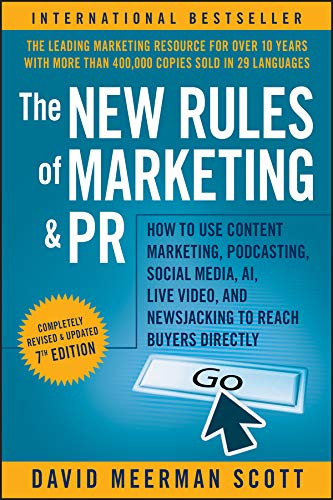
Not sure why this one isn’t embedding correctly, but here’s a great article by one of my copywriting mentors on how to quickly and effectively learn ANY new skill. I mentioned David in an earlier post this week on blogging in community. I recently cracked this book back open to check out what he had to say about the best ways to blog, inspiring that previous post. If you do ANYTHING involving content, I highly recommend this book. Click the image to get a copy at Amazon.
Don’t forget to subscribe for daily insights delivered directly to your inbox!
I’m sorry that I’ve been quiet for the past few weeks: I’ve been in the midst of a very intensive job hunt. After multiple interviews and offers from three different companies, I started my new job at Lurn Inc. this past Monday.
As a content developer, I’ll be creating all sorts of amazing educational content to help aspiring entrepreneurs succeed in life and business. I’ve been going through a lot of the content myself this past week, learning how they teach and do things. It’s felt like drinking from a firehose of knowledge.
I am part of a great team: a small group of former (and current) freelance writers who love to teach. It’s the perfect application of my skills, passions, and knowledge areas. I’m working with, and helping, people I want to be around, and I have an ideal workplace—home. 😀
If you’re interested in what Lurn has to offer, I encourage you to go to https://lurn.com and get a free account. There are lots of courses you can start immediately (for free). You might come away with new business ideas or new strategies and tactics if you already have a business.
Here’s to regular posting once again!
Yours truly,
Nathan
Get updates as soon as they happen. Subscribe now!
“I never think of what I have said before. My aim is not to be consistent with my previous statements on a given question, but to be consistent with truth as it may present itself to me. The result has been that I have grown from truth to truth.”
—Mahatma Gandhi
Consistency is only beneficial as long as the truth to which we are holding remains true.
Changing our minds seems to be a sign of weakness, meekness, and shame in our culture. But is it not a sign of wisdom and growth when we take a new stance upon learning new information?
When we hold to something because “that’s the way we’ve always done it,” even when a new truth is staring us in the face, our culture, relationships, and society stagnate.
There is nothing wrong with changing your mind as you learn new information.
Be wise and grow.
Follow me and get new content delivered straight to your inbox.