What does coaching mean to you?

I heard the best description of what a coach does this week on Michael Hyatt’s podcast, “Lead to Win”:

“I love developing people and helping [them] to see the best potential in them and call it out. And that is what coaching is all about.”

That quote is from Michele Cushatt, Chief Coaching Officer at Michael Hyatt & Company. (You can check out the episode here.)

Her definition of coaching leapt out at me… I had to listen to it at least three times. 

Most of us have an image in our head of a coach as a cheerleader… Maybe it’s someone who tells you “great job” when you finish a task or make a little progress. 

Or maybe “coach” conjures images of someone putting you through drills or practices to help you develop a skill. 

Coaches can and should do those things. But that’s not the essence of what coaching is…

A great coach sees the potential in another person and calls it out! That’s the key. They bring forth what’s already inside someone else. 

They help someone become the best person they can be. The person they are destined to become.

Do you have someone in your life doing that for you? If not, can you find someone?

Or is there someone you know who’s got tons of potential but can’t see it? Or hasn’t developed it? 

Why can’t you take the role of coach and call it out to them?

Subscribe below for daily insights, resources, and ideas delivered straight to your inbox.

Are you scared of failing? Or…

Are you afraid the path you’re walking is taking you somewhere you don’t want to go?

The former means you should probably keep going.

The latter is a warning from your inner self, your conscience, your child artist… Whatever you want to call that little voice that whispers truth in your ear.

But here’s the problem:

Often the two fears are hard to distinguish. To figure out which it is requires time for introspection, writing, silence… Sometimes even experimentation with what’s scaring you.

Often this fear manifests itself around our careers.

Are you afraid you might fail at being a salesperson? Or does the idea of selling this particular thing make your skin crawl?

Remember: one means you should try. The other means you should rethink your path.

Subscribe below for insights, resources, and guidance delivered directly to your inbox.

What I Read This Week (July 9, 2021)

Here’s something new I’m trying out:

Every Friday, I’d like to update you, the loyal readers, on what I have been reading or listening to over the past week.

I’m hopeful that you’ll find awesome insights and new folks to follow who’ll help you level up your life.

Here’s this week’s first post!

Michael Hyatt is one of the foremost bloggers on the internet today. His five steps to avoiding burnout were simple and actionable. I’ll be working them into my routine from now on.
One of Seth’s longer posts, here he talks about how to find customers and the strategies you can use to grow your base. Definitely worth a read when you have the time.
Not sure why this one isn’t embedding correctly, but here’s a great article by one of my copywriting mentors on how to quickly and effectively learn ANY new skill.
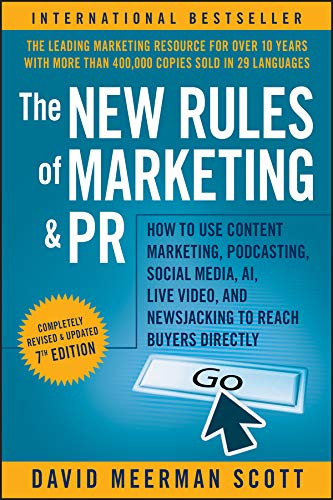
I mentioned David in an earlier post this week on blogging in community. I recently cracked this book back open to check out what he had to say about the best ways to blog, inspiring that previous post. If you do ANYTHING involving content, I highly recommend this book. Click the image to get a copy at Amazon.

Don’t forget to subscribe for daily insights delivered directly to your inbox!

Why I’ve Been Quiet for a Few Weeks

 Hello to all my loyal readers!

I’m sorry that I’ve been quiet for the past few weeks: I’ve been in the midst of a very intensive job hunt. After multiple interviews and offers from three different companies, I started my new job at Lurn Inc. this past Monday.

As a content developer, I’ll be creating all sorts of amazing educational content to help aspiring entrepreneurs succeed in life and business. I’ve been going through a lot of the content myself this past week, learning how they teach and do things. It’s felt like drinking from a firehose of knowledge.

I am part of a great team: a small group of former (and current) freelance writers who love to teach. It’s the perfect application of my skills, passions, and knowledge areas. I’m working with, and helping, people I want to be around, and I have an ideal workplace—home. 😀

If you’re interested in what Lurn has to offer, I encourage you to go to https://lurn.com and get a free account. There are lots of courses you can start immediately (for free). You might come away with new business ideas or new strategies and tactics if you already have a business.

Here’s to regular posting once again!

Yours truly,

Nathan

Get updates as soon as they happen. Subscribe now!

I hate getting feedback… Don’t you?

I hate getting feedback…

It hurts. It stings. It can crush your soul—especially if you think you’re already kicking butt. 

But it’s also the best way to figure out where you can grow to hit your goals.

That’s why I actively seek it out in everything I do. 

Musicians Are Brutal

This practice came from my time in university. I was studying to be (and working as) a professional musician. 

Every week, I had multiple lessons, rehearsals, and performances. And after each one, my teachers, bandmates, and mentors had feedback for me.

It was brutal (to put it mildly). But it made me a better musician. 

These people were better than me, more experienced, and knew what needed to be done to succeed. 

I’ve carried this practice with me into every job I’ve had. It’s made me a better leader, writer, and marketer.

“A mark of a competent adult is their ability to accept feedback. The mark of a child is their expectation of praise without merit.”

—Donald Miller, Business Made Simple, p. 15

Surround yourself with people who want you to improve and succeed in your roles. Actively seek out feedback. 

The more you do it, the better you’ll get. But I can’t promise it won’t sting.

How do you feel about feedback? Are you actively seeking it out?

Get daily insights on business, personal growth, and creativity.

Subscribe today.

We Must Grow from Truth to Truth

“I never think of what I have said before. My aim is not to be consistent with my previous statements on a given question, but to be consistent with truth as it may present itself to me. The result has been that I have grown from truth to truth.”

—Mahatma Gandhi

Consistency is only beneficial as long as the truth to which we are holding remains true.

Changing our minds seems to be a sign of weakness, meekness, and shame in our culture. But is it not a sign of wisdom and growth when we take a new stance upon learning new information?

When we hold to something because “that’s the way we’ve always done it,” even when a new truth is staring us in the face, our culture, relationships, and society stagnate.

There is nothing wrong with changing your mind as you learn new information.

Be wise and grow.

Follow me and get new content delivered straight to your inbox.

How to Make Revolutionary Change in Your Personal Life and Career

Dr. Covey taught me perhaps the most important and fundamental life lesson of all. It’s the idea of paradigms and the See-Do-Get formula.

What Are Paradigms?

Paradigms are our ways of seeing the world. As Dr. Covey describes it, they are maps of the territory we are navigating. As we know, maps are a representation of the world but not the world itself. These “maps” affect every aspect of our daily lives.

See-Do-Get

Our paradigms put us into a cycle known as “See-Do-Get”. How we see something (our paradigm) affects our behavior (what we do). Our behavior affects the results we get. These results then reinforce our viewpoint. They become a never-ending cycle that can only be short-circuited by changing how we “see”. We must examine the map.

A Story to Illustrate the Point

I once knew a teacher whose students approached him about putting on a short play for the school. They saw this as a way to put the English literature they were studying into a fun and creative context. But this teacher saw his students as an uncreative bunch of hooligans with no talent. He did not believe them capable of staging anything worthwhile.

Grudgingly, he let the students “try” to put something together. Because of his mindset, he failed to encourage them, coach them, or help them in any way. His only offering was scathing criticism because he saw no possible positive outcome. The students became increasingly frustrated and unhappy with their efforts. They began to believe their teacher correct in his views and quit the project after a few weeks. Their “failure” further reinforced the teacher’s own paradigm.

I felt devastated when I found out about the situation from the students. Why did it happen that way? Because he saw them as uncreative, incapable, and without talent, he treated them as such. He failed to help or encourage his students and did nothing but criticize and condemn. This behavior led to the results he expected all along.

The Root of Any Problem

How we see a problem (or person, political party, or random happenstance) is a problem itself. It affects our behavior and the results we get, leading to a self-fulfilling prophecy.

Design thinking teaches us to reframe problems in ways that allow us to take positive action on them. Only by changing how we see something can we get to the root of the issue. If you want to make positive change in any area of your life, first examine how you see the problem.

What would have happened had this teacher been aware of the way he saw his students? What if he had taken a step back and seen them as young, curious, and full of potential? Maybe he would have treated them as budding thespians and offered encouragement. This change in behavior might have led to a fun, engaging, and successful student project. And who knows? It might have had lasting effects on all the students, even the ones who came to watch.

Instead, his negative mindset destroyed all hope of having any success at all.

I’ll leave the final word on this subject to Dr. Covey himself:

“If you want to make minor improvements, change your behavior. But if you want to make quantum improvements, change your paradigm.”

—Dr. Stephen R. Covey

What more advice for living an effective life? Subscribe below.

Empathic Learning

The 5th habit Dr. Covey writes about in The 7 Habits of Highly Effective People is all about empathic listening: “seek first to understand, then to be understood.” Empathic listening is putting aside our own narratives, judgements, assumptions, and listening from the other person’s point of reference. When we do this, we become students learning something new from another point of view.

For some reason this morning, I was thinking about my time in college studying my favorite subjects in history, subjects I had been studying since I was a small child. Sad to say, I remember listening to lectures and discussions with my professors from my own frame of reference: “I already learned all about that. Let me tell you what I already know about this subject to impress you.” 

I was the guy who would ask “deep, insightful questions,” when in reality, I was simply asking questions that showed my knowledge of the subject.

How vain, immature, and dumb I was! Had I only been listening––not from my own frame of reference, from the mindset of what I already knew––and instead adopted that wide-eyed curiosity of a child, I could have learned and retained so much more than I did. I would have been able to see the same ideas and subjects in a new light or with new perspectives. 

Instead, I listened to validate what I already thought I knew.

Empathic listening doesn’t just apply to difficult or emotional conversations with relationships in your life. It also must be employed in any learning environment to get as much out of it as possible.

Creating Football Fans

There are two components to learning a subject:

  1. You must want to learn whatever the subject is.
  2. You must constantly engage with the subject until it becomes a part of you.

This is how die-hard football fans (and players) are made. We don’t give them a textbook and test them on all the information it contains – we create an environment where a person wants to learn about the sport, and then we expose them over and over again until it becomes a part of his or her identity.

How do we replicate this in a classroom? How can we create people, children and adults, obsessed with learning something other than sports?

We’ve gotten really good at creating a culture obsessed with football; we’ve done a poor job of creating a culture obsessed with history, literature, or science.

Fear Accompanies Us On All Our Exciting Adventures

Something I’ve been working on a lot during my deep dive into creativity and self-awareness is dealing with fear. It’s always there, and I don’t know about you, but I’ve never been able to find a way to get rid of it.

What I have learned, however, is simple: feel the fear…then act anyway. 

There Is No Danger…

Almost nothing we do in modern life is actually dangerous – it just feels dangerous, and our amygdala tells us to run as fast as we can in the other direction. Making a cold call, sending out batches of promo materials to prospective employers, sitting in an interview…none of these things are dangerous. They just feel dangerous.

Jumping out of a plane with no parachute is dangerous; driving while wearing a blindfold is dangerous.

Trying something new where you may be told no? That’s not dangerous.

Action Overcomes Fear

I’ve decided to feel the fear, and act anyway. First, it was making a phone call to get contact information for someone in charge of a job I desperately wanted to take. Then it was beginning the sales process of promoting myself to that person. Today, it was reaching out to an old contact – a professor at a local college – about working for her in her program.

Each time, I felt tremendous fear, then did the thing that scared me anyway Euphoria followed fear, then the fear melted away. 

And so far, 2 out of the 3 times, it has paid off. The person I called was incredibly kind and more than happy to give me the information I was seeking (why was I so scared?).

The contact at the college was very positive in her response (again, why was I so scared?).

And the third person? Well, I’m not done selling myself to him yet.

What is, and was, the worst that any of them could say? No? That’s not scary or dangerous. It just means I’ve got to try something else.

Win or Learn

But the best part of all this? If I act and succeed, then I win! If I act and fail, I STILL WIN! How? Because I did something that scared me, which makes it easier to do it again next time in a different situation. Because I’m exercising the muscle of action in the face of fear. Because I’m not basing my self-worth over how other people feel about me, what they say about me, or whether or not they say yes to my proposal. I don’t feel the need for that approval anymore – it’s just a happy bonus if I get it. 

I will quote Susan Jeffers at length here:

“We cannot escape fear. We can only transform it into a companion that accompanies us on all our exciting adventures…Take a risk a day – one small or bold stroke that will make you feel great once you have done it.”

Susan Jeffers

I’ve decided to make fear my companion on this adventure called life. I hope you will too.

Want more inspiration to embrace your creativity? Subscribe below!