Is This Book Better Than an MBA?

Colleges don’t teach you how to succeed in the business world. Business schools teach theory, case studies, and lots of accounting and finance. But what they don’t teach you is how to run a profitable, cash-positive business. 

Sadly, they don’t even teach you how to work in a business. At least not in a way that makes money for your employer.

That’s a problem. Why? Because that’s what business owners, managers, and leaders want: value-driven professionals who generate cash.

Here’s the Solution

Donald Miller has done it. He’s created a book and podcast that teach you exactly what you need to know to run a profitable business. If you haven’t yet checked out Business Made Simple, do it today!
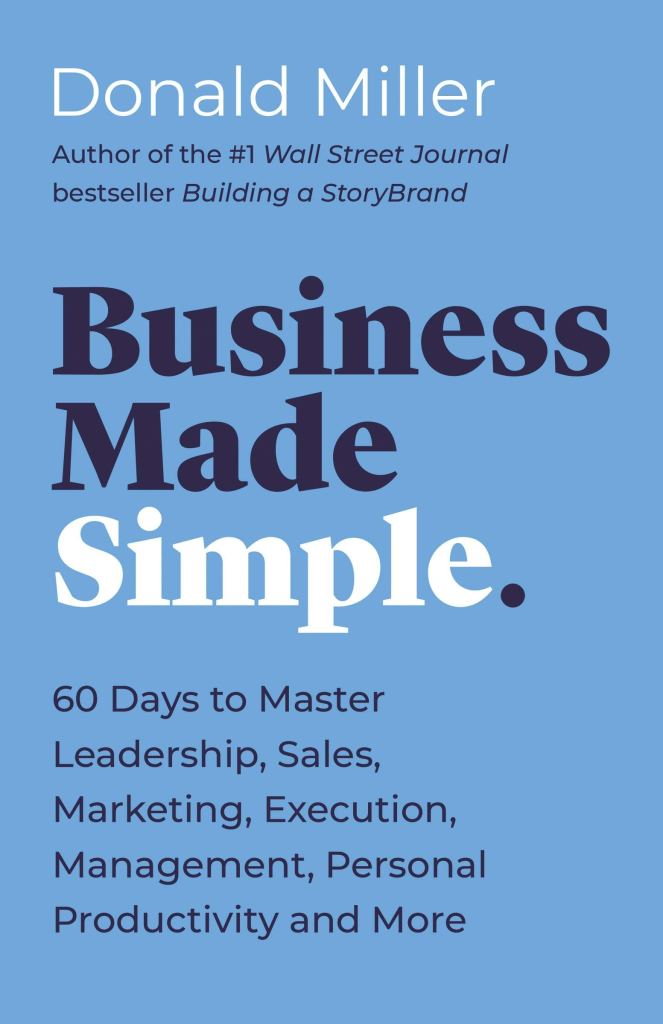
Buy the book. For just $20 bucks, you can get a better business education in 60 days than you would spending $50,000 on an MBA. And listen to the podcast—it’s absolutely free!

Learn practical skills you need to succeed like:

  • How to write a mission statement that drives and inspires you and your team.
  • How to create a clear message that drives customers to your products and services.
  • Sales processes that actually work.
  • Execution strategies that grow your business exponentially.

What If You’re Not A Business Owner?

Maybe you’re not an entrepreneur. Maybe you just want to have a successful career as a team member or employee. That’s okay!

Business Made Simple is for anyone who’s job it is to generate cash for a business. And guess what? That’s you! Whether you’re a salesperson, marketer, customer service agent, or a janitor, this book will help you succeed at work. 

If you’re looking to stand out in your job search, get promoted, or just contribute more in your work, you need check this stuff out. Get a business education that actually pays off.

Get a copy today!

Get daily insights on business, personal growth, and creativity.

Subscribe today.

Speak Your Dreams Into Reality Today

I got an email from the 48 Days Eagles (affiliate link) asking what my main business goal is for 2021. I thought I’d share it with you as well. So here goes:

“I want to help small businesses and entrepreneurs write better copy for their websites and marketing efforts so they can increase the sales of their products and services and grow their businesses.”

Why do I want to do this? Because if I can help others succeed in their business endeavors, they’ll be able to live out their hopes and dreams.

Now it’s your turn. Use this awesome layout to create your own business goal.

What’s your dream? Have you spoken it into reality yet?

And most importantly, can I help you with your dream or business?

Let me know in the comments!

Are You Buying What You’re Selling?

Zig Ziglar, the great motivator and sales trainer, found a mantra in the word “enthusiasm.” To him, the last four letters stood for “I am sold myself.”

Zig was a master salesman. He knew if you didn’t believe in what you were selling, that lack of enthusiasm would come across to the prospect.

But what about when you’re not selling a product? What if the thing you’re selling is yourself, and your customer is a potential employer?

This same idea holds true in the job hunt. If you’re trying to persuade an employer to hire you, you have to believe in the product. 

If you’re a freelancer trying to convince a company to use your freelance services, you’re selling a product you must believe in. 

If you’re not enthusiastic about what you have to offer, they won’t be either.

If you don’t believe in yourself, they won’t want to buy your product. And make no mistake: you are the product. 

Grow your enthusiasm. Know what you have to offer; understand what you do best; determine how you can best serve others. And believe that it will benefit another person.

Sell yourself on you.

“You can have everything in life you want, if you just help enough people get what they want.”—Zig Ziglar

Get a daily dose of inspiration. Subscribe below!

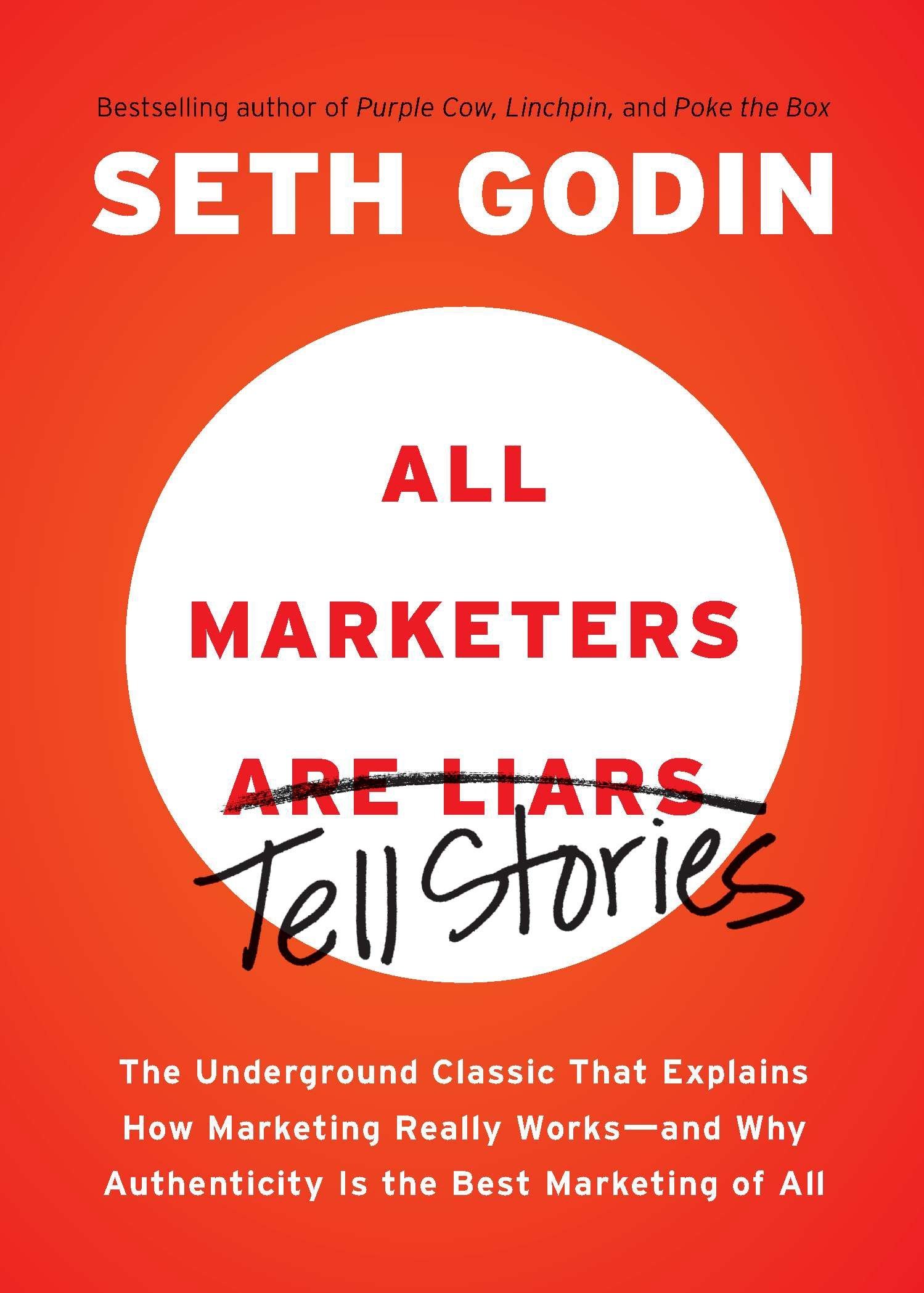
We Are All Liars

I was flipping through books in a bookstore the other day on an Artist Date. While there, I came across one by my favorite marketing teacher Seth Godin.

Seth boldly claims that all marketers are liars because their jobs are to tell stories. As I thought about it, I realized we’re all liars.

Stories are how humans make sense of the world. It’s been that way since we were sitting around campfires, boasting about the Mastodon we brought down on the plains.

Our stories are never accurate. Our memories are fleeting, piecemeal images we try to put together into coherent statements. It’s why you can ask multiple eyewitnesses what happened at the scene of an accident and get four versions of the same crash

This does not mean there are no true stories, no facts. It just means the stories we tell ourselves and others are never the whole truth.

Fish Stories

How many times have you heard the same fish story from a relative? Did the fish get bigger with every telling?

I remember as a child sitting in the living room with my older brothers, sides splitting from tales of their recent exploits and the ridiculous shenanigans they got up to.

And I remember feeling a sense of jealousy afterwards. “Why couldn’t I tell stories like that?” Stories that were as humorous, grandiose, and absolutely ridiculous.

One reason was I had not mastered telling stories (read: changing details ever so slightly to make the stories better). Another reason was I had not lived long enough to collect interesting stories.

Of course, as I got older and my contact with other strange characters in this world increased, I collected my own fair share of comedies. And now, each time I retell one, I find myself questioning the details.

Did that really happen? Did I add that tiny detail to make the story more cohesive? More enjoyable? Am I remembering it the way it really happened?

The answer, of course, is no. We never do.

We humans like stories, but the stories we tell ourselves change. They’re imprints of what actually happened, not what actually happened.

I guess that makes us all liars.

But it also makes story time much funnier.

Get more daily insights into the human condition. Subscribe below!

Should You Get Paid Every Time You Send an Email?

Wouldn’t it be great if you got paid every time you sent an email? I dunno about you, but I’d love to live in that world. 

I send hundreds each week. If I earned the price of a postage stamp on each one, I could make a pretty easy living.

Am I Devaluing Myself?

I’m an up-and-coming copywriter. To make a living, I spend several hours each week reaching out to potential clients, offering them my services as a writer and marketer. I do this because I’m a salesperson. And if you’re trying to make a living in a similar way, so are you. 

I recently came across a Twitter post telling me that I was devaluing my work by selling myself. To sum it up, the writer said I should either:

  1. Have clients beating a path to my door willing to pay me, OR 
  2. I should get paid every time I send an email, proposal, or pitch to a potential client before any work is done. 

I understand the author’s point. My time is valuable, and it stinks when I feel I’ve “wasted” my time pitching to someone who doesn’t buy. But I 100% disagree.

Sales Professionals Don’t Get Paid to Prospect

How do professional salespeople get paid? They sell a product and get paid a commission. They don’t get paid when they prospect or send proposals to customers. The only way they make money is by closing a sale. 

I sell a service, and I only get paid if I provide that service. And that service is not pitching ideas. If it was, I’d be a billionaire right now because I have a few thousand ideas each day, and most of them are awful.

Selling Your Service Is Like Applying for a Job

Each time I pitch a client, I’m putting in a job application. Think about all the jobs you’ve applied for in your adult life. What if you got paid for every job application you ever completed? Wouldn’t that make for an awesome career?

Often we don’t have a lot of experience for the jobs we are applying for, especially if we are new to the workforce or a field. When asked what a beginner should do, the Tweeter said, “get paid to pitch.”

We’ve all gotten those phone calls from sleazy salespeople. Does this sound familiar?

“I’ve got this great new system that will keep you from paying any taxes this year. But I can only tell you what it is if you sign a non-disclosure agreement and pay me $2,000 upfront.”

You know you’re losing money and going to jail if you get in bed with that guy. You don’t want to have anything to do with an idea you can only hear after signing an NDA and paying upfront.

How to ACTUALLY Get Paid to Pitch 

There are two parts to this tactic:

  1. Charge higher prices to compensate for the inevitable rejections you’ll get.
  2. Overdeliver to your clients and customers so it’s worth paying you higher prices!

One of my favorite phrases comes from the marketing genius Seth Godin:

“You’ll pay a lot, but you’ll get more than you paid for.”

That is the only way this guy’s Tweet works. 

Selling Is Tough

I get it. Creating proposals, pitching to customers, and facing possible rejection—it really stinks. It takes a lot of time and hard work. It’s frustrating. 

But let me be clear: THAT DOESN’T MEAN ANYONE OWES YOU ANYTHING!

The world doesn’t work that way. We are all in sales, and much of that involves reaching out to others. It means facing the very real possibility of rejection coupled with no monetary gain. 

So go ahead and pitch. And if you want to get paid for that, build the cost into your pricing structure. 

But make sure you overdeliver on that promise to your customer. 

Feeling inspired? Like, comment, and share so others can benefit! And subscribe below!

We Are at War! (A Content War, That Is)

There is a war going on, a content war—one of which we are all a part. If you are on social media or have a smartphone, you now have a voice.

We have two choices:

We can sit on the sides and watch passively, soaking up everyone else’s content and letting it sway us one way or another.

Or we can choose to create, contribute, and add our voice to the mix and try to be heard. To change someone for the better. To make a difference however small. 

It’s true you may never be noticed. You might be drowned out by all the other voices. But doing the work is still worth it—in fact, it’s all that matters.

If we do not speak up, there is no chance that we can improve anything. And those that seek to make things worse will overtake those who want to make things better. 

Never miss an update. Subscribe below!

If you build it, they (probably) won’t come.

The key in any endeavor from which you hope to profit, whether it’s creating a new product, learning a new skill, or starting a new service, is to first identify whether other people want what you are selling.

Contrary to the message in “Field of Dreams” (sorry, Kevin Costner), if you build or create something without first determining whether or not people want it, you probably won’t have anyone knocking down your door to get it.

Learning to be the best Fortran coding expert in the world is useless in today’s workplace because no one uses that coding language anymore. And don’t get upset if you spend 4 years learning puppetry only to find no one wants to pay you for it.

To make a living, you must serve other people. To serve other other people, you must find what people need.

You must determine what problems other people have and how you can solve them. Perhaps the need is to be entertained (in which case learning puppetry might actually be profitable for you, if you can find a way to market it). Perhaps the problem is a lack of clean water to drink.

Regardless of what you do, the key is to first identify what others want, then create something that serves that purpose. The customer must come first if you desire to profit.

Join 904 other subscribers

You must develop these two skills

Writing and sales: if you want to be successful in anything, you must be able to do both well.

If you have an idea, you must communicate it to others; if you want it implemented in some way, you must persuade them.

Writing and sales.

If you want a new job, you have to let others know why you’re the applicant for them by first getting their attention and then persuading them of your worth and potential.

Writing and sales.

“Writing is organized thinking on behalf of persuasion.”

Seth Godin

Writing helps you clarify your thoughts and communicate more clearly. You need it in every field in which you might work. Learn to write.

Parents, physicians, therapists, educators, and those in every other profession must win over those they serve–children, patients, students–to their way of thinking. Learn to sell.

Writing and sales: the most important skills of a modern worker.

Join 904 other subscribers

Praise the good. Ignore the rest.

If you want to create lasting influence with others, or change for the better, there is really only one way to do it:

Praise the good.

“So long as a person did anything good, he would praise him and use him for the service in which he excelled, but to his other conduct he paid no attention…”

–Cassius Dio writing about Roman Emperor Marcus Aurelius

When Emperor Marcus Aurelius wanted to influence other people, to reinforce the behaviors and actions he wanted to see, he would praise the person who did the good deed. This is actually quite Pavlovian in its execution.

Conditioning good behavior

Remember Pavlov from your introductory psychology class? Pavlov would ring a bell before he gave his dogs food; the food caused the dogs to salivate. Eventually the dogs associated the ringing bell with food and would salivate when the bell rang, even when Pavlov did not give them food.

Marcus essentially did the same thing with those in his service: whenever they did something of which he approved, he praised it. This constant reinforcement of the good conditioned his people to do more good work in the future. But there is a second part to Dio’s observation above…

Pay no attention to the rest

Not only did Marcus praise the good, he ignored the behavior and actions he didn’t want to continue. Why did he do this?

There is a wonderful little book who’s first chapter discusses this at length:

“Don’t criticize, condemn, or complain.”

–Dale Carnegie, How to Win Friends and Influence People

How often have you had a positive outcome after you criticized someone for doing something? I would hazard a guess at 10%.

When you criticize someone, they get angry, defensive, and emotionally illogical. He or she will justify the action rather than accept that it was wrong. It’s a natural human response. We don’t like to be wrong, and we definitely don’t like other people pointing out our poor behavior.

Therefore, the only way to get the results you want from other people is to praise them when you seeing them do the good deeds you want done. Criticizing the bad doesn’t work: it only causes resentment.

“We are not dealing with creatures of logic. We are dealing with creatures of emotion, creatures brisling with prejudices and motivated by pride and vanity.”

–Dale Carnegie, How to Win Friends and Influence People

(Of course, there are some behaviors that are dangerous, illegal, immoral, or that might harm others; these behaviors must be stopped immediately. Those sorts of behaviors are not the topic of discussion here.)

Be a model

How do let others know what good actions or behaviors are? You must be a model. Do the things you want others to do; be the kind of person you want others to be.

Seth Godin likes to say, “people like us do things like this.” Invite people to be “people like us,” whoever you think “people like us” should be. Then, do the things you want others to do, and when they follow, praise them for it!

Model good behavior. Praise others when they perform good work. Ignore the rest.

Join 904 other subscribers

Great power. Great responsibility.

Uncle Ben said it best: “with great power comes great responsibility.” This should be the phrase by which every leader and marketer lives.

Marketing and leadership are two fields primarily focused on influence. Leaders focus their efforts on influencing what work gets done and on what companies place emphasis; marketers focus on what products get made, what gets purchased, and what changes are made in our culture.

With great influence also comes great responsibility. Leaders and marketers have in their hands the power to persuade others towards things that are either helpful or harmful.

Who gets to decide which is which? Technically, it’s the follower, the consumer, or the customer. But we are all human–we know before a customer tells us whether or not our product or idea will harm her.

If you lead others, if you sell, or if you persuade, please take your responsibility–the power you have over other people–seriously.

Don’t take advantage.

Join 904 other subscribers