Undoing bad leadership

Often, employees are so burned by the people who lead and manage them that when they’re offered a real opportunity to make a difference, they scoff at it.

They assume there are strings attached. Or that it’s not a real opportunity, but instead, a way for them to pawn off their problems because they just don’t want to deal with it.

There’s a lesson here for leaders and managers of all types: 

You have to prove to the people in your care that you have their best interests at heart. To do this, you have to consistently act in such a way that they come to believe you by your actions, not your words. 

This is why Ralph Waldo Emerson wrote:

“What you are shouts so loudly in my ears I cannot hear what you say.”

You won’t have their trust in the beginning. 

What you want to happen won’t happen the first time. Or the second. Nor the third. Maybe not even the tenth. 

And unfortunately—but not unexpectedly—if you have a track record of burning your employees, it’ll take even longer. 

But that’s what you signed up for when you took on the role of a leader. You chose to show up continuously until you got the enrollment you seek. 

It’s not easy, but it’s definitely worth the work. 
“That’s not the right way to do that…”

Have you ever looked at someone and said to yourself, “That’s not the right way to do that…”

Maybe you were watching someone do an exercise at the gym. And you just couldn’t figure out why their pushup form was so different from yours.

Your first thought probably goes to their ignorance: “They just don’t know the right way to do it. I could show them how…”

The thing is… You have your own lens through which you look at the world. You have your own experiences, education, and biases that dictate the “right” and “wrong” way for you. 

And they have theirs too. 

Even when it comes to something as simple as a pushup. And even when there might be an objectively “right” way to do something.

But there might be a specific reason they’re doing their pushups in that way. 

Maybe they have an injury that prevents them from using “proper” form.

Or maybe they read a new study that taught a different way of doing it—one that helps them meet a different need.

Or maybe it really is simply ignorance of what’s right. 

But the fact remains, you don’t know why they’re doing it. 

Perhaps a better thing to do, instead of jumping to conclusions about right and wrong, would be to change the statement to a question.

“I wonder why they’re doing it that way?”

At that point, you have the basis for empathy and understanding.

And those qualities give you a much more stable platform to engage in dialogue… Or even enact change.

Build integrity like a muscle

Integrity simply means keeping promises you make—both to yourself and others. 

It’s almost like a muscle, something that must be stretched and strained so that it can grow bigger and stronger over time. 

The best way to develop integrity is to start making tiny promises to yourself, then follow through with them. 

Every time you schedule or write down a task…

  • Writing a blog post
  • Taking a 20-minute walk
  • Eating a serving of vegetables with dinner

…you’re giving yourself the potential to build your integrity muscle. 

Then, when you follow through on those tiny commitments, your sense of integrity gets stronger

Soon you’ll be able to make bigger and bigger promises to yourself and others.

But most importantly, you’ll have trained yourself to follow through. 

That’s how you become a person of integrity: one tiny promise at a time.

What’s one small thing can you promise yourself today?

The inauthentic hero

The people we admire most are the ones who act the most inauthentic in the moment. 

Being authentic: the idea that you should do or say whatever it is you’re thinking or feeling in the moment. This is what we glorify. 

Vs.

Being inauthentic: doing things we’d rather not. Doing them because we promised we would. Doing things regardless of how we feel in the moment.

War heroes, the type of people we admire for their bravery and selfless acts, are those who act decidedly inauthentic in the moment. 

If they were being authentic—when the rounds cracked overhead or the grenade dropped in the middle of their buddies—they’d run as fast and far away as they could. 

But instead, they make a conscious decision to act despite how they feel in the moment. They run towards the sound of battle, or throw themselves on the grenade to save their friends. 

They do these things despite feeling terrified, exhausted, or pained. And we admire them for that. 

We admire the same traits in people from all walks of life: athletes, leaders, writers, musicians.

We want them to do what they signed up to do. Imagine going to a concert where the musician didn’t play because “they just didn’t feel like it” when they got on stage.

So, in fact, we don’t want authenticity. We want professionalism, decency, integrity—for people to keep the promises they make… To do the things that need doing regardless of how they’re feeling in the moment. 

In terms of behavior, authenticity leads to tantrums and inaction. 

Inauthenticity, on the other hand, leads to professionalism. 

(H/t to Seth Godin for inspiring this post.) 

Rules for politics

Rules for politics I wish more of our elected members would follow:

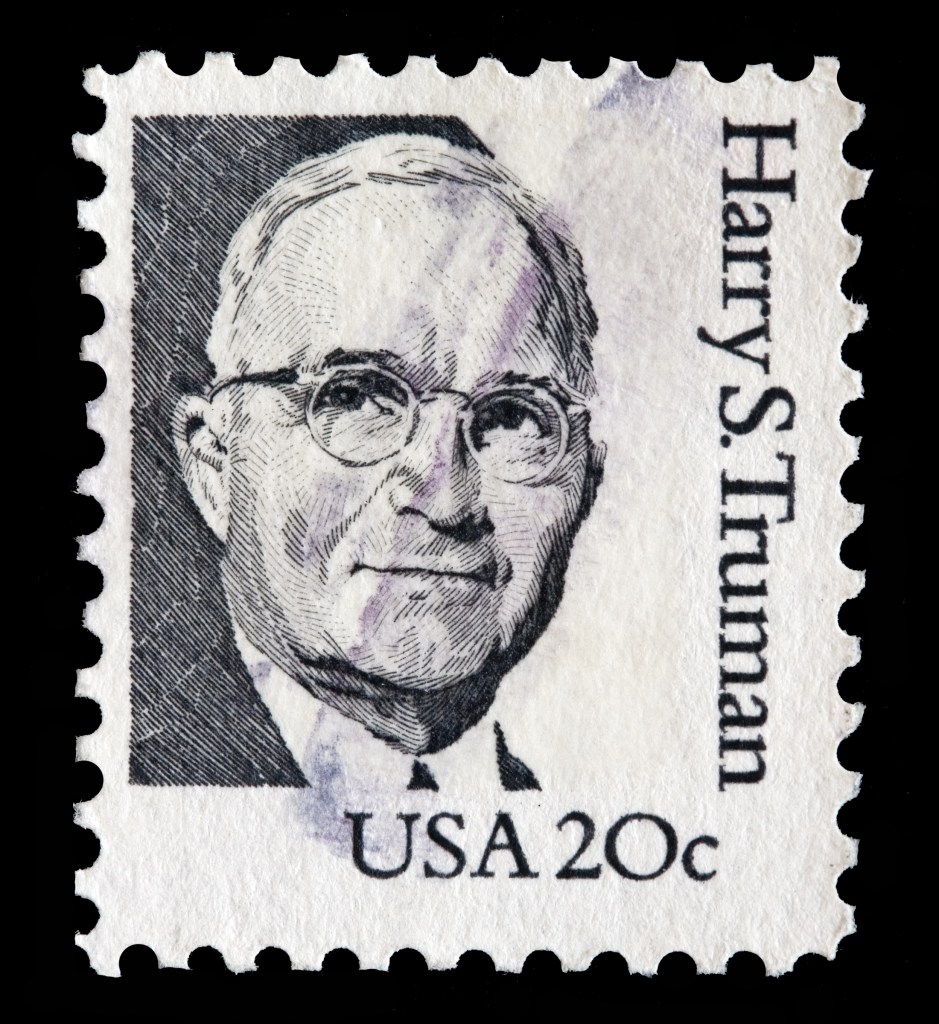
(These come from Harry S. Truman)

“In all this long career I had certain rules I followed win, lose or draw.

I refused to handle any political money in any way whatever.

I engaged in no private interests whatever that could be helped by local, state or national governments. 

I refused presents, hotel accommodations or trips which were paid for by private parties…I made no speeches for money or expenses while I was in the Senate… 

I lived on the salary I was legally entitled to and considered that I was employed by the taxpayers, and the people of my country, state, and nation.”

USA 20 cent stamp with a picture of Harry Truman

Truman wasn’t perfect by any means. But the rules he set for himself would go a long way to making our political leaders more effective… And less corrupt.

Self-growth is tender

A person of character

Character is an unchanging foundation that supports everything else. 

It’s much more important to be a person of character than it is to be successful.

(And the latter is more likely if you are the former…)

Consistency is key

“If you want to change your body, being consistent is more important than anything else.”

Precision Nutrition, “Prepare for liftoff”

This is wonderful advice. But it doesn’t just apply to your body.

With anything you pursue, consistency is the key factor that will determine success or failure, change or stagnation.

If you want to be a writer, showing up to the page consistently—upon waking for Morning Pages or each evening on a blog—is the most important thing you can do.

If you want to start a business, showing up to work on it every day—writing copy, sending emails, building an offer—is the way to do it.

Aristotle said, “We are what we repeatedly do.” To be the thing you want to be, you have to do it day after day.

What do you want to become? What do you need to do consistently to become that?

Choices

Almost everything that’s ever happened in your life has been the result of a choice.

A lot of it has happened because of your own personal choices.

But even those things that have happened to you completely and totally outside of your control have usually resulted from a choice…

Someone else’s choice in that case. And it created circumstances, good or bad, that affected you.

Interesting, and quite sad, to think about.

Subscribe

Are you an innovator… or one of the others?

Here’s one of the most enlightening things I’ve heard this week (and it’s 30+ years old).

It’s a quote by Denis Waitley from his audio program “The Psychology of Winning“:

“Victims are inactive, waiting and dreading… the survivors are reacting, and hanging in there… the dreamers are in the shower, active but nonproductive… [but] the innovators are out of the shower, dressed, ready, and proactive in the market. 

The innovator for the 21st century has the visionary’s ability to look ahead…

The philosopher’s ability to learn from history…

The inventor’s ability to employ breakthrough concepts…

And the entrepreneur’s ability to deliver those concepts profitably and effectively to the marketplace.”

Right now, if I’m honest, I’d say I’m somewhere between dreamer and innovator. What’s holding me back? My failure to take action when I think I should.

What about you? Where do you fall within these categories?

Subscribe