Luck happens

Sometimes, it comes down to sheer luck.

You’re sitting in the right booth, reading the right book, and someone notices.

She comes over and asks what it is that you do; you proceed to tell her how you help people. Eyes light up, connections are made, recommendations are given to you about who else you can help with your craft.

What a lucky meeting!

And yet…if I hadn’t been working so diligently for months on my new endeavors, this lucky encounter never would have occurred. Had I been sitting in the booth watching Netflix, she would have walked right past me.

So yeah, luck happens, but it still pays to prepare and practice your craft so that you are ready when the lucky moments occur.

I’ll take slow, persistent effort sheer luck any day.

Solve interesting problems

One of my passions, and pain points, is the state of modern education in the US. Everyone knows that it’s not working well: children are leaving schools, both public and college-level, less prepared for careers than ever before.

The reason is simple: schools are operating on outdated modes of education in which students are taught to sit still, obey, memorize lots of information, regurgitate it on a test, and then promptly forget everything they just memorized.

The creative ones, the wiggle worms, speakers, artists, drawers, engineers – they are all stifled in the name of obedience. Yes, I realize that to have 35 kids in a classroom, you can’t have them all doing their own weird and wacky things, but answer this question for me:

When was the last time you got paid to regurgitate information on a standardized test?

What is school for? Seth Godin asks this question often. I believe the answer should be to educate and prepare children and young adults to create, innovate, contribute, and solve interesting problems for society. It is not about asking, “Will this be on the test?”

None of the “tests” you face in real life are multiple choice, with answers you found in a textbook and memorized only to forget them a hour later. When an irate customer is standing in front of you, there is no clear, right answer. There is an answer that might make things better or not; it’s up to you to figure that out.

When a new idea is dropped on your desk by a leader, you have to collaborate with your team, find and utilize resources, synthesize information, and come up with a solution for the project. How is memorizing a bunch of unrelated information that is kept separate from other information in the spirit of division called “subjects” helpful in this regard?

Why not instead teach people how to solve interesting problems? Teach how to find answers to questions on their own, how to create connections between information across varying fields and periods of time, how to think, and more importantly, how to learn when formal education stops.

Greg McKeown triggered this train of thought for me in his book Essentialism when he wrote the following:

“What if schools eliminated busywork and replaced it with important projects that made a difference to the whole community? What if all students had time to think about their highest contribution to their future so that when they left high school they were not just starting on the race to nowhere?”

Greg McKeown, Essentialism

The Industrial Age in the United States has ended; factory work is quickly becoming a thing of the past, as much as parts of our culture want to hang on to it. Our schools cannot continue teaching in the same mold as as they used to, when everyone eventually went to work on an assembly line. Employers no longer need cogs in machines; they need creative thinkers and problem-solvers equipped with the skills of communication, collaboration, analysis, leadership, and learning (yes, it is a skill).

In short, we need to teach people how to solve interesting problems.

It may not feel like much

It may not feel like much when it’s all you can physically do.

I’m speaking, of course, on producing, practicing, or creating when there just isn’t enough time in the day to get much of anything done. On those days, all you can do is all you can do.

And all you can do is good enough.

Write a few sentences instead of fretting over not writing a chapter.

Practice your instrument for 15 or 20 minutes instead of saying, “screw it” because you didn’t master an entire piece today.

Draw a doodle comic, not some magnificent portrait.

Go for a 10 minute walk rather than beating yourself up over the fact that you didn’t spend an hour at the gym.

Incremental improvement. Streaks. Baby steps. 5 minutes here; another 8 minutes there. This is how progress is made.

Change your mindset; realize that you are building mental fortitude and creating habits when you do just a little something each day rather than adopting an all-or-nothing mindset.

You might feel like you suck. You don’t. You’re doing a heck of a lot better than the person that decided not to show up today.

And if you can’t do anything at all, wipe the slate clean and show up again tomorrow.

Decisions

Sometimes you agonize over making a decision, only to have that decision taken out of your hands. There may be a sense of relief when it happens, but all too often, that relief turns to regret.

The questions start boiling up: Why did I not jump on the offer when I got the chance? What held me back? Why was I so afraid?

Are you guilty of “paralysis by analysis” when it comes to making life decisions? I most certainly am.

I have lost so many opportunities over the years simply because I waited too long to decide. I sought out advice, weighed the pros and cons, did research…the problem is I never took action when it was time to decide. I was too afraid of failure, of taking the wrong road, of looking back at the possibilities I may have missed because of what I chose.

So I didn’t choose, and that in itself was a choice. It was a choice to have someone else decide for me.

Sometimes the decision is taken out of your hands. You have to learn from the experience. The question is not, “What could I have done differently?”

The question becomes…

What are you going to do now?

Overcome the resistance

Steven Pressfield talks about “the resistance” in his book The War of Art when discussing the mental blocks that Creatives encounter during their artistic pursuits. This is that fear in the back of your mind, the one telling you there is no use in trying what you are attempting to do as it might not work.

Every Creative goes through this; you are not alone.

My resistance is telling me now that my business endeavors might not work out; it’s trying to convince me that I am not skilled enough, not knowledgeable enough, or not important enough for people to use me as a resource in their creative endeavors.

Don’t listen to the resistance. All you can do is press forward.

Launch your ideas; reach out to potential clients and customers; let the public see your work.

Beat the resistance down, and when it comes back, do it again.

You can’t always do what you want.

Sometimes all of your available time is taken up by getting things done that have nothing to do with your passion, your dream job, or anything else you are pursuing

The laundry has to be done; the home can’t be left unclean and disheveled; dinner must be cooked. Every artist, writer, musician, every genius in every field…they still have to eat, sleep, and live.

Do what must be done so that you can later do what you want done.

Ask someone

Sometimes the easiest way to get an answer, the easiest way to get unstuck, is to just ask a question.

Want to know what comes next for you in your career? Ask your leader what he thinks.

Want to know how to market your latest work? Get around people who do it and ask them how they did it.

Want to know if the person you are dating will marry you? Ask them (hopefully not too soon).

Sometimes it is best to get out of your own head, away from the fear and uncertainty, and just ask someone a question.

Progress

Sometimes the progress you get isn’t necessarily the progress you wanted or expected.

You might be trying to lose inches around your waist, only to get to measurement day and discover that result didn’t happen, but your shoulders, arms, and legs grew slightly bigger and more muscular.

Progress.

A really challenging exercise or song being learned on the guitar doesn’t sound any better, but you notice your fingers don’t hurt anymore from the biting of the strings, and your wrist technique has improved.

Progress.

Progress is change in a forward direction. Look for it everywhere, not just in the one thing on which you happen to be focusing.

Progress: notice it everywhere, celebrate it often, and keep trying to create it.

Progress.

Change happens

Human beings are notoriously bad at two things: thinking about the future…and adapting to change.

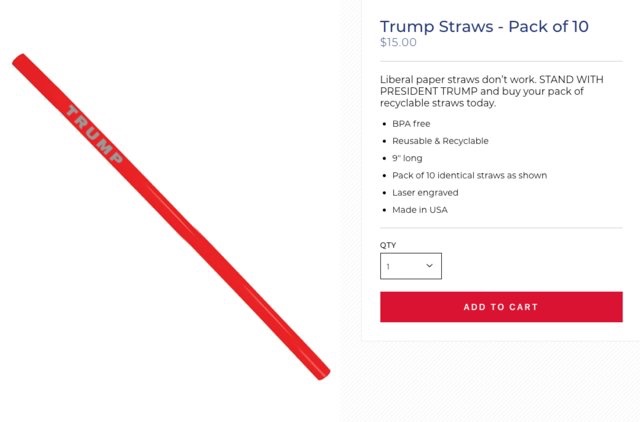
Now before I go on, this article references something that was sent to me about President Trump’s campaign, but I am not trying to write a political post. This is simply an observation of how people are are being set against one another because of change.

We have scientific proof that there is more carbon in the air today than there was 50 years ago (which causes the Earth to retain more heat). We have documented, scientific evidence that our oceans are becoming cesspits overflowing with plastic and other waste which is harmful to the creatures that inhabit them.

So the culture is experiencing a change: companies all over are adding links to their “About Us” sections to show their customers how they interact with the environment. Start-ups and entrepreneurs are creating delivery boxes to help people go greener. Local businesses are trying to source their goods from local people with minimal or no packaging. And individual Americans (and humans in general) are making efforts to lower their footprint by using less plastic or finding alternative ways to commute.

Then you have something like this:

You can find more information about the item here if you want to look more into it.

A small idea like a biodegradable paper straw, innocent of anything except trying to save a turtle here or there, is politicized and given the label of “liberal”.

What purpose does this serve except to divide us Americans even further? Why take an idea like the paper straw, something that harms no one and has long-term benefits for everyone, and use it as fuel on a fire to incense one group of citizens against another?

Change is happening; change is inevitable and has been occurring as long as there have been people. And people have fought against change as long as we have existed.

Yet change is still happening. People are attempting to think long-term about some of the behaviors we have practiced over the past century and are trying to do something about it. We can either accept it, or attempt to fix it later when it’s too late to prevent it. Either way, change will occur.

In the meantime, we must stop politicizing EVERYTHING and making every single issue in our culture an issue of belief, of us pitted against them. And we must stop letting people drive wedges between us regardless of our own thoughts and beliefs. We must be able to have a civil discourse about issues that affect the future – perhaps not your future, but that of your children and grandchildren.

Change is going to happen whether we want it or not, but we can affect the sort of change that we want if we can only stop working against each other and ask questions, then listen

In the meantime, I will continue to take my own cup to restaurants and politely refuse plastic straws when offered. If you wish to ask me about it, I would be delighted to have a civil discussion with you.

Take the pressure off

Seth Godin said something in his podcast “Pizza & Sushi, Joy and Mediocrity” that really resonated with me today. One of the listeners asked him a question about whether he should find a job while he pursues his art or just dive straight into creating. I’m paraphrasing his answer here, but in essence his response was that sometimes less-than-ideal work allows you to create your art unhindered.

Let’s think about this for a moment: what if the only source of income, of survival that you had was your reliance on producing your art, of developing your craft? How much pressure would that put on your shoulders? How stressful would your art, that thing you love to do so much, become if it was the only difference between feeding your family and going to bed hungry? How generous and authentic would your art be if it was the only thing keeping you from losing your home?

There are plenty of creatives that I know who would be just fine eating beans and rice and living in a van. For some of them, that is the life. But for me, with debt to pay off, a roof to keep overhead, and a wife who leans on me (and I on her) for financial support, it is too much stress.

So get a job.

Do something, anything, to keep the wolf away from the door. Drive for Uber or Lyft; deliver pizzas; wait tables; work in retail. It will not be glamorous, and it might be boring and tedious to the creative mind. But it isn’t forever, especially if you start down a path to your dream job.

If you can take the financial burden off of your art, whether it is visual art, speaking, music, theater, or writing, it will be that much easier for you to produce meaningful work. You’ll also learn a lot of useful skills you might not otherwise gain working on your art, such as leadership, communication, planning, business skills, and countless others. You also will make a lot of contacts with other people who might someday benefit from your art.

More than anything else, you’ll worry less about survival and focus more on creating and making the world a better place for us all to live.

Again, I am not advocating working in something you don’t want to do forever; I certainly don’t plan on doing that. So get to work, make some money, and make your art without worrying about where your next meal will come from.

If you would like to start down the path to your dream job or start your own business, I recommend going through the 48 Days to the Work You Love Seminar and joining the 48 Days Eagles group, a community of creative, like-minded individuals supporting each other in finding and creating work that is meaningful, purposeful, and profitable.