Reaping excellence

I came across a little maxim yesterday that got my mind going, so I wanted to share.

“Sow a thought, reap an action; sow an action, reap a habit; sow a habit, reap a character; sow a character, reap a destiny.”

There is also a quote that pairs nicely with this maxim:

“We are what we repeatedly do. Excellence, then, is not an act, but a habit.

– Aristotle

What is it that you repeatedly want to do? If you did it often enough, do you believe you would truly develop excellence in that habit?

Perhaps you should ask a related question: if what you are doing now isn’t something in which you want to develop excellence, what do you repeatedly think about? Once you have an idea in mind, you can then apply it to the maxim.

For example, let’s say that a person is constantly thinking about art, but only thinking, never creating any herself. We’ll start there.

“Sow a thought…” she is constantly thinking about and admiring the artistic work of others.

“Reap an action…” the aspiring artist decides to take drawing lessons and vows to draw a little bit every day, no matter how small it might be.

“Sow an action…” drawing each and everyday becomes second nature.

“Reap a habit…” she no longer even thinks about if she will draw today; the only thought on her mind is what to draw. A habit is developed.

“Sow a habit…” drawing has become second-nature to her now. It’s as habitual as brushing her teeth or eating.

“Reap a character…” she has become, intentionally or not, an artist. It is now who she is, a fundamental feature of her character. She is now one of the people she once admired.

“Sow a character…” you can see the rest. Her destiny is whatever she decides to make it at this point. She has already developed the skills and habits needed to carry her far down the path of artistic success, whatever she decides that looks like for her. Perhaps it is a career in art, or perhaps it is just a wonderfully enjoyable hobby. But it is now who she is.

So, what is it about which you constantly think? How can you turn those thoughts into action, and then practice those actions often enough until habits form and a certain character you want develops?

“We are what we repeatedly do…”

Decide and act on that in which you strive to be excellent.
Luck happens

Sometimes, it comes down to sheer luck.

You’re sitting in the right booth, reading the right book, and someone notices.

She comes over and asks what it is that you do; you proceed to tell her how you help people. Eyes light up, connections are made, recommendations are given to you about who else you can help with your craft.

What a lucky meeting!

And yet…if I hadn’t been working so diligently for months on my new endeavors, this lucky encounter never would have occurred. Had I been sitting in the booth watching Netflix, she would have walked right past me.

So yeah, luck happens, but it still pays to prepare and practice your craft so that you are ready when the lucky moments occur.

I’ll take slow, persistent effort sheer luck any day.

Solve interesting problems

One of my passions, and pain points, is the state of modern education in the US. Everyone knows that it’s not working well: children are leaving schools, both public and college-level, less prepared for careers than ever before.

The reason is simple: schools are operating on outdated modes of education in which students are taught to sit still, obey, memorize lots of information, regurgitate it on a test, and then promptly forget everything they just memorized.

The creative ones, the wiggle worms, speakers, artists, drawers, engineers – they are all stifled in the name of obedience. Yes, I realize that to have 35 kids in a classroom, you can’t have them all doing their own weird and wacky things, but answer this question for me:

When was the last time you got paid to regurgitate information on a standardized test?

What is school for? Seth Godin asks this question often. I believe the answer should be to educate and prepare children and young adults to create, innovate, contribute, and solve interesting problems for society. It is not about asking, “Will this be on the test?”

None of the “tests” you face in real life are multiple choice, with answers you found in a textbook and memorized only to forget them a hour later. When an irate customer is standing in front of you, there is no clear, right answer. There is an answer that might make things better or not; it’s up to you to figure that out.

When a new idea is dropped on your desk by a leader, you have to collaborate with your team, find and utilize resources, synthesize information, and come up with a solution for the project. How is memorizing a bunch of unrelated information that is kept separate from other information in the spirit of division called “subjects” helpful in this regard?

Why not instead teach people how to solve interesting problems? Teach how to find answers to questions on their own, how to create connections between information across varying fields and periods of time, how to think, and more importantly, how to learn when formal education stops.

Greg McKeown triggered this train of thought for me in his book Essentialism when he wrote the following:

“What if schools eliminated busywork and replaced it with important projects that made a difference to the whole community? What if all students had time to think about their highest contribution to their future so that when they left high school they were not just starting on the race to nowhere?”

Greg McKeown, Essentialism

The Industrial Age in the United States has ended; factory work is quickly becoming a thing of the past, as much as parts of our culture want to hang on to it. Our schools cannot continue teaching in the same mold as as they used to, when everyone eventually went to work on an assembly line. Employers no longer need cogs in machines; they need creative thinkers and problem-solvers equipped with the skills of communication, collaboration, analysis, leadership, and learning (yes, it is a skill).

In short, we need to teach people how to solve interesting problems.

It may not feel like much

It may not feel like much when it’s all you can physically do.

I’m speaking, of course, on producing, practicing, or creating when there just isn’t enough time in the day to get much of anything done. On those days, all you can do is all you can do.

And all you can do is good enough.

Write a few sentences instead of fretting over not writing a chapter.

Practice your instrument for 15 or 20 minutes instead of saying, “screw it” because you didn’t master an entire piece today.

Draw a doodle comic, not some magnificent portrait.

Go for a 10 minute walk rather than beating yourself up over the fact that you didn’t spend an hour at the gym.

Incremental improvement. Streaks. Baby steps. 5 minutes here; another 8 minutes there. This is how progress is made.

Change your mindset; realize that you are building mental fortitude and creating habits when you do just a little something each day rather than adopting an all-or-nothing mindset.

You might feel like you suck. You don’t. You’re doing a heck of a lot better than the person that decided not to show up today.

And if you can’t do anything at all, wipe the slate clean and show up again tomorrow.

New toys

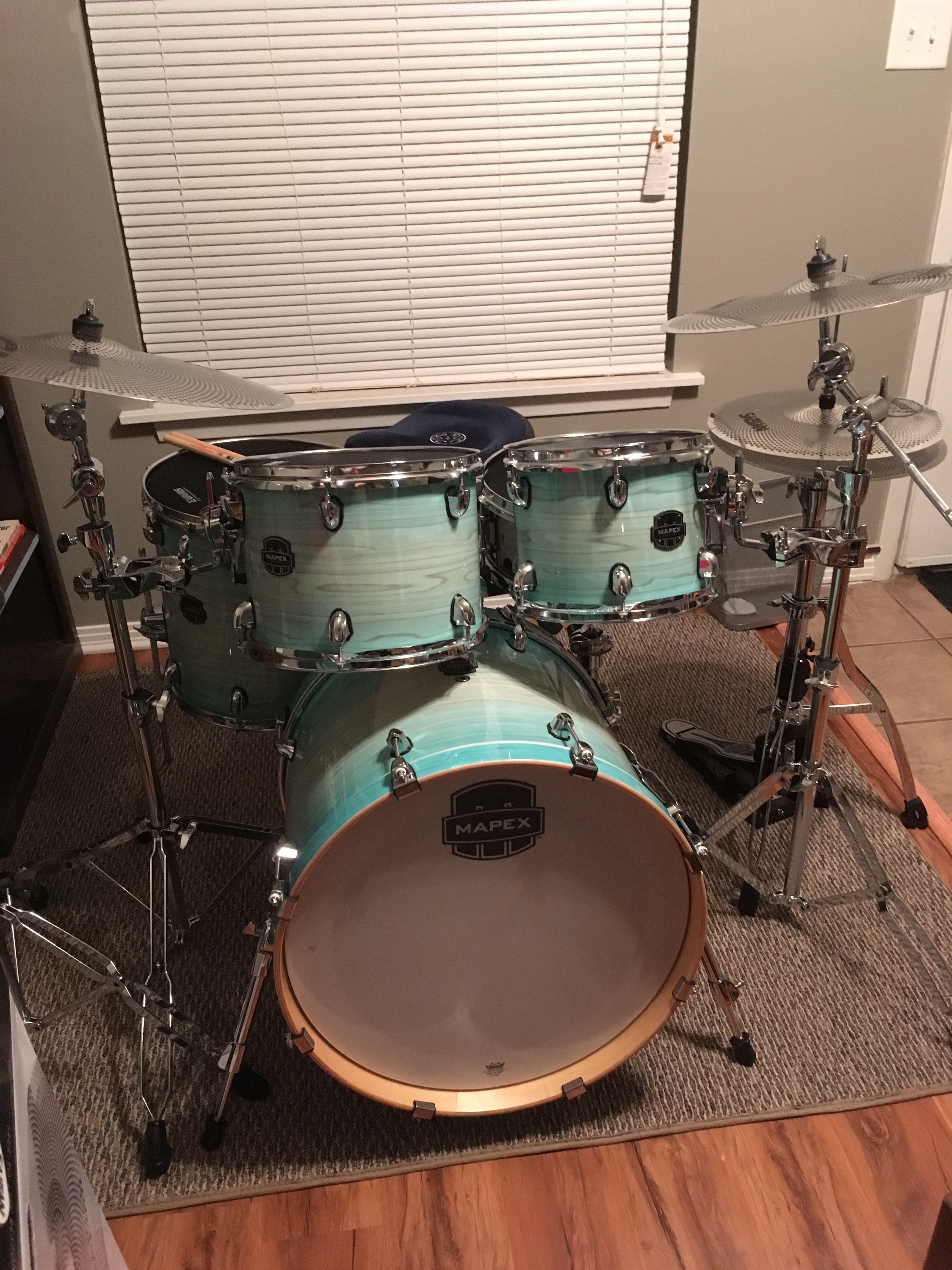
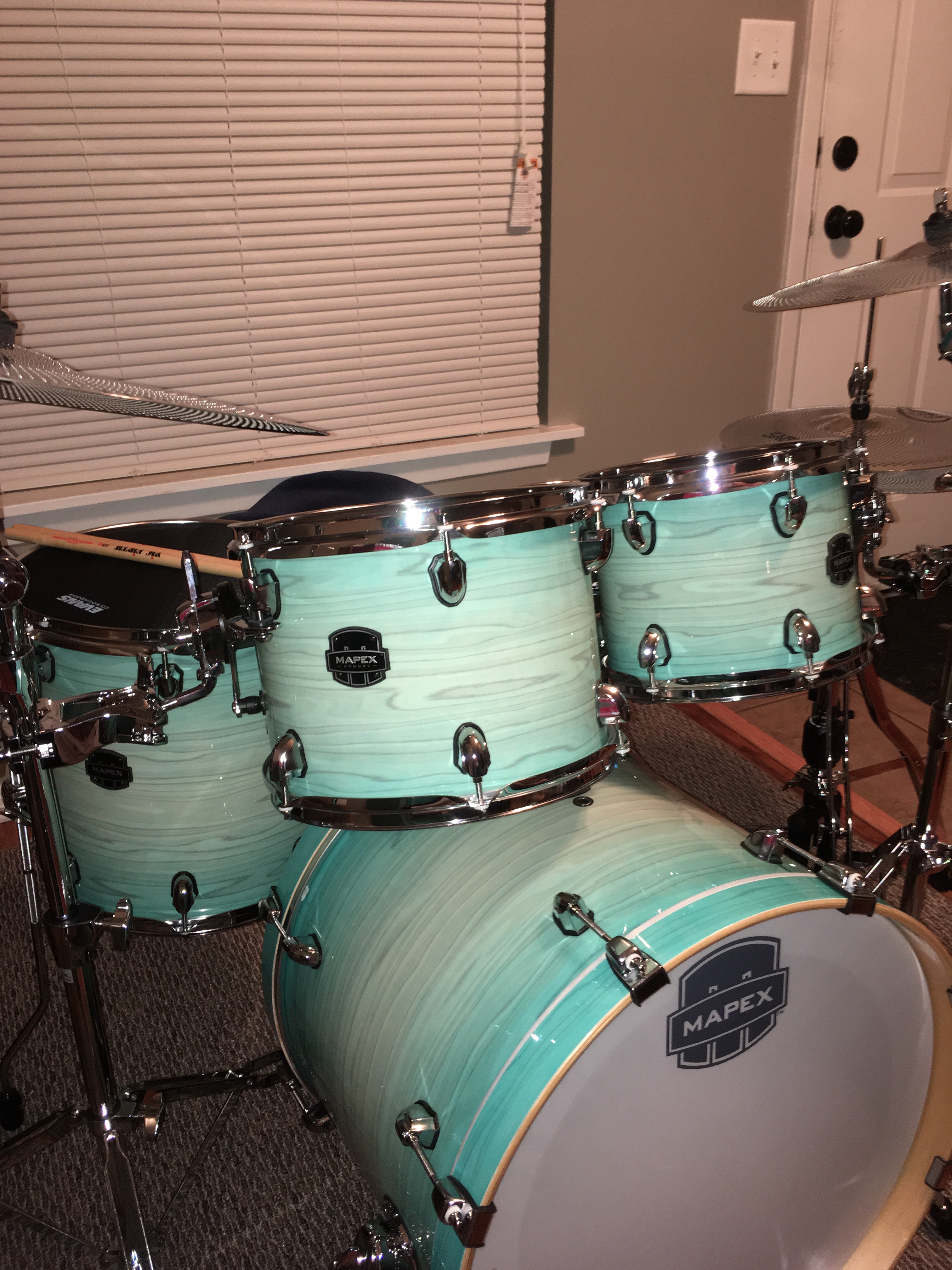
There is nothing quite like coming home and opening new toys. Even when you’re almost 30.

My new practice and teaching kit arrived today, and I could not be more thrilled.

You can’t always do what you want.

Sometimes all of your available time is taken up by getting things done that have nothing to do with your passion, your dream job, or anything else you are pursuing

The laundry has to be done; the home can’t be left unclean and disheveled; dinner must be cooked. Every artist, writer, musician, every genius in every field…they still have to eat, sleep, and live.

Do what must be done so that you can later do what you want done.

Progress

Sometimes the progress you get isn’t necessarily the progress you wanted or expected.

You might be trying to lose inches around your waist, only to get to measurement day and discover that result didn’t happen, but your shoulders, arms, and legs grew slightly bigger and more muscular.

Progress.

A really challenging exercise or song being learned on the guitar doesn’t sound any better, but you notice your fingers don’t hurt anymore from the biting of the strings, and your wrist technique has improved.

Progress.

Progress is change in a forward direction. Look for it everywhere, not just in the one thing on which you happen to be focusing.

Progress: notice it everywhere, celebrate it often, and keep trying to create it.

Progress.

Resources for you

Today I felt like sharing some of the magnificent people and resources that have helped me along my journey to this point in life. I may turn this into its own page at some point as I am sure the list will grow.

Dave Ramsey – what can I say? He really hit me over the head with how stupid I had been for close to a decade. If you want to know how to handle your money and get on the path to becoming wealthy, his book The Total Money Makeover is a must-read. Dave also first planted in my mind the idea that I should find something meaningful in my life to do for work which led me to the person that I will now offer up as my next recommendation.

Dan Miller – writer, speaker, coach, entrepreneur, mentor, Dan is one of the kindest and most giving individuals I’ve ever known (and we’ve never even met in person). He truly inspired me to look inward to find work that is meaningful, purposeful, and profitable. 48 Days to the Work You Love is his masterpiece; it will completely change the way you view work and will put you on the path to doing what you love for a living. He also has the 48 Days Eagles community, an incredible group of people who are supporting each other in stepping out on their own as entrepreneurs. His book recommendations and his idea of investing 3% of my income back into myself led me to discover some of the most powerful learning I have ever experienced as taught by…

Seth Godin – quite possibly one of the most influential people I’ve ever encountered, Seth is a serial entrepreneur (as are Dan and Dave), a master of marketing, storytelling, business, leadership, and one of the greatest teachers from whom I have ever had the privilege to learn. His blog is brilliant, to say the least, and his many books and courses will change your life. That is not an exaggeration. His podcast is one of the most entertaining, thought-provoking, and enjoyable I have ever heard. I have never failed to learn something when I hear Seth speak. As an aside, he is also the reason I decided to get out of my own way and start writing and publishing my ideas.

I hope these resources will benefit you in some way. I will attempt to update them as I have more time and as I continue to put together my “best of…” lists.

Prepare the way

I have been guilty many times in my life of sitting and waiting for things to happen for me. It is only recently, in the last couple of years, that I decided to be proactive and seek out opportunities for myself. 

How many of us have sat with the mindset of, “When [some random opportunity] happens, then I will start to learn/practice/develop [the skill needed to accomplish said opportunity]?” I will bravely raise my hand. Great opportunity may come to those who wait, but I think we’d all be better off if we started preparing for things while we wait. 

“Success occurs when opportunity meets preparation.”

– Zig Ziglar, See You at the Top

We cannot sit on the couch, twiddling our thumbs, waiting for the phone to ring with that new job offer. No one is thinking to themselves that they should call you with a gig or a show unless you have proven yourself by developing a following, building relationships, developing your skills, and making a ruckus in the world already. This idea is very similar to my previous blog post “Take your eye off the prize” in that sometimes you just have to work, learn, create, and do without thought of reward, without letting the notion of “What’s in it for me?” hold you back.

Be persistent, find out what you need to learn and do to get where you want to be, and start doing it. The opportunities will come, but you have to be prepared when they arrive. If you get an offer for the NBA, and you’ve been sitting naked on a bean bag chair eating Cheetos for 3 months, you aren’t prepared and will therefore fail in your opportunity.

If you want a job in marketing, you are going to have to learn it on your own time and start doing marketing, maybe for a friend while you hold down another job to pay the bills. If you want to make a living as an artist or a graphic designer, you are going to have to start doing work and putting it out into the world whether or not you get paid for it. People have to see you and know you before they will want you. You will have to sell yourself as an expert in what you do and that means you have to do the work, build a following, make noise in your little area of the world.

You are going to fail, probably more than once. That’s fine, just start another project, call another business, reach out to another person who might need your expertise. Just keep working.

“When you work and develop your skills and talents, your day will come…[and] if your day never came, you would still be the big winner. Inside you will be the knowledge that you’re doing your best with what you have.”

– Zig Ziglar, See You at the Top

I’m going to keep preparing myself so that I am ready when opportunity comes knocking. What about you?