Make an exercise out of the hard parts

Something I learned to do as a musician was the idea of “deliberate practice.”

What this meant for me—like when I was learning a concert snare drum solo—was to take individual measures or a small group of measures, and turn them into exercises.

Examples:

  • A difficult passage that had a hard dynamic transition or sudden change
  • A complicated rhythm I needed to drill before I could play it

I would take these passages, slow them down, get them perfect, and work my way up to “normal” playing speed. Then I would add back in the music that surrounded these difficult sections.

This is how I was able to learn difficult music.

There’s a lesson to be learned here for every aspect of life.

Doing the things you can already do easily won’t make you any better at anything.

You’d got to practice the hard parts until you can get them right.

For more daily musings like this, subscribe below:

Marketable skills

The Music School at University of North Texas has a list of what they call “marketable” skills that each of their degree plans develop. Skills include:

  • Performance communication
  • Excellent memory capability
  • Command of music computer programs
  • Pattern understanding
  • Improvisation and analytical capabilities

Now, as a former full-time musician myself and current corporate employee, I can safely say…

No one has ever paid me for any of this. Which is the supposed to be the definition of “marketable skills”—things worth paying for.

If you take Seth Godin’s definition of marketing to heart (which I do), then marketing means creating change in another person. And to take it a step further, it means creating a change in them that also prompts them to “pay” for your skills in some way.

You will then see that none of those skills do anything like that. However, they may give you the ability to accomplish that goal.

Those skills might allow you to:

  • Move another person so deeply that they become a raving fan of your music
  • Leave someone in awe of your stage presence and artistry (so they’ll come to more concerts and buy your albums)
  • Create a piece of music so astounding that someone tells 10 of their friends (and they tell 10 more…and on and on it goes)
  • Hypnotize an audience with intricate rhythms and on-the-spot creations so outrageous they beg to “know the trick”

All of these outcomes from your skill development lead to similar results: obsessed fans who tell other people and support your art because they can’t live without you.

The skills aren’t marketable.

But what you create with them and put into the world is.

If you want more daily musings like this, subscribe below:

Art hardens you against feedback

I spent years of my life being criticized (often brutally) by teachers and peers during my time as a musician.

It hurt—a lot. For a while, anyway.

Eventually you realize something:

It’s not about you. It’s about the work.

Even when the comments seem personal or exceedingly harsh.

You realize there’s this other thing you’re trying to bring into the world (in my case, a piece of music). And there are ways to do it that are creative and wonderful… And ways to do it that are just plain wrong.

At some point, the musician realizes that the people they’re making art with all have the same goal: to bring to life a beautiful piece of music in the way it needs to be.

And when you’re all working toward that shared goal, it makes the feedback easier to bear. You learn to separate the self from the art.

It’s not about you—it’s about the work.

For more daily musings like this, subscribe below:

Everything is a tool

When I was in marketing, I defined myself as a marketer. But I hated that title because of what people expected of me (sleaziness). And because of the jobs that were available—they contrasted with the type of marketing I wanted to do. 

When I was a musician, I defined myself as much. And I burned out. I got tired of the expectations placed on me because of how other people viewed the music world and careers within it.

As I’ve put some space between me and these fields, I’ve had a revelation.

They are just tools.

Marketing is a tool to make change happen. Music is a tool to create emotion in, and connection with, others. 

My fellows in both fields didn’t see it that way. Marketers told me that social media and spamming were the only ways to make things happen in business. 

Musicians told me, “you must focus only on percussion. If you try to play other instruments, you’ll be mediocre at best. No piano, guitar, or voice lessons for you.”

And I believed them. And missed out on some wonderful experiences in the process. And I eventually quit both.

The lesson here is to adopt the “tool” approach, so you see things for what they are. That way, they don’t become your identity. 

I know now that I focused on percussion in college because that area of music was a tool for me to use in that moment of life. To express what was inside of me at the time. It wasn’t who I was. 

And marketing is just a tool, like a hammer. You don’t have to “become” a marketer. You can simply use it as a means to make a change you want to see in the world. 

Separate yourself from the tools you use. 

If it’s worth doing, it’s worth doing poorly

You’ve been told your entire life you should do things well.

Perfectly.

Like an expert.

And if you can’t do it well, you might as well not even bother to do it at all.

That’s wrong. You can’t instantly be great at doing ANYTHING.

The only place to start is at the level we currently are.

The always relevant, and sometimes irreverent, Zig Ziglar said one of my favorite quotes of all time:

“If it’s worth doing, it’s worth doing poorly.”

What did he mean?

Simple: anything worthwhile requires that we start as a beginner.

Golfing, tennis, writing, painting, jazz improv… It doesn’t matter what it is.

If it’s worth pursuing, you owe it to yourself to be bad at it. And then get better at it every single day.

He uses the example of someone learning to play golf: if everyone could join the PGA Masters tour after a couple of lessons with the local pro, there’s no reason to do it.

Give yourself time to do things badly…

On the way to doing them well.

Subscribe

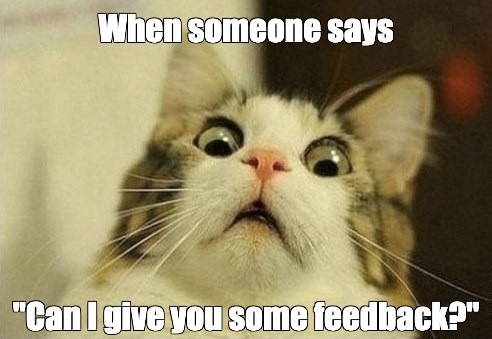
I hate getting feedback… Don’t you?

I hate getting feedback…

It hurts. It stings. It can crush your soul—especially if you think you’re already kicking butt. 

But it’s also the best way to figure out where you can grow to hit your goals.

That’s why I actively seek it out in everything I do. 

Musicians Are Brutal

This practice came from my time in university. I was studying to be (and working as) a professional musician. 

Every week, I had multiple lessons, rehearsals, and performances. And after each one, my teachers, bandmates, and mentors had feedback for me.

It was brutal (to put it mildly). But it made me a better musician. 

These people were better than me, more experienced, and knew what needed to be done to succeed. 

I’ve carried this practice with me into every job I’ve had. It’s made me a better leader, writer, and marketer.

“A mark of a competent adult is their ability to accept feedback. The mark of a child is their expectation of praise without merit.”

—Donald Miller, Business Made Simple, p. 15

Surround yourself with people who want you to improve and succeed in your roles. Actively seek out feedback. 

The more you do it, the better you’ll get. But I can’t promise it won’t sting.

How do you feel about feedback? Are you actively seeking it out?

Get daily insights on business, personal growth, and creativity.

Subscribe today.

Artist-of-All-Arts

I don’t think I’ve ever met a single artist who was not a jack-of-all-trades in the arts and humanities–an “artist-of-all-arts” if you will.

It seems every artist is not only attracted to multiple forms of art but develops skill in multiple areas as well.

My late friend Michael McNally was a brilliant cellist and a gifted, passionate actor. My friend Lindsey is a skilled artist, photographer, designer, and also a singer with a beautiful voice. (You can see some of her work here and here.) Another friend of mine, Alden, is one of the best photographers I know as well as a talented artist and connoisseur of music.

It seems to me that anyone attracted to the arts and humanities is attracted to all of them. It’s as if once the right brain is fully engaged, it looks for beauty everywhere. 

Such is the life of an artist, and why, I suppose we can seem to others to be so scattered in our work and interests–and perhaps feel that way about ourselves. 

An artist is a lover of beauty no matter its form, so we chase it everywhere.

What about you? What forms of art are you attracted to or skilled in? Let me know in comments below!

Want more inspiration to pursue your creativity? Subscribe below!

School can ruin a passion

It amazes me how much I used to enjoy certain things until I went to college. School ruined a lot of it for me.

Let me explain:

I have always had a passion for music and history. I loved them both so much I couldn’t decide between the two when I went to college, so I double-majored. I did all of my research on different historical periods and figures in music.

Interestingly enough I hated every second of it.

When I graduated, I quit researching history, and I quit researching music. I think in the back of my mind, the thought was if that’s what I was gonna have to do for a living, I wanted nothing to do with it.

I graduated five years ago and have been struggling to find my fit in a career ever since. I have had a lot of time to think, and I believe I’ve figured out the problem.

I didn’t hate the work: I hated having my hands tied.

College assignments are unrealistic

“You can’t write about or research anything you want – you are required to tie it back to this particular point and make an argument about how it conforms to this idea.”

“It doesn’t matter that your subject has very little source material – you have to make it 30 pages (rather than making it as long as it needs to be and no longer).”

How many of you went into college to study something you had a deep passion for, only to come out the other end hating what you once loved?

I don’t think you suddenly realized you hated the subject: I think you hated being boxed into unrealistic parameters and expectations.

Nowadays, if you want to do research on a topic outside of school, you can, and you can make it as long or as short as it needs to be. Also, it can be about whatever you want it to be.

Do you want to turn it into a podcast instead of writing? GO FOR IT! Do you want to interview people and draw conclusions from their ideas? Do that.

As long as you aren’t making stuff up and deliberately lying to the rest of the world, you can do whatever it is you want to do in whatever subject you choose.

You don’t hate learning – you hate school

You will never have your hands tied, parameters set, or asinine expectations to meet like you had in school. You don’t hate your subject, and you don’t hate the work you thought you wanted to do. You hated being boxed in, required to do things that bored you to death or robbed you of the joy of what you once loved.

Don’t throw the baby out with the bathwater. If there was something you used to love doing, something about which you were insanely curious, I encourage you to pick it up again.

I don’t think you lost your love for it – I think you just got the wrong idea of what you were expected to do in the real world in your field of study.

Join 904 other subscribers

How much is enough?

I asked myself this question a few days ago and elaborated on it in my journal. Specifically, I was asking myself, “How much money do I need to make to feel like I am making enough?”

Honestly, making more money right now would not bring me any more happiness. It’s not money that my conscience is crying out to gain: it is meaning, purpose, the ability to use my God-given talents and strengths to serve and help other people.

The income I make now is actually more than enough to satisfy my needs at this moment. So why am I not doing something that fills my cup?

Have you ever asked yourself what enough is? If you made $40,000 a year, could you live on that if it meant you were doing something you cared about so much and so thoroughly enjoyed you couldn’t dream of doing anything else?

My answer is yes. Yours may be different. At a certain point, making more money is just making more money. Studies tend to cap the increase in happiness that comes from money at about $75,000.

So what goal, idea, or passion is the quest for more money preventing you from pursuing?

Are you, perhaps, an artist who wants to paint? A musician who wants to play and teach? Or are you, like me, a teacher who simply wants to teach?

Ask yourself this question: could you, honestly, make a living knowing the starting or average income that job in your head receives? Could you survive, or even thrive, if it meant you were doing what you felt passionately called to do?

The irony is most of the time when you quit pursuing money and start pursuing passion in the service of others, more money than you imagined comes into your life.

How much is enough? Could you make it doing what you love?

Join 904 other subscribers

One hundred

There is something magical about the number 100. Nothing that comes before it really has the same feeling of meaning associated with it.

Think of the first time you had $100 in your hand. Today, that really doesn’t stretch very far, but do you remember the feeling? It was powerful, a feeling of wealth, of richness, of feeling as though you could do anything and buy anything you wanted.

Or what about Napoleon’s 100 Days? He escaped from the island of Elba, rallied 1,500 men, marched on Paris, and became emperor once more. Of course, he was defeated at Waterloo and kicked out again, but he still had those hundred days.

Or maybe working out? Have you ever done 100 push-ups or pull-ups? Have you ever put 100 pounds on a bar and lifted it for the firs time?

United States has exactly 100 senators. And the other important thing to many Americans: there are 100 yards between end-zones on a football field.

100ºF is extremely hot for humans; 100ºC will boil water into vapor.

100% is total, complete, a perfect score.

Most great lists of music, actors, artists, influential people, and books are lists of 100.

There is truly something special about one hundred.

Join 904 other subscribers