Perfectionism hinders progress

We all have a tendency to strive for perfection. But it’s often a trap that keeps us from reaping any rewards at all.

Case in point:

I used to write morning pages each day to clear my mental clutter and get ideas flowing for the day. And, like their creator, Julia Cameron prescribed, I did them longhand on 8.5″ x 11″ sheets of paper first thing upon waking.

But doing it this way took me nearly an hour each morning. Not a problem when I was laid off and unemployed, but quite difficult on a regular, full day when I also needed to cook breakfast, help my wife get ready for work at 5 am, and squeeze in a workout.

That was hard enough, but life made it harder.

After I left my two-week ICU stay in 2020 and went home to recover from COVID-19, I found myself dealing with horrible inflammatory issues all throughout my body, including my hands and wrists. This made it difficult, if not impossible, to do much writing by hand.

So I stopped writing morning pages. And as a result, I lost all the benefits of that wonderful mental decluttering each morning and the ease with which new ideas flowed.

I tried here and there to dive back into morning pages—the right way, by hand—for years, but never managed more than a few days before I quit. Frustration, or pain, stopped me from continuing.

But in the back of my mind, I always knew there was a simple solution to this: just type your morning pages out on your computer! Rather than mangle my hands or suffer through a slow hour of writing I didn’t have, I could just type them.

But I resisted, because it wasn’t the right way to do morning pages. Julia was very explicit.

I let perfection prevent me from doing anything at all, when something, however imperfect, would have been better than nothing. By refusing to do them any way other than “perfectly,” I was missing out on 100% of the benefits of the process itself.

Doing no morning pages guaranteed that I got 0% of the benefits of morning pages—no mental declutter and no new ideas to work with during the day.

Doing anything, however imperfectly, had to be better than nothing, right? 25% better? 50%?

In fact, it would have been infinitely better! Because a 1% benefit is infinitely better than a 0% benefit.

Interestingly, I found that writing out my pages by typing them up on my computer not only let me do them on days when time was limited and with no physical pain, but I still got all the benefits that I received when writing them by hand.

I delayed doing a less-than-perfect version of something and missed out on all the benefits of that something rather than doing a “good enough” version of it and getting at least some of the benefits.

We’re all guilty of this.

We do it with our health: if we can’t do the extreme workout perfectly, we just don’t do anything at all. But going for a 15-minute walk is literally infinitely better than vegging out on the couch.

If we can’t stick to our meal plan perfectly (and no one ever can), we say “f–k it,” and eat an entire 18″ pizza. But eating 3 slices of pizza with a little salad is infinitely better than binge eating out of frustration.

We do it with our hobbies: if we can’t set aside two hours to practice our guitar, we let it languish on the stand in the corner. But spending 15 minutes learning a small section of a song is infinitely better than doing nothing.

This all-or-nothing mindset is all too common and the enemy of progress in everything we do. We’re trained in school to live by an A+ mindset: how far away am I from 100%?

But we’d be so much better off if we reversed it and asked, “how far away from 0% am I, and what decision would let me move a notch or two higher?”

I use this tactic all the time with my coaching clients when trying to make behavior changes stick, and it works wonders.

The next time you find yourself battling perfectionism, stop and take a breath. Then ask yourself, “What is 0% on this thing I’m trying to do?” Then figure out what a tiny notch higher on that scale is for you and do that.

Those little points, day after day, add up.

Atomic writing

Atomic Habits by James Clear consistently tops every bestseller list.

And for good reason: if you follow the ideas, you’ll improve your habits. Improve your habits, and you improve your days. Improve your days, and you improve your life.

What’s the saying? “Sow a thought and you reap an action; sow an act and you reap a habit; sow a habit and you reap a character; sow a character and you reap a destiny.”

Emerson definitely said it better than I. But it means the same thing: your daily habits lead to your lasting legacy.

Which brings me to an idea I presented to someone the other day.

A friend told me he wanted to write. And he’d considered going the “Stephen King” route, writing 2,000 words a day, but he seemed daunted by that prospect.

I agreed. That’s a lot to commit to at the beginning. So I suggested he go the Atomic Habits route instead.

What’s the smallest version of that habit he could reasonably commit to?

My idea: write one sentence every day. Then don’t break the streak.

I find it hard to believe that anyone reading this can’t come up with at least one original thought every day.

It doesn’t have to be brilliant. In fact, I guarantee that 50% of your ideas will be “below average.” But so what? Half my blog posts are below average—that’s the definition!

It doesn’t have to be brilliant—it just has to exist! Do that for 30 days, and the 31st sentence will be infinitely better than the 1st one.

A writer writes. So be a writer and start writing!

The end vs. the beginning

One of the essential habits in Stephen Covey’s 7 Habits of Highly Effective People is #2:

“Begin with the end in mind.”

The premise behind this habit is that before starting something—a career, a hobby, a marriage, a life—you should project yourself into the future.

By doing so, whether three years or five (or even all the way to your 80th birthday), you can lay out a map for how you want to live your life or complete a project.

I love this habit, and the idea behind it, but it’s also the only habit out of the seven with which I struggle. Why?

Because it’s overwhelming! Sometimes I don’t even know what I want life to look like tomorrow, let alone in 47 years. (God, is 80 really that close?)

It’s also overwhelming because at times, the daunting idea I have in my head seems so impossible that I become paralyzed, unable to do anything.

I know I’m not the only one.

The negative thoughts creep in with a seeming inability to solve them.

  • I can’t uproot my family while I pursue a master’s degree—it’s too many years out of work!
  • I can’t possibly go to medical school—it’ll practically leave my wife working as a single mom!
  • I can’t throw all my energy into a marketing business—we could be left destitute and homeless!
  • I can’t coach people to improve their health—I’m still trying to do that for myself!

The solution?

Start.

Decide on the very next small thing you can actually do.

Julia Cameron calls this “filling the form”—taking the next small step instead of leaping ahead to some giant thing you might not ready for.

Using the examples from above, you can…

  • Put in an application to see if you even get accepted to school
  • Take a biology course to get your first prerequisite needed to attend medical school
  • Call one business in your area to see if they need a freelance marketing expert to help them
  • Help one person you know develop one new healthy habit

It’s the oft-cited cliché that a journey of a thousand miles begins with a single step.

You have to put a destination into the GPS. But then you must focus on the directions and look for the next turn.

If the end in mind is too big to tackle, focus instead on the tiniest first step.

For more daily musings like this, subscribe below:

Improvement is ugly

One of my favorite quotes from Julia Cameron’s The Artist’s Way is this:

“It is impossible to get better and look good a the same time.”

Often, how we think others view us stands in the way of making progress. 

If we’re worried about what others think, we’ll pretend to have expertise we don’t—and often make ourselves the fool we were so worried of being. 

Or we’ll fall to braggadocio instead of humility when faced with someone who can actually help us improve.

She continues:

“Give yourself permission to be a beginner. By being willing to be a bad artist, you have a chance to be an artist, and perhaps, over time, a very good one.”

Keep a beginner’s mind as much as possible. You’ll go much farther and faster if you do.

Have mercy on the critics

Julia Cameron writes that every critic she’s ever met was, in reality, a blocked artist who couldn’t bring him- or herself to create art of their own…

So they tear down other people’s work because that’s what’s easier.

I remind you of that to say this: absolutely, let’s hear it for all the amazing and brave creators…

But also have mercy on the critics and encourage them to create something of their own.

(Also, make sure you go through The Artist’s Way at least once in your life… It’s truly life-changing for creators of all sorts).

Do the next right thing

Often we get so caught up in the future that it paralyzes us.

Or we feel so overwhelmed by everything we have to do that we accomplish nothing. Not the stuff we have to do… or that we want to do.

Our task lists, calendars, projects, dreams, and goals seem to cause more angst than hope. So we veg out in front of the television. Or mindlessly scroll on our phones.

Anything to avoid facing what we need to do.

The solution is simple: do the next right thing.

I’ve heard this phrase from both Julia Cameron and Michael Hyatt.

It’s a simple idea with wildly beneficial results. Rather than staying paralyzed and accomplishing nothing, the next right thing creates a tiny step forward.

It doesn’t feel like much, but then it’s not supposed to.

One step forward each day adds up to 365 tiny steps over a year. That’s a lot of progress.

When you’re feeling overwhelmed, ask yourself this question:

“What’s the smallest, easiest next step I can take?”

Then do that and only that. Afterwards you can reevaluate and decide whether to take another step or stop and chill out.

But at least you’ve taken that one step. And that’s one more than you would have otherwise.

Subscribe today for insights, resources, and inspiration delivered straight to your inbox!

Are You a Professional Artist?

You have a problem with perfection.

You don’t have writer’s block or artist’s block; you’re worried what you create isn’t very good. 

But once you stop worrying about whether something is good or bad, you can get to the business of creating. 

Professionals

To be a professional is to show up and do your work regardless of how you feel. To be a professional artist, then, is to create works of art every day no matter what.

If you’re trying to make a living doing something artistic or creative, you’re a professional. Or at least, you should act like one. 

Even if you don’t feel that you have any good ideas. Even if you’re “just an artist.”

An amateur artist only creates when he feels like it, or when the muse speaks to him. Or, God forbid, after getting inebriated so he can “loosen up” and go with the flow. 

If You Build It, They Will Come…

Remember Field of Dreams? Being an artist is a lot like Kevin Costner building that baseball field.

You don’t wait for the muse to show up before you start creating. If you start creating, the Muse shows up like a curious child. She asks “Ooooo! What’s that? Can I help? Can I do that with you?” 

Waiting for a child to do something you want her to do doesn’t work. But if you just start doing it, she’ll immediately perk up and join you because she wants to be a part of your world. The mythical “Muse” acts the same way.

Some days you might have incredible days full of flow and creative ideas, but I’ve found those to be few and far between. Creation comes before inspiration almost every day. It’s why I show up to my morning pages each day after I wake. 

I don’t write them because I feel inspired: I write them to BECOME inspired. That’s what a professional artist does–indeed, that’s what any professional does.

Act Like a Professional

A lawyer doesn’t wait to become inspired before writing a brief or rehearsing an opening statement. She’s a professional and shows up because that’s her job. 

A surgeon doesn’t wait for the muse to speak to her before operating on a patient. She trains for years so each and every time a patient is wheeled into the operating room, she’s ready to perform. 

What if you approached your art the same way? As your job. What if you showed up every day ready to create whether or not you’re in the mood?

Do the work. Go make the Muse curious today.

Get a daily dose of creative inspiration. Subscribe today!

We Are All Liars

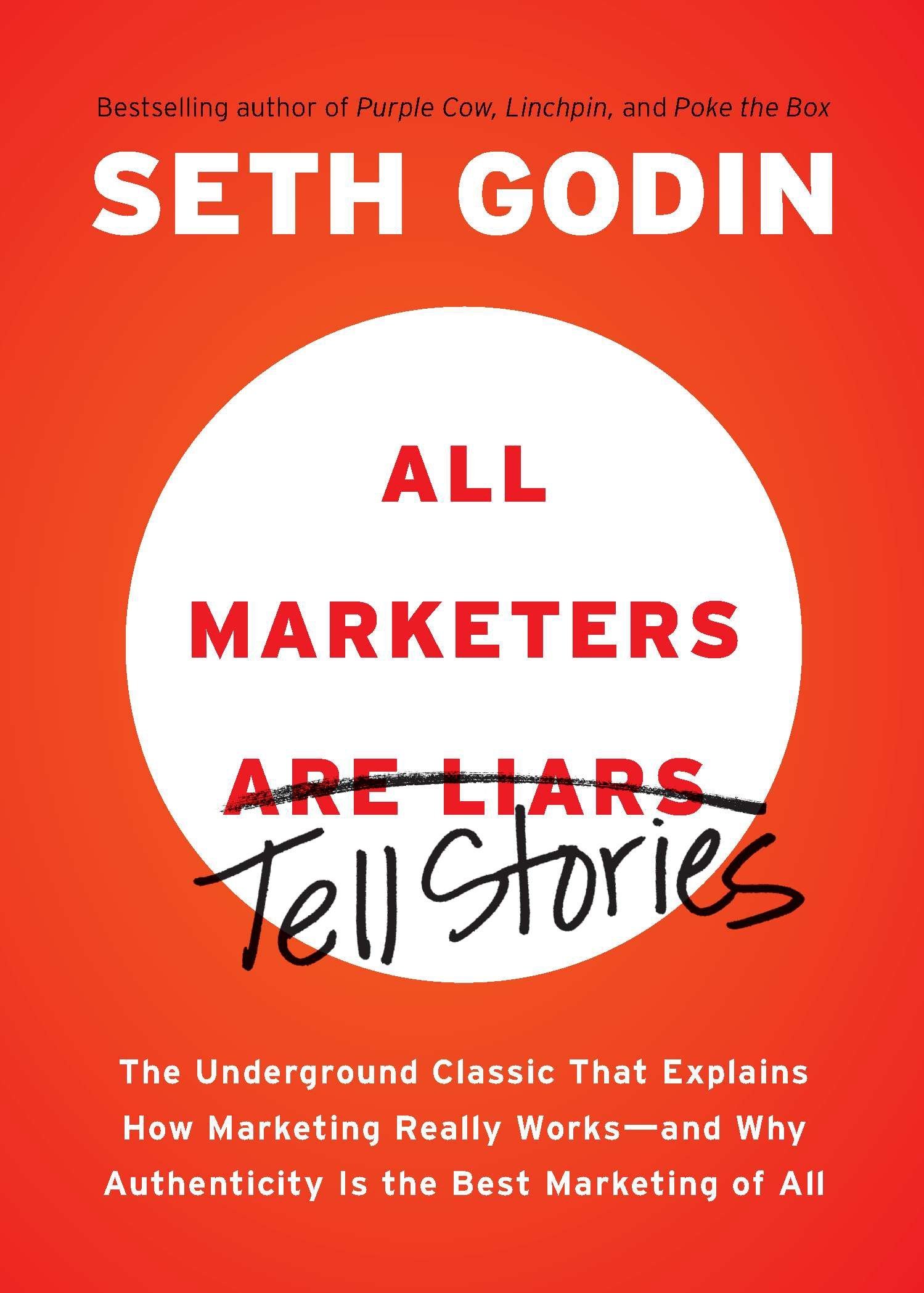
I was flipping through books in a bookstore the other day on an Artist Date. While there, I came across one by my favorite marketing teacher Seth Godin.

Seth boldly claims that all marketers are liars because their jobs are to tell stories. As I thought about it, I realized we’re all liars.

Stories are how humans make sense of the world. It’s been that way since we were sitting around campfires, boasting about the Mastodon we brought down on the plains.

Our stories are never accurate. Our memories are fleeting, piecemeal images we try to put together into coherent statements. It’s why you can ask multiple eyewitnesses what happened at the scene of an accident and get four versions of the same crash

This does not mean there are no true stories, no facts. It just means the stories we tell ourselves and others are never the whole truth.

Fish Stories

How many times have you heard the same fish story from a relative? Did the fish get bigger with every telling?

I remember as a child sitting in the living room with my older brothers, sides splitting from tales of their recent exploits and the ridiculous shenanigans they got up to.

And I remember feeling a sense of jealousy afterwards. “Why couldn’t I tell stories like that?” Stories that were as humorous, grandiose, and absolutely ridiculous.

One reason was I had not mastered telling stories (read: changing details ever so slightly to make the stories better). Another reason was I had not lived long enough to collect interesting stories.

Of course, as I got older and my contact with other strange characters in this world increased, I collected my own fair share of comedies. And now, each time I retell one, I find myself questioning the details.

Did that really happen? Did I add that tiny detail to make the story more cohesive? More enjoyable? Am I remembering it the way it really happened?

The answer, of course, is no. We never do.

We humans like stories, but the stories we tell ourselves change. They’re imprints of what actually happened, not what actually happened.

I guess that makes us all liars.

But it also makes story time much funnier.

Get more daily insights into the human condition. Subscribe below!

A Note to My Readers

To all my wonderful readers:

I apologize for my long absence from the blog. I’ve been on something of a publishing sabbatical for the last couple of months. During that time, I have done a deep dive into my creative self; I’ve been working to heal old wounds, develop my self-awareness, and reconnect with God, artistry, and the creative energy with which we have all been blessed. In short: I’ve put myself through a process of creative recovery as the wonderful Julia Cameron calls it.

This process has brought me back to the blog and what I hope to do with it. For the longest time, it has been my writings on what I’ve learned at work, in my reading, and by listening to great teachers. I’ve decided that I want a different focus: I want this blog to be a place for Creatives to come when they need inspiration, help, or collaboration; guidance on how to make a life with their art; and how to rekindle their creativity as I have so diligently worked to do myself. 

As such, you will notice different content posted on here going forward. Some days, there may be photographs; other days might have long-form essays on specific topics. You will see more music posted here, perhaps even some poetry and stories. I will continue to publish educational articles as well: information to help writers, artists, musicians, and anyone else who considers himself or herself a Creative, regardless of the field or medium. 

I will also be working to better organize this blog, so that different types of work can more easily be found – essays will have an essay section; music will have a music section, etc. 

Most importantly:

I want this to become a collaborative community, one where artists can see others’ work, contribute their own, and feel supported in the process. As such, I would like to feature work you wish to share with others here on this blog using my platform (with all credit going to you, of course). It might be a different person each week; it might be the same few people each week. It depends on who is willing to show up, share, and contribute to the community. 

This will be a place for art, a place for thinking, a place for creativity, collaboration, and connection with others. It will be a place for love, generosity, spirituality, and goodness. 

I will continue to encourage, enlighten, and educate each day for as long as I am able. I hope you will continue to follow me on this journey and contribute along the way.

Sincerely,

Nathan

Don’t miss an update–subscribe now!