What is the art that is yours to do?

How do you identify it?

Seth Godin asked the question, “Where are the spots [in your personal/professional/creative life] in which you are most afraid?” 

Find the places and things you are afraid of, and determine why you are afraid of them. Then you can identify what you need to go work on.

“Begin with the thing that scares you.”

Don’t miss a thing! Subscribe below to receive updates as soon as they post.

Join 904 other subscribers

What if we all just stopped?

Is every single person born with the potential to be creative?

Yes.

So if we are all creative in some unique way (and we are), what would happen if we all stopped working in areas or jobs in which we felt obligated, and we all started working in our own areas of creative genius?

Does each of us have the potential to succeed in our unique creative gift? Is it that many of us never get the chance because of environmental factors or fear?

Could the marketplace support 100% engagement by all creatives? I think so; creativity doesn’t have to be writing, art, or music. Some people are creative in areas of building, business, leadership, plumbing, carpentry, or any other area that a modern society needs in order to thrive.

Food for thought.

What are you afraid of?

Why haven’t you started yet? Why have you not launched your side-hustle? Or started tackling that new skill you need to get a new career?

Is it really the fear of failure? If you start a side-hustle and it fails, who cares? You didn’t lose your job. You aren’t out on the streets.

If you try to learn a new skill and find that you are completely uninterested or you don’t have a knack for it, why does that matter? What has it cost you? Absolutely nothing.

So is it failure that scares us, or something else?

Maybe the reality is we don’t feel like we are good enough. We feel like phonies, that if we put something out there, people will see us as such – that we are not experts. We are simply amateurs, and they might scoff at us.

Or maybe it’s the actual shipping of your idea or work that scares you. Because in order to make it work, in order to get it started, you have to tell someone about it. You have to try and get someone to bite.

And they might say no.

Why does this terrify us? It’s just one person, or two, or ten. But you only need one person to say yes in order to get the ball rolling.

And if no one says yes, then make better work, make different work, until someone says yes.

Ask yourself today what you are really afraid of, then see it for what it is and act.

Be my eyes, Harry!

I’m on a Harry Potter kick, it seems, but I love well-written literature…I can’t help it. When I was reading the other night, I was struck with the thought of how Harry serves as the “eyes” of us non-magic folk in discovering the wonderful world J.K. Rowling crafted for us. Instead of telling us a story, she let us live it out through Harry.

Think about it – had Harry grown up in a magical household, the Harry Potter series would have been quite boring to read. For instance, remember the first time in Harry Potter and the Goblet of Fire when Harry (and us, the readers) hears about “splinching”, a situation in which part of a witch or wizard is left behind when they disappear from one place and reappear in another? Had Harry been brought up with this rather common knowledge, in the wizarding world at least, Arthur Weasley would not have explained it to him, which allowed us to learn about it by extension. J.K. Rowling would instead have had to break from the story, become a narrator, and say something along the lines of, “Oh by the way, reader, ‘splinching’ is…” By writing Harry as a newcomer to the wizarding world, one character explains it to another character, and we as readers never have to come out of the magic that occurs when we lose ourselves in an excellent story.

Rowling crafted a useful literary tool into her story by using Harry as the window into the world of magic, rather than simply telling us a story. It’s never too late to appreciate an artist’s ingenuity.

Reaping excellence

I came across a little maxim yesterday that got my mind going, so I wanted to share.

“Sow a thought, reap an action; sow an action, reap a habit; sow a habit, reap a character; sow a character, reap a destiny.”

There is also a quote that pairs nicely with this maxim:

“We are what we repeatedly do. Excellence, then, is not an act, but a habit.

– Aristotle

What is it that you repeatedly want to do? If you did it often enough, do you believe you would truly develop excellence in that habit?

Perhaps you should ask a related question: if what you are doing now isn’t something in which you want to develop excellence, what do you repeatedly think about? Once you have an idea in mind, you can then apply it to the maxim.

For example, let’s say that a person is constantly thinking about art, but only thinking, never creating any herself. We’ll start there.

“Sow a thought…” she is constantly thinking about and admiring the artistic work of others.

“Reap an action…” the aspiring artist decides to take drawing lessons and vows to draw a little bit every day, no matter how small it might be.

“Sow an action…” drawing each and everyday becomes second nature.

“Reap a habit…” she no longer even thinks about if she will draw today; the only thought on her mind is what to draw. A habit is developed.

“Sow a habit…” drawing has become second-nature to her now. It’s as habitual as brushing her teeth or eating.

“Reap a character…” she has become, intentionally or not, an artist. It is now who she is, a fundamental feature of her character. She is now one of the people she once admired.

“Sow a character…” you can see the rest. Her destiny is whatever she decides to make it at this point. She has already developed the skills and habits needed to carry her far down the path of artistic success, whatever she decides that looks like for her. Perhaps it is a career in art, or perhaps it is just a wonderfully enjoyable hobby. But it is now who she is.

So, what is it about which you constantly think? How can you turn those thoughts into action, and then practice those actions often enough until habits form and a certain character you want develops?

“We are what we repeatedly do…”

Decide and act on that in which you strive to be excellent.

Money matters

Money is important, whether we wish it to be or not. The keyword here is money.

Your credit score is not money – you cannot buy an amazing, limited-time offer with your credit score. You cannot use your credit score to buy a life-changing course that will help you make more money than you dreamed possible. You need money to do these things.

You need money to be able to improve yourself, your skills, your position; you need it to create, to thrive, to lower the demand your art places on your head.

Creatives, artists, writers, musicians – we, more than anyone else, need to realize the importance of money in our lives. It allows to create more art; it allows us to pay the bills so that we can create more art; it allows us to eat SO THAT WE CAN CREATE MORE ART.

Get money, not an 850 FICO score. We’ve been brainwashed that a credit score is an indicator of wealth, but it isn’t. All a credit score measures is how much interest you’ve paid to banks, how long you’ve been paying them, and how many different types debt you’ve had.

Do you know what a real measure of wealth is?

MONEY!

Money, investments, property, assets – these have been the measures of wealth for centuries now. It’s only been in the last half decade that companies decided to collect a bunch of random information about you and sell it to banks, so that the banks can make huge sums of money off of your ignorance.

Here’s another idea: how many of you have had your personal information compromised and stolen simply because credit bureaus exist? If you are reading this blog right now, if you are breathing, there is a greater than 50% chance that your personal data has been stolen by someone.

BREAK THE CYCLE. Quit thinking that a credit score means something good for anyone but banks. Money matters; wealth matters.

I’ll say this one more time: go make money so that you can create more art.

It’s never too early…

It’s never too early to declare to the world who you are.

If you are writing and want to be a writer, go tell people you are a writer. Put it in your bio; put it in your social media description. The same goes if you play music and want to be a musician, or if you draw and want to be an artist.

“What we believe about ourselves has a way of coming true…”

Jeff Goins, Real Artists Don’t Starve

The narrative that we tell ourselves, if said often enough and with enough emphasis, is more likely to become true. In Jeff Goins’ book, he retells a conversation that he had with author Steven Pressfield. He asked Pressfield, “When does a writer get to call himself a writer?” Pressfield answered, “You are [a writer] when you say you are.”

Tell yourself what you want to be. Then go tell others.

Decide.

Then, if you later find that you no longer want to be what you say you are, decide to be something else.

After that, declare it to the world.

It’s never too early to tell the world who you are.

Stop telling people to avoid the arts

How many of us have told someone that she should choose a real major, one that is applicable in today’s job market, rather than pursue something creative like art, music, or literature?

(RAISES HAND)

Why do we do this? It is well-meaning enough, I suppose: we don’t want them to struggle financially, we don’t want them to fail, we don’t want them to get hurt because it is so hard to live as an artist…

Let’s just stop, shall we?

What if the person to whom you gave this advice is actually quite talented as a writer? What if she has spent so much of her free time drawing, painting, and sculpting that she has become a fantastic artist? Do you really feel comfortable telling her that she should go get her MBA, work in middle management, collect her benefits, get the 401(k) match, and just worry about “all that artsy stuff” in her off hours, because she can’t make real money in the arts? Why is that good advice (especially when that last claim is bogus)?

Handle Money. Fail often.

Why don’t we teach her instead? Let’s make sure that we are teaching our children how to handle their finances, how to live on a budget, spend less than they make, save money, make money, and how to avoid debt at all cost (this is the real reason so many of us starve these days). We should most definitely teach her not to go $100,000 in student loan debt for her MFA in painting, but that does not mean we should tell her not to pursue her passion – those are not the same thing.

At the same time, we should also be teaching her to fail and fail often. Have her start trying to sell her art online. That doesn’t work? Should we tell her that she should quit and go get a real job? No! You don’t tell a child to stop trying to ride a bike because she fell off and scraped her knee; you tell her to get up and encourage her to try again.

Do the same thing with your creative child or friend. Encourage her start teaching other people what it is that she knows. She can make online videos of her work so that others can see it and her ideas will spread. Find whatever avenue works for her.

Encourage

There has never been a better time to be an artist than today – the market is wide open, the possibilities are limitless. You can be an artist in anything at which you are talented; it does not have to be a traditional “art”. Let’s focus on teaching our family and friends the right skills they need to survive and thrive – let’s teach creativity, leadership, personal finance, marketing and storytelling. Then let’s send them forth to pursue that which they most truly enjoy.

If we can teach them to handle money well, and to learn and grow from failure, they will all be fine.

We will all be just fine.

New toys

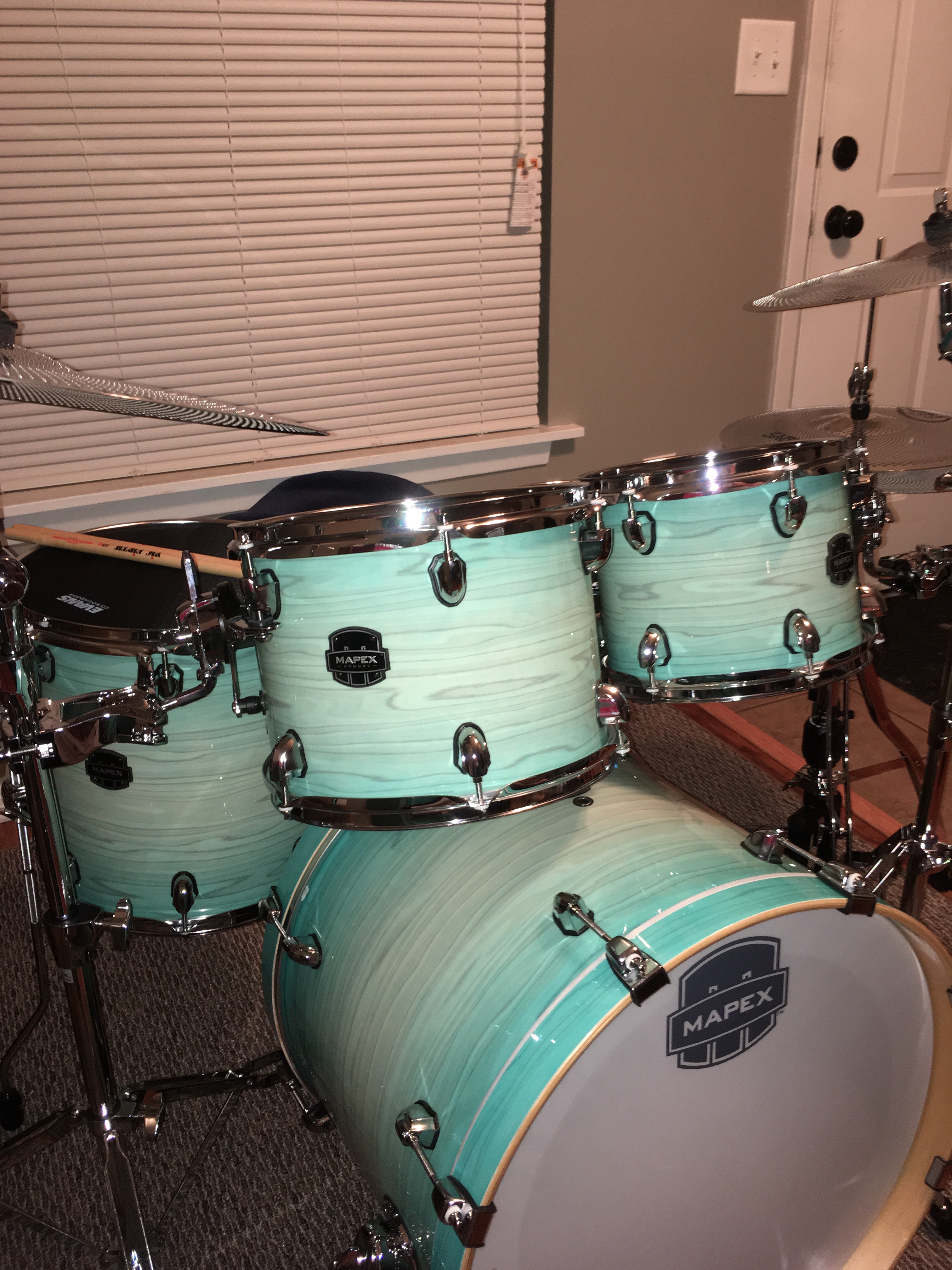
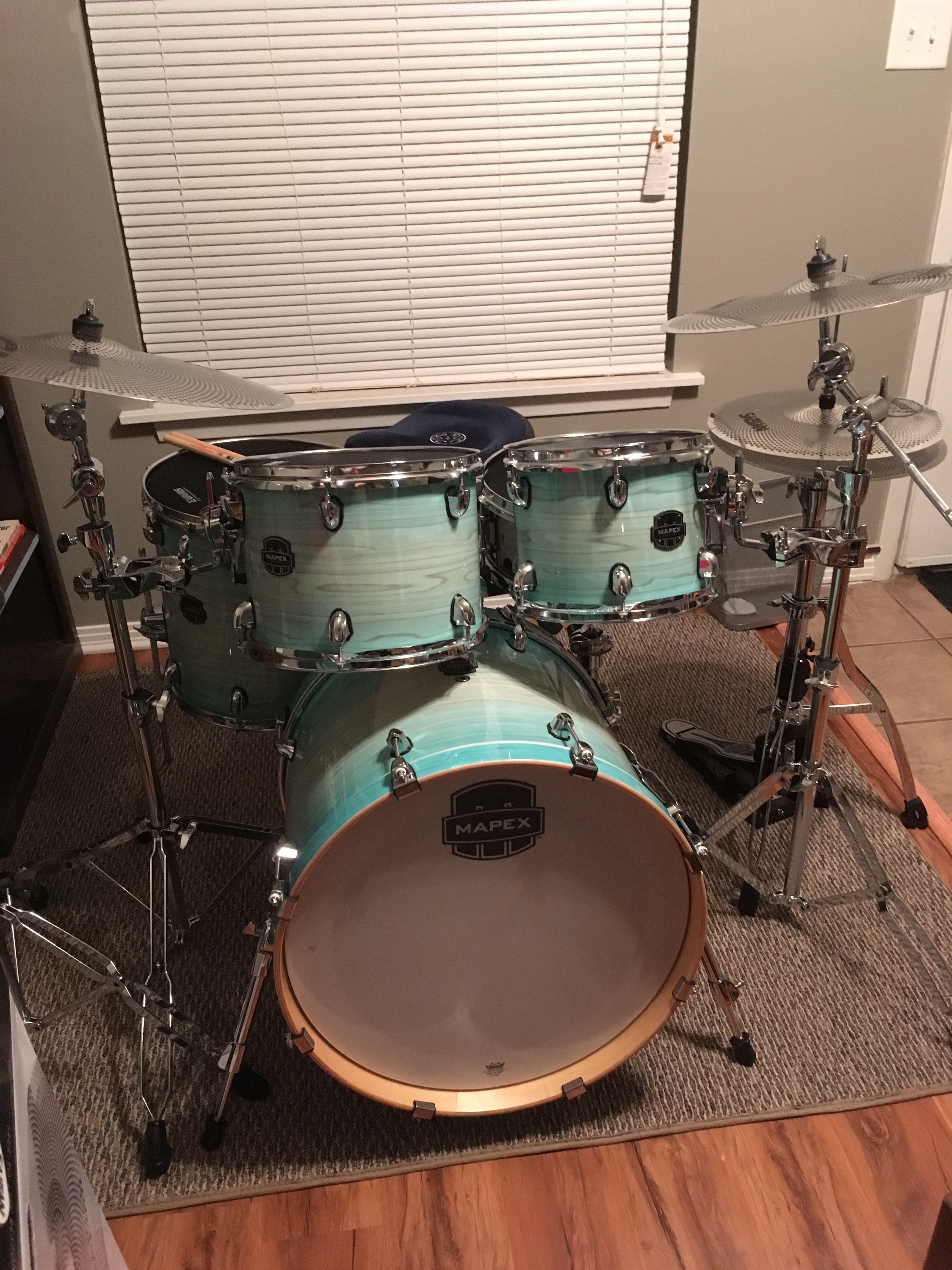
There is nothing quite like coming home and opening new toys. Even when you’re almost 30.

My new practice and teaching kit arrived today, and I could not be more thrilled.

Teaching how to fail

What did you learn about failure in school?

I learned to avoid it at all costs – if it wasn’t a good sentence, don’t write it. If you weren’t sure if the answer you just worked out in algebra was correct, you should probably go back and rework the whole thing. If you can’t draw very well, you just shouldn’t draw anything, because it won’t be good enough for anything.

You see where I am going with this; our educational system is so caught up in compliance, with getting the correct answer, with mastering the test, that the experience of failure is drilled out of us. Better not to do anything than to do something incorrectly.

So we have students going to college that can’t write well because they never learned how to write. They never learned how to write because they were too afraid of doing it badly, which is exactly what you have to do to get better. Start by writing poorly until you get better.

We have adults that cannot draw because they’ve told themselves they are bad at it, so they quit drawing. In actuality, everyone has the potential to learn to draw, you just have to get the right teacher (as an aside, not every artist knows how to teach someone how to draw well).

We have students who are so afraid of getting the wrong answer in a math class, or writing a bad line of code in a coding class, that they don’t put anything down – they don’t even try to work it out and get partial credit because it isn’t the right answer. If they only started, if they only put down the code that might work, they would eventually work it out until they got the right answer.

Leonardo da Vinci, arguably the greatest genius to ever live, failed at so many projects, works of art, and inventions that if you held up his successes next to his failures, we would probably classify him as a failure. But that’s not why we remember him, and that’s not how we measure success and failure.

He persevered and kept trying.

He knew that failure was the best teacher of all, which led him to create some of the greatest works of art in history and to imagine ideas and inventions centuries ahead of his time.

We don’t need to teach our students how to find all the right answers; we need to teach them to try to find an answer to an interesting problem, not the answer a test problem. It might be the wrong answer; that’s okay – just keep working to solve it.

Keep writing bad stuff until the good ideas start to come out.

Keep drawing until your left brain gets out of the way of your right brain, and you start to draw better.

Don’t teach the test; don’t teach the correct answer.

Teach how to ask better questions, how to analyze, how to lead others.

Teach perseverance in the face of adversity and failure.