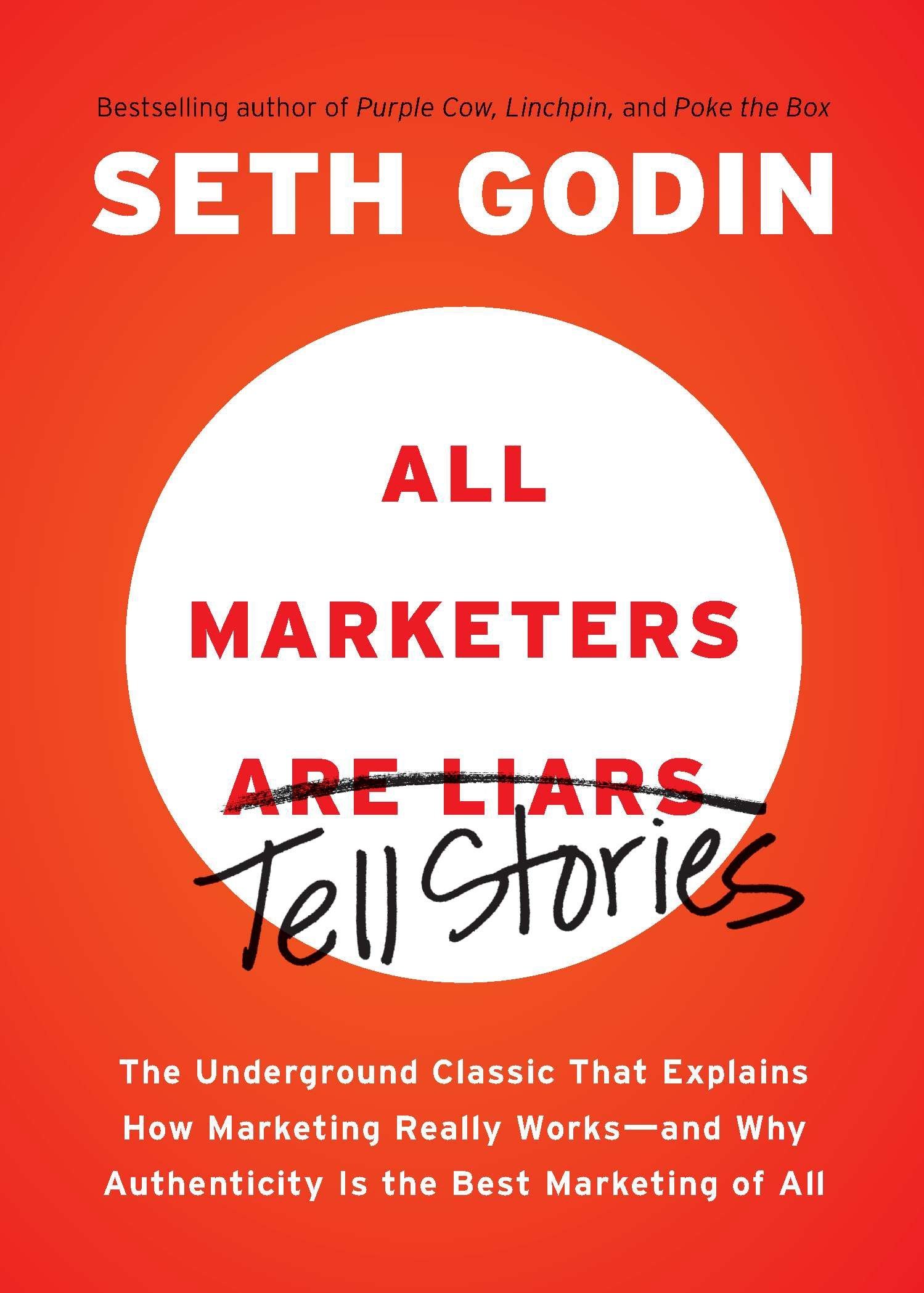
I was flipping through books in a bookstore the other day on an Artist Date. While there, I came across one by my favorite marketing teacher Seth Godin.
Seth boldly claims that all marketers are liars because their jobs are to tell stories. As I thought about it, I realized we’re all liars.
Stories are how humans make sense of the world. It’s been that way since we were sitting around campfires, boasting about the Mastodon we brought down on the plains.
Our stories are never accurate. Our memories are fleeting, piecemeal images we try to put together into coherent statements. It’s why you can ask multiple eyewitnesses what happened at the scene of an accident and get four versions of the same crash
This does not mean there are no true stories, no facts. It just means the stories we tell ourselves and others are never the whole truth.
Fish Stories
How many times have you heard the same fish story from a relative? Did the fish get bigger with every telling?
I remember as a child sitting in the living room with my older brothers, sides splitting from tales of their recent exploits and the ridiculous shenanigans they got up to.
And I remember feeling a sense of jealousy afterwards. “Why couldn’t I tell stories like that?” Stories that were as humorous, grandiose, and absolutely ridiculous.
One reason was I had not mastered telling stories (read: changing details ever so slightly to make the stories better). Another reason was I had not lived long enough to collect interesting stories.
Of course, as I got older and my contact with other strange characters in this world increased, I collected my own fair share of comedies. And now, each time I retell one, I find myself questioning the details.
Did that really happen? Did I add that tiny detail to make the story more cohesive? More enjoyable? Am I remembering it the way it really happened?
The answer, of course, is no. We never do.
We humans like stories, but the stories we tell ourselves change. They’re imprints of what actually happened, not what actually happened.
I guess that makes us all liars.
But it also makes story time much funnier.
Get more daily insights into the human condition. Subscribe below!
If you were inspired, go tell the others

 Nathan's Blog