Is This Book Better Than an MBA?

Colleges don’t teach you how to succeed in the business world. Business schools teach theory, case studies, and lots of accounting and finance. But what they don’t teach you is how to run a profitable, cash-positive business. 

Sadly, they don’t even teach you how to work in a business. At least not in a way that makes money for your employer.

That’s a problem. Why? Because that’s what business owners, managers, and leaders want: value-driven professionals who generate cash.

Here’s the Solution

Donald Miller has done it. He’s created a book and podcast that teach you exactly what you need to know to run a profitable business. If you haven’t yet checked out Business Made Simple, do it today!
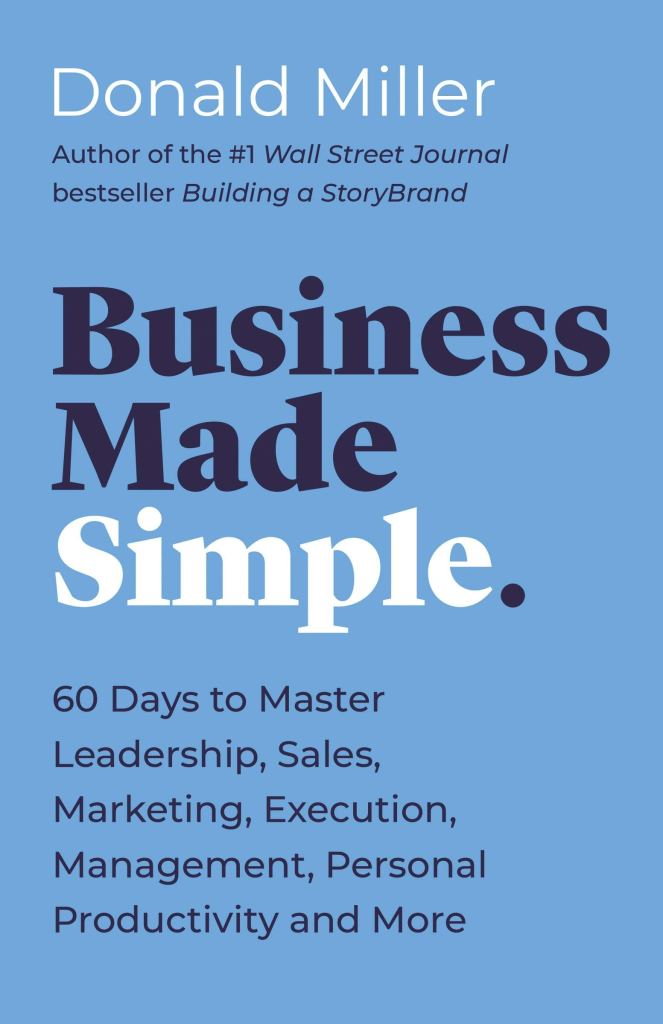
Buy the book. For just $20 bucks, you can get a better business education in 60 days than you would spending $50,000 on an MBA. And listen to the podcast—it’s absolutely free!

Learn practical skills you need to succeed like:

  • How to write a mission statement that drives and inspires you and your team.
  • How to create a clear message that drives customers to your products and services.
  • Sales processes that actually work.
  • Execution strategies that grow your business exponentially.

What If You’re Not A Business Owner?

Maybe you’re not an entrepreneur. Maybe you just want to have a successful career as a team member or employee. That’s okay!

Business Made Simple is for anyone who’s job it is to generate cash for a business. And guess what? That’s you! Whether you’re a salesperson, marketer, customer service agent, or a janitor, this book will help you succeed at work. 

If you’re looking to stand out in your job search, get promoted, or just contribute more in your work, you need check this stuff out. Get a business education that actually pays off.

Get a copy today!

Get daily insights on business, personal growth, and creativity.

Subscribe today.

Coincidence on MLK Day

I bought an audiobook through Audible and started listening to it today. (It’s called The Miracle Equation if you’re curious.)

In the second chapter, the author Hal Elrod talks about how anyone who’s contributed something great to society had two qualities: unwavering faith in their mission, and the willingness to put in extraordinary effort to achieve it.

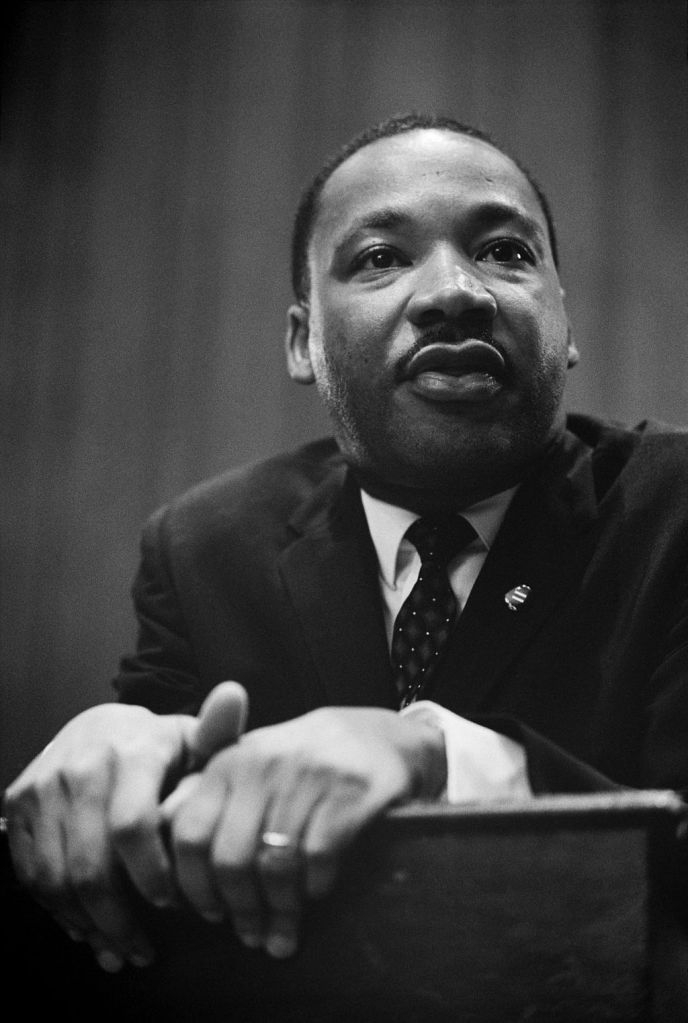
What a coincidence that today on Dr. Martin Luther King’s birthday, Mr. Elrod used him as an example.

Dr. King had unwavering faith in his mission to achieve racial equality in the United States. And he most definitely put in extraordinary effort to achieve it. At the cost of his life.

Let’s remember Dr. King’s legacy today and continue to pursue his mission with the same effort he did.

Happy Birthday, Dr. King.

Get a daily dose of inspiration. Subscribe below

What Happens When We Don’t Think Win-Win?

Until we can believe that there is enough to go around, that each of us has the possibility to win alongside others, we cannot live effectively in an interdependent world.

Instead, we will see the world through the paradigm of scarcity. Everything becomes a competition rather than a chance for cooperation and mutual benefit.

Get more insights delivered directly to your inbox. Subscribe below!

Holding Others Accountable Is an Act of Respect

I am in the second week of a leadership course created by FranklinCovey based on The 7 Habits of Highly Effective People.*

This week’s topic is Habit 1: Be Proactive. For those of you unfamiliar with the 7 Habits, the first habit is about personal responsibility. It posits that we are the creative force in our own lives. We can choose how we respond to stimuli in the world, and these choices drastically alter our results.

One statement this morning stood out more than others:

“Holding people to the responsible course is not demeaning; it is affirming.”

—Stephen R. Covey, The 7 Habits of Highly Effective People

We show respect when we refuse to let others blame circumstances for their situations. Holding others responsible tells them “you are where you are because of the choices you’ve made.” 

At the same time, we are communicating another message:

“You can make choices now that can lead you to a better situation.”

Of course, our environmental factors must be taken into account. Outside, uncontrollable forces definitely influence our lives. Our upbringing, sex, gender, or socioeconomic status can make things easier or harder. But they do not determine our lives! 

Each of us has within us what Viktor Frankl calls “the last of the human freedoms.” We can choose our response to any stimulus. It may not seem like much to you, but this idea was incredibly liberating to me. 

“Between stimulus and response, man has the freedom to choose.”

Show another person respect. Let them know they have the power to choose. 

When you choose, you change things.

*If you want to level up your leadership skills, and earn an industry-recognized certification in the process, check out FranklinCovey’s LeaderU courses at leaderu.us.

Subscribe below for regular insights on personal effectiveness!

We Must Grow from Truth to Truth

“I never think of what I have said before. My aim is not to be consistent with my previous statements on a given question, but to be consistent with truth as it may present itself to me. The result has been that I have grown from truth to truth.”

—Mahatma Gandhi

Consistency is only beneficial as long as the truth to which we are holding remains true.

Changing our minds seems to be a sign of weakness, meekness, and shame in our culture. But is it not a sign of wisdom and growth when we take a new stance upon learning new information?

When we hold to something because “that’s the way we’ve always done it,” even when a new truth is staring us in the face, our culture, relationships, and society stagnate.

There is nothing wrong with changing your mind as you learn new information.

Be wise and grow.

Follow me and get new content delivered straight to your inbox.

Motivation, management, and bathing

“People often say that motivation doesn’t last. Well, neither does bathing, that’s why we recommend it daily.”

–Zig Ziglar

You cannot read a book one time and consider yourself done with it. You have not learned it all or digested enough of it to make any difference in your life. The same is true of motivation – one speech will change your life, but only for a day. You must revisit and remind yourself daily of the message that so inspired you. You must practice it daily. 

I’ve found the same idea to be true of working with people in any sort of leadership or supervisory position. Managing people is also like bathing: you have to do it every day. 

I found myself in previous roles aggravated by having to remind people of the same tasks, duties, and responsibilities. In my mind, if I delegated something to someone, that should have been the end of it. It should have been taken care of from that point forward. 

It rarely was. I found myself constantly having to remind teammates to do this or remember that. This frustration had nothing to do with anyone’s  incompetence or irresponsibility and everything to do with my mindset. Managing people requires setting a goal and then helping your people along the path to that goal. They will not achieve it on their own with all the competing priorities set before them during a typical workday. It must be made fresh in their minds daily. Don’t let the need to remind your people daily of what you expect from them cause irritation or frustration on your part. It’s part of the job. 

The lesson for today is to bathe every day, motivate every day, and manage every day. 

Join 904 other subscribers

You are self-employed

All of us, if we do work that causes us to get paid, are self-employed. It doesn’t matter who signs our paychecks–we work for ourselves.

What does it mean to be self-employed? It means you are your own boss. It means your income is based on your work.

If a freelancer or entrepreneur doesn’t show up for work–if they don’t create enough value for another person–they don’t get paid. This is obvious when you don’t work for a big company with payroll every two weeks.

What about the salesperson working on commission who does have someone who signs her paycheck? If she doesn’t contact the customer, provide value to that customer, and make a sale, she doesn’t get paid.

What about you? The hourly worker or the salaried cubicle-dweller (perhaps virtual cubicle-dweller is more accurate right now)? What happens if you don’t show up for work?

You don’t get paid.

What happens if you fail to create value for the company that employs you?

You get fired.

As soon as you realize you are self-employed–as soon as you realize that you are responsible for the value you create and the income you generate, regardless of how you get paid–you will secure your future.

Even if you are laid off, the attitude of self-employment will cause you to stand out from droves of people who want to know what a company can do for them rather than what they can do for their potential employer.

Adopt the self-employed mindset and you’ll rarely have to worry where your next paycheck comes from.

Join 904 other subscribers

Praise the good. Ignore the rest.

If you want to create lasting influence with others, or change for the better, there is really only one way to do it:

Praise the good.

“So long as a person did anything good, he would praise him and use him for the service in which he excelled, but to his other conduct he paid no attention…”

–Cassius Dio writing about Roman Emperor Marcus Aurelius

When Emperor Marcus Aurelius wanted to influence other people, to reinforce the behaviors and actions he wanted to see, he would praise the person who did the good deed. This is actually quite Pavlovian in its execution.

Conditioning good behavior

Remember Pavlov from your introductory psychology class? Pavlov would ring a bell before he gave his dogs food; the food caused the dogs to salivate. Eventually the dogs associated the ringing bell with food and would salivate when the bell rang, even when Pavlov did not give them food.

Marcus essentially did the same thing with those in his service: whenever they did something of which he approved, he praised it. This constant reinforcement of the good conditioned his people to do more good work in the future. But there is a second part to Dio’s observation above…

Pay no attention to the rest

Not only did Marcus praise the good, he ignored the behavior and actions he didn’t want to continue. Why did he do this?

There is a wonderful little book who’s first chapter discusses this at length:

“Don’t criticize, condemn, or complain.”

–Dale Carnegie, How to Win Friends and Influence People

How often have you had a positive outcome after you criticized someone for doing something? I would hazard a guess at 10%.

When you criticize someone, they get angry, defensive, and emotionally illogical. He or she will justify the action rather than accept that it was wrong. It’s a natural human response. We don’t like to be wrong, and we definitely don’t like other people pointing out our poor behavior.

Therefore, the only way to get the results you want from other people is to praise them when you seeing them do the good deeds you want done. Criticizing the bad doesn’t work: it only causes resentment.

“We are not dealing with creatures of logic. We are dealing with creatures of emotion, creatures brisling with prejudices and motivated by pride and vanity.”

–Dale Carnegie, How to Win Friends and Influence People

(Of course, there are some behaviors that are dangerous, illegal, immoral, or that might harm others; these behaviors must be stopped immediately. Those sorts of behaviors are not the topic of discussion here.)

Be a model

How do let others know what good actions or behaviors are? You must be a model. Do the things you want others to do; be the kind of person you want others to be.

Seth Godin likes to say, “people like us do things like this.” Invite people to be “people like us,” whoever you think “people like us” should be. Then, do the things you want others to do, and when they follow, praise them for it!

Model good behavior. Praise others when they perform good work. Ignore the rest.

Join 904 other subscribers

Great power. Great responsibility.

Uncle Ben said it best: “with great power comes great responsibility.” This should be the phrase by which every leader and marketer lives.

Marketing and leadership are two fields primarily focused on influence. Leaders focus their efforts on influencing what work gets done and on what companies place emphasis; marketers focus on what products get made, what gets purchased, and what changes are made in our culture.

With great influence also comes great responsibility. Leaders and marketers have in their hands the power to persuade others towards things that are either helpful or harmful.

Who gets to decide which is which? Technically, it’s the follower, the consumer, or the customer. But we are all human–we know before a customer tells us whether or not our product or idea will harm her.

If you lead others, if you sell, or if you persuade, please take your responsibility–the power you have over other people–seriously.

Don’t take advantage.

Join 904 other subscribers

Make a huge difference with one small behavior change

In his second great book, The 8th Habit: From Effectiveness to Greatness, relates the story of Muhammad Yunus, an economics professor who founded the Grameen Bank – an institution that makes microloans to the impoverished citizens of Bangledesh. His story deserves to be quoted at length, but I will not do that here. What follows is a summary.

Muhmmad Yunus Saw a Need

Muhammad Yunus earned a Ph.D. and began teaching economics at a university in Bangladesh. While he was inside lecturing on macroeconomic principles, the citizens of Bangladesh were struggling to survive in a life of abject poverty.

One day when Dr. Yunus walked out of class, he passed a woman making beautiful, handmade bamboo chairs. Upon further discussion, he determined the woman was making two pennies per day.

Why? Because she was in a terrible arrangement with her supplier who only allowed her to sell the chairs back to him. Dr. Yunus then discovered that the woman only needed $0.20-0.25 cents to buy the materials herself, then she would no longer be in bonded labor to the supplier.

He discovered that other citizens were struggling in much the same way. His assistant went around asking how much money different people in his neighborhood needed to make a living: he reported back that all together they needed $27.

TWENTY-SEVEN DOLLARS! Dr. Yunus took that money out of his wallet, gave it to his assistant, and told him to tell those who were receiving the money simply to pay him back whenever they could (which they all did, eagerly and quickly).

Dr. Yunus Met a Need

There is much more to the story than that, including a long battle with banks in the area who did not believe anyone would pay back the money that was loaned to them (which they did). Dr. Yunus discovered, simply by opening his eyes and talking to people around him, that while he might not be changing the world with a $27 loan, he was changing someone’s world.

Dr. Yunus went on to create and found his own financial institution, Grameen Bank, which specializes in making small loans to people all over Bangladesh so they can create businesses, making a living, and pull themselves out of poverty. To this day it has loaned billions of dollars in microcredit to hundreds of millions of citizens, and it changed their lives.

Why am I telling you this story?

What You Need to Do

Change how you move through the world. Today, and each day for the rest of your life, when you drive around town, walk outside, or even scroll through social media, pay attention to the people.

What are they doing? What are they posting on social media? Can you identify a need in what they are saying? Are they struggling to accomplish a task or project?

Are they asking a question to which you know the answer or have a solution?

Assume, as Dr. Yunus says, “a worm’s-eye view” of the world. Don’t look for huge problems to solve: look for small, everyday problems. Find someone in need, ask yourself if you have the will and the skill to meet that need, and then do something about it. Show up, solve a problem, and keep doing that over and over again.

Ask yourself if you have the will and skill to meet someone’s need today.

You may not change the world, but you will change that person’s world. Do that enough times, solve enough problems for people, and you might begin to see a greater need that can be met by a business, service, or non-profit.

Find a need, meet the need, and make a difference today.

Join 904 other subscribers

*Note: some links on my site are affiliate links which means I make a small commission for purchases made. This does not affect you in any way.