
Streaks

What comes to mind when you hear the word “streak?”

One of the first images that comes to my mind is the tail behind a shooting star. It leaves a trail of light behind it, showing you its progression through the sky.

You can take that same metaphor and apply it to any part of your life:

  • Developing a daily creative practice (painting, drawing, writing, composing, etc.)
  • Growing a business (daily content creation, calling 5 people every single day)
  • Going on a weekly date with your spouse and not missing a week
  • Incorporating intentional movement or exercise into your daily routine

Just like with the comet, you’ll have a trail behind you, showing your growth and development over time. You can see where you started and how far you’ve come.

And the longer your streaks become, the harder they are to break. Can you imagine exercising every single day for 150 days? How terrible would you feel if you made it that far only to break it?

Jerry Seinfeld is famous for his creative streak: starting in the 1980s, he committed to writing one new joke every single day. That commitment seems to have worked out pretty well for him: today he’s worth in excess of $950 million.

My challenge for you is this: pick a habit you believe would have a major, positive impact on your life. Commit to it, track it on a calendar or an app, and get to a point where you’d be devastated if you broke it.

Subscribe below for daily insights delivered directly to your inbox.

Life lessons from the last 18 months

Cherish your loved ones – they’ll be taken from you when you least expect it.

I’ve lost three close family members in 18 months. My father-in-law dropped dead of heart failure in December 2019. He was in perfect health.

My uncle died of cancer 6 months later. I had just seen him at Thanksgiving the previous year, and he seemed to be doing just fine.

Then my dad died in May. I had just spoken with him on the phone a month before… He sounded just like his old self. By the time I got to see him, he couldn’t speak or see me. I was able to say goodbye, but I’ll never know if he heard me.

And I might be losing someone else soon.

Tell your family you love them after you finish reading this. Then do it every day from now on.

Serious illness—or even death—can strike you down no matter your age or health.

My wife and I took the COVID-19 pandemic seriously. We quarantined, wore masks, and did all we were advised to do by the CDC. And both of us still managed to catch it.

My wife had a fever for eight days. I ended up in the ICU on forced oxygen for eight days gasping for breath. Wondering if this was what it felt like to die. The doctors told me had I not come in the night that I did, I would have died in my sleep.

I spent Christmas and New Year’s in a hospital room isolated and alone—except for the occasional nurse or technician. Eight days. And there were people around me even worse off than I was.

I was 30 years old and in perfect health. And I’m still recovering.

Never chase money – you’ll always end up miserable.

I was in my sweet spot at a job I enjoyed—teaching classes all day and putting my creative skills to use on a daily basis. But I felt I wasn’t making enough money, so I took a promotion.

The money wasn’t as good as I thought it would be. And I wound up in a miserable role that stressed me out more than I could have ever imagined.

Then another offer came my way, a chance to escape that misery, and it came with a decent bump in pay. But I had an uneasy feeling about it during the interviews.

I took it anyway, and it left me just as miserable as I was before, but for different reasons.

It might be a cliche, but find something that makes you happy. Then find a way to make a living doing it. Don’t take jobs you know don’t fit you simply because they offer you more money.

Take any or all of these lessons to heart. Let them guide your actions for the last half of 2021 and beyond.

Subscribe below and get daily insights delivered straight to your inbox.

Blog in community (and grow your blog fast)

One of the most helpful things I’ve learned as a blogger came to me from David Meerman Scott. There are two parts, and the first is this:

Before you start your own blog, follow other blogs and bloggers and engage with the ones that matter to you.

I’ve been an avid blog consumer for years, reading from great thinkers and companies like Seth Godin, Michael Hyatt, HubSpot, and Mr. Scott himself of course. They’ve shaped my own thinking and helped me figure out my path forward as a marketer.

This first step lets you figure out how you can contribute to the discussions and the questions being asked on the internet. This is a great starting point for creating your own content.

But the second part of what David taught me was the most profound: engage with their content, leave comments, start discussions. And when you do that, include a link to your own blog.

We often forget the “engagement” step. Don’t just consume—engage! And almost no one links back to themselves for follow-up.

Bloggers like to support other bloggers. They like to talk, discuss, disagree in a civil manner, and try to make the world a better place. By engaging with their content and leaving behind a link as a calling card, you’re encouraging this type of civil discourse.

Now, if you don’t yet have your own blog, you can do the same thing by linking to your LinkedIn profile. Or better yet (since people won’t be able to see your whole profile or its content without connecting), create a free, public about.me page to leave behind.

Think of it as your digital business card, a way for people to learn who you are and follow up with you if they’re so inclined.

Try it the next time you comment on someone’s blog or social media post. I guarantee people will want to hear what you have to say. And they might follow up as well.

(If you want to learn more about David Meerman Scott’s blogging strategies, check out his book The New Rules of Marketing & PR (7th Edition) wherever books are sold.)

Don’t forget to subscribe! Get daily insights to level up your life delivered directly to your inbox.
The Transitive Property of Belief

Time for a math lesson! Bear with me—it matters.

The Transitive Property of Mathematics says this: for all real numbers x, y, and z, if x=y and y=z, then x=z also.

That makes sense, right?

Why am I telling you this? Because this same mathematical property affects all outcomes you experience in life.

Think about it: how you see an aspect of reality affects how you behave. How you behave affects the results you get. Therefore, how you see things affects the results you get. X=Y and Y=Z, so X=Z as well.

Dr. Stephen R. Covey called this the “See-Do-Get Continuum.” How we see the world affects what we do, which affects what we get in life. (You can learn all about it in his monumental work The 7 Habits of Highly Effective People.)

Covey likes to say, “How we see the problem is the problem.” In this case, “seeing” could also translate into “believing.”

Here’s an example:

Let’s say you’re a manager and you’ve recently had a few millennials added to your team. If you believe all millennials are lazy and entitled, you’re going to treat them as such. This will so alienate them and undermine your relationship that pretty soon, they’ll start acting out.

Most likely they’ll rebel against you by doing the bare minimum, scraping by because in their minds nothing they do will be good enough to please you anyway. Why should they put out more effort than necessary?

How you saw them affected your behavior towards them, which affected how they behaved (your results). It’s the Pygmalion Effect, a self-fulfilling prophecy.

Can you see how this continuum affects us when it come to things like race, gender, or religion? Our beliefs shape our actions; our actions shape our outcomes.

So what’s the bottom line?

If you want to change the world—or maybe just your situation in it—start first by changing your beliefs. Work first on how you see things.

Don’t forget to subscribe!

Great News on a Monday!

Random personal post this afternoon:

This morning I got a clean bill of health from my pulmonologist! Clear chest x-rays and no other issues (other than a cough and general weakness) after my horrible battle with COVID-19 in December. 

I’ve been diligently pushing myself a little harder each day and hit my personal post-COVID hospitalization best of walking 2 miles last Friday. I even managed a light strength workout this morning. 

After my appointment, I got ANOTHER piece of great news telling me I’d been selected to interview at one of my DREAM COMPANIES this week…hopefully more news on this to come

Hard work, networking, and practice pay off in all areas of our lives. 

Conflict Is Inevitable. How Do You Handle It?

“If you avoid conflict you will not achieve success.”

Donald Miller, Business Made Simple, p. 17

I have to admit: conflict scares me.

This is how I imagine it’ll end in all situations:

Photo by yang miao on Unsplash

I avoided conflict like the plague (or COVID-19 😩) most of my life. As a child and a young adult. And every time I did, I missed out on something.

A chance to connect with someone on a deeper level.

A chance to fix a situation in desperate need of repair.

A chance to understand someone else’s point of view.

But every time I embraced the inevitability of conflict and put on my brave face, I made a difference.

Conflict is going to happen if you’re making progress towards something great.

Will you run from it? Or will you tackle it head-on with empathy and understanding?

If you made it this far, subscribe today!

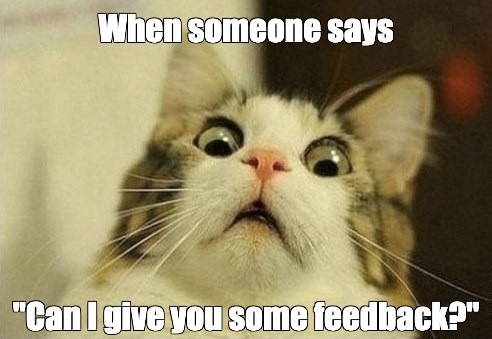
I hate getting feedback… Don’t you?

I hate getting feedback…

It hurts. It stings. It can crush your soul—especially if you think you’re already kicking butt. 

But it’s also the best way to figure out where you can grow to hit your goals.

That’s why I actively seek it out in everything I do. 

Musicians Are Brutal

This practice came from my time in university. I was studying to be (and working as) a professional musician. 

Every week, I had multiple lessons, rehearsals, and performances. And after each one, my teachers, bandmates, and mentors had feedback for me.

It was brutal (to put it mildly). But it made me a better musician. 

These people were better than me, more experienced, and knew what needed to be done to succeed. 

I’ve carried this practice with me into every job I’ve had. It’s made me a better leader, writer, and marketer.

“A mark of a competent adult is their ability to accept feedback. The mark of a child is their expectation of praise without merit.”

—Donald Miller, Business Made Simple, p. 15

Surround yourself with people who want you to improve and succeed in your roles. Actively seek out feedback. 

The more you do it, the better you’ll get. But I can’t promise it won’t sting.

How do you feel about feedback? Are you actively seeking it out?

Get daily insights on business, personal growth, and creativity.

Subscribe today.