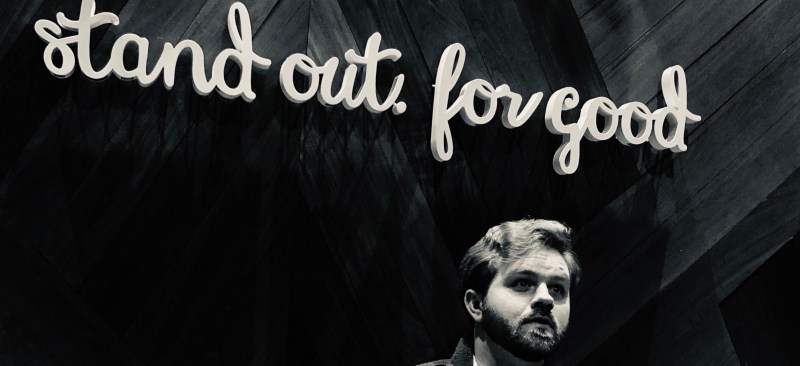
What would it take to replace you?

Think about your work and personal life for a moment.

What qualities and skills would your employer look for in a new hire were she attempting to replace you?

Be that person now.

What would your spouse, significant other, or children look for in a partner or role model if you weren’t around?

Be that person now.

Start.

Be the person others in your life want and need; you will become nearly impossible to replace.

Don’t miss a thing! Subscribe below to recieve new posts as soon as they go live.

Join 904 other subscribers

We are all volunteers

Everyone you interact with on a daily basis is a volunteer in your life.

Don’t believe it? Try an experiment:

If you have children, a spouse, or any sort of significant other, order them around, withhold affection, neglect the small kindnesses and courtesies that make relationships so strong and fun.

If you do it long enough and often enough, they will quit.

(Please don’t actually try that experiment.)

The same is true in any organization: simply because someone is employed by another does not mean that person is not a volunteer. You would never neglect the needs and wants of a customer or disrespect her. Why not? Because a customer is a volunteer – she is choosing to do business with you, and that choice can be revoked at any time.

There seems to be some disconnect when money is involved – because the person is paid, she does not deserve the same level of care and dignity given to a customer. This could not be further from the truth.

The employee might be reliant on that money; she might need it for her survival, but she is still a volunteer.

Your friends and family members are volunteers; they are customers. They are choosing to do “business” with you, and at any time, that choice can be revoked. Your employees are volunteers; they just happen to be paid.

Treat everyone with whom you interact as a volunteer customer, and you will seldom be disappointed.

Don’t miss a thing! Subscribe below to receive updates as soon as they post.

Join 904 other subscribers

A new normal

Adjusting to a new normal is…well, normal.

Most of the time, it is painful, difficult, frustrating, depressing, and hilarious – quite often all at once.

Face the new normal head-on with courage, kindness, and generosity.

It might not work out like you hope, but these qualities will still take you far.

Don’t miss a thing! Subscribe below to receive updates as soon as they post.

Join 904 other subscribers

Cats and proactivity

I have a cat. His name is Jack. Captain Jack Sparrow, if you want the full name.

Jack is the most annoying cat in the world.

If you go into a different room, he will sit outside the door and scream at you. “MerEYOWWWWWWwwwwwwwwww” or something like that. Over and over again until you return to the room in which he is sitting or you let him inside with you.

He beats up his sisters without mercy.

He went through a phase at 3 years old where he peed on the floor in front of our couch if my wife didn’t come home by a certain hour.

He scratches the paint off doors; eats expensive cables like they are spaghetti noodles; chews up the beater on my bass drum pedal; and just this morning, we discovered he had destroyed a set of blinds.

He also loves my wife unconditionally and makes her very happy.

For the first few years we had Jack, I would get visibly angry with him when he misbehaved. He knew it, too, and he never liked me as much as my wife.

However, since I started my deep dive into being a more effective and proactive individual, however, I have noticed a change.

I came to the conclusion that while what he did was very frustrating, I was choosing to react in a very negative manner which upset me and made him unappy with me. I was choosing to yell, to stamp my feet in anger, to curse the day we adopted him. What good did it do?

When I implemented “be proactive” into my life, I began with Jack. I lived by the idea that there is a space between stimulus and response where I could choose how I would react.

Now, when Jack misbehaves, I put him in time out – not with anger or scare tactics, but by simply picking him up and putting him into his room.

I feel better, Jack feels better. Now, he crawls up and falls asleep on my chest when I’m trying to take a nap on the couch, purring all the while.

Here’s my point:

You get to decide how a certain stimulus affects you. You cannot choose the consequence of the stimulus; I could not choose whether or not the blinds got broken when Jack climbed behind them. That was a natural consequence. But there are also natural consequences to my response:

  • I did not begin my day with negative emotions and stress.
  • My wife does not begin her day with negative emotions and stress, and our relationship is improved.
  • Jack knows that he misbehaved, but he also won’t run away from me when I return later today. He will instead greet me at the door with screeching and purring.

Something else you should know – since I began reacting better to Jack’s antics, his behavior has changed. He is less destructive, less abusive to his sisters, and less whiny.

Or perhaps, I just don’t notice it as much because of how I choose to respond.

If being proactive works with cats, how well do you think it will work with your human relationships?

The Weasleys: two sides of the passion coin

One of my all-time favorite literary creations is the Harry Potter series by J.K. Rowling. It is a story that grew up at the same time I did, and it still brings me great joy today. Because I know it so well, and because it doesn’t overstimulate my mind as I am trying to wind down, I tend to read it before bed. While reading Harry Potter and the Goblet of Fire, I was struck by the inadvertent focus on passions in the first few chapters.

Two different ideals on passion are illustrated in the book. Arthur Weasley, the father of all the red-headed Weasleys, is obsessed with all-things Muggles. He “collects plugs,” and his wife thinks him crazy for it. The Weasley twins, Fred and George, are known far and wide for creating mischief and mayhem wherever they go. I want to unpack this a bit more.

Arthur Weasley has followed his passion (non-magic people) and made an entire career out of it. He works for the Misuse of Muggle Artifacts Office in the Ministry of Magic, protecting the Muggles he loves from witches and wizards who would do them harm. His hobbies at home are all based around Muggle items, from cars to plugs and electricity. And yet, even though he has followed his passion, his family is impoverished.

Throughout the series, we are constantly reminded how little the Weasleys have because their father seemingly has no ambition. I don’t believe this is the case; he simply followed his passion down a deep rabbit hole without ever paying attention to how he could monetize his curiosity.

Career coach Dan Miller often talks about the three-legged stool model of work: for it to work well, there must be passion, talent, and a way to make money from it. Arthur has failed to build that third leg of the stool, and his family has suffered from it. This is by no means a warning against following your passions and talents; it is simply a reminder that you must pay attention to how you can make a living from them, or else you simply have a hobby.

Now let’s turn our attention to the Weasley twins. There is no doubt that they are brilliant witches and wizards. They hold their own plenty of times against other witches and wizards in combat. Not only that, but Hermione Granger herself comments at one point on how impressive and advanced their magic must be for their magical gag products to work.

They are obviously immensely creative and talented in their passions, which seem to be mischief-making and comedy. Yes, it gets them in trouble at school, but only because their school, like our own modern educational system, is a place to sit quietly, obey, and pass the end-of-year exams. Their mother, Molly, is constantly chastising them about not getting enough high exam marks, about causing too much trouble, about not being ambitious like their father and choosing comedy and invention over working for the Ministry.

How is that for irony? For one, government work, whether magical or not, has never been the most creative of workspaces, nor, in my experience, do many people in government tend to be overly ambitious and concerned with making a difference in, or leaving a mark on, the world. I find it fascinating how closely this relates to us in the real world. Our schools stifle creativity and individual differences among their students; we encourage them, not to pursue what they excel in, but to pursue what will pay well and be the “secure,” as if such a thing even exists anymore in the information age. We focus on improving everyone’s weaknesses to make everyone more like the average student, rather than focusing on strengths so that we can all stand out and achieve our unique purpose.

If the Weasley twins had followed their dad’s example, or their mother’s advice, they would never have lived up to their true potential. By book six, Harry Potter and the Half-Blood Prince, the twins succeeded in creating Weasley’s Wizard Wheezes, opening up a highly successful magical joke shop, and becoming fabulously wealthy in the process.

Let’s take a lesson from the Weasleys today. Have the focus of Arthur Weasley, but the ambition of Fred and George. I strongly encourage you to follow your curiosity wherever it leads. Ignore the naysayers, but keep in mind the idea of the three-legged stool; all three legs must be present or you only have a hobby, like Arthur Weasley. Find a way to monetize and maximize your obsession, and you will be successful beyond your wildest dreams.

Stop telling people to avoid the arts

How many of us have told someone that she should choose a real major, one that is applicable in today’s job market, rather than pursue something creative like art, music, or literature?

(RAISES HAND)

Why do we do this? It is well-meaning enough, I suppose: we don’t want them to struggle financially, we don’t want them to fail, we don’t want them to get hurt because it is so hard to live as an artist…

Let’s just stop, shall we?

What if the person to whom you gave this advice is actually quite talented as a writer? What if she has spent so much of her free time drawing, painting, and sculpting that she has become a fantastic artist? Do you really feel comfortable telling her that she should go get her MBA, work in middle management, collect her benefits, get the 401(k) match, and just worry about “all that artsy stuff” in her off hours, because she can’t make real money in the arts? Why is that good advice (especially when that last claim is bogus)?

Handle Money. Fail often.

Why don’t we teach her instead? Let’s make sure that we are teaching our children how to handle their finances, how to live on a budget, spend less than they make, save money, make money, and how to avoid debt at all cost (this is the real reason so many of us starve these days). We should most definitely teach her not to go $100,000 in student loan debt for her MFA in painting, but that does not mean we should tell her not to pursue her passion – those are not the same thing.

At the same time, we should also be teaching her to fail and fail often. Have her start trying to sell her art online. That doesn’t work? Should we tell her that she should quit and go get a real job? No! You don’t tell a child to stop trying to ride a bike because she fell off and scraped her knee; you tell her to get up and encourage her to try again.

Do the same thing with your creative child or friend. Encourage her start teaching other people what it is that she knows. She can make online videos of her work so that others can see it and her ideas will spread. Find whatever avenue works for her.

Encourage

There has never been a better time to be an artist than today – the market is wide open, the possibilities are limitless. You can be an artist in anything at which you are talented; it does not have to be a traditional “art”. Let’s focus on teaching our family and friends the right skills they need to survive and thrive – let’s teach creativity, leadership, personal finance, marketing and storytelling. Then let’s send them forth to pursue that which they most truly enjoy.

If we can teach them to handle money well, and to learn and grow from failure, they will all be fine.

We will all be just fine.

It pays to have a partner

Sometimes the best thing you can do in life is to find someone to walk through it with you.

If you’re lucky (or a really good judge of character), that person will support you, believe in you, push you to greater heights, and love you unconditionally.

I hope you find that person. You deserve it.