Unknown's avatar

Posts by Nathan Coumbe

My mission is to learn, inform, inspire, and improve. I am a passionate teacher, an avid writer, a leader of people, and a strategic thinker. Wherever I am, whatever the work I am called to do, my goal is the same: make my little corner of the world better for everyone in it. To do this, I ask better questions and solve more interesting problems for those I serve. Think deeply. Think often. Keep exploring. Always be curious.

Stop telling people to avoid the arts

How many of us have told someone that she should choose a real major, one that is applicable in today’s job market, rather than pursue something creative like art, music, or literature?

(RAISES HAND)

Why do we do this? It is well-meaning enough, I suppose: we don’t want them to struggle financially, we don’t want them to fail, we don’t want them to get hurt because it is so hard to live as an artist…

Let’s just stop, shall we?

What if the person to whom you gave this advice is actually quite talented as a writer? What if she has spent so much of her free time drawing, painting, and sculpting that she has become a fantastic artist? Do you really feel comfortable telling her that she should go get her MBA, work in middle management, collect her benefits, get the 401(k) match, and just worry about “all that artsy stuff” in her off hours, because she can’t make real money in the arts? Why is that good advice (especially when that last claim is bogus)?

Handle Money. Fail often.

Why don’t we teach her instead? Let’s make sure that we are teaching our children how to handle their finances, how to live on a budget, spend less than they make, save money, make money, and how to avoid debt at all cost (this is the real reason so many of us starve these days). We should most definitely teach her not to go $100,000 in student loan debt for her MFA in painting, but that does not mean we should tell her not to pursue her passion – those are not the same thing.

At the same time, we should also be teaching her to fail and fail often. Have her start trying to sell her art online. That doesn’t work? Should we tell her that she should quit and go get a real job? No! You don’t tell a child to stop trying to ride a bike because she fell off and scraped her knee; you tell her to get up and encourage her to try again.

Do the same thing with your creative child or friend. Encourage her start teaching other people what it is that she knows. She can make online videos of her work so that others can see it and her ideas will spread. Find whatever avenue works for her.

Encourage

There has never been a better time to be an artist than today – the market is wide open, the possibilities are limitless. You can be an artist in anything at which you are talented; it does not have to be a traditional “art”. Let’s focus on teaching our family and friends the right skills they need to survive and thrive – let’s teach creativity, leadership, personal finance, marketing and storytelling. Then let’s send them forth to pursue that which they most truly enjoy.

If we can teach them to handle money well, and to learn and grow from failure, they will all be fine.

We will all be just fine.
You can do whatever you want…

It’s true – you really can do whatever you want to do.

You can buy whatever you want, using debt or with cash.

You can leave work early everyday and show up late if you just aren’t feelin’ it that day.

You can eat junk food throughout the day and live on take-out and fried foods. You’re an adult – eat ice cream for dinner if you want to do that.

You can do whatever you want to do…

You just can’t choose the natural consequences which will occur in reaction to your choices.

Decisions

Sometimes you agonize over making a decision, only to have that decision taken out of your hands. There may be a sense of relief when it happens, but all too often, that relief turns to regret.

The questions start boiling up: Why did I not jump on the offer when I got the chance? What held me back? Why was I so afraid?

Are you guilty of “paralysis by analysis” when it comes to making life decisions? I most certainly am.

I have lost so many opportunities over the years simply because I waited too long to decide. I sought out advice, weighed the pros and cons, did research…the problem is I never took action when it was time to decide. I was too afraid of failure, of taking the wrong road, of looking back at the possibilities I may have missed because of what I chose.

So I didn’t choose, and that in itself was a choice. It was a choice to have someone else decide for me.

Sometimes the decision is taken out of your hands. You have to learn from the experience. The question is not, “What could I have done differently?”

The question becomes…

What are you going to do now?

Why did they not follow a passion?

One of the most common subjects we talk about these days is following our passions. Some of us are passionate about music, art, or writing, while others enjoy business, finance, and marketing. Regardless of the specifics, many of the conversations among our peer groups revolve around ways in which we can pursue careers and success in these areas. It has gotten me thinking about our parents’ generation and those that came before.

Most of the media on television or the internet today lampoons the adults of the mid-20th century, who went to a white-collar office job or a blue-collar factory job every day, did the same boring thing day after day, left at 5pm, came home, and spent the rest of the evening watching television before falling asleep and doing it all over again the next day. It is obviously satirical in many cases, but it also doesn’t seem far from the truth.

Why did our parents and grandparents do that? Was that all that was available to them? Did they not have specific passions they wanted to pursue? Were they actually content with working simply to earn an income to buy a house with a two-car garage for their 2.5 children to live happily ever after in the suburbs? Did they not also spend time with their friends and family discussing art, music, or writing and how they might pursue these areas? Does that explain why so many of them are portrayed today as drinkers and layabouts at home?

I don’t have an answer to this question; it just seems to me that the idea of pursuing passion areas as a career is a relatively modern one. Perhaps it is born from the end of the industrial age where factory work (and yes, office work counts) has been replaced by information work. We are now required to be creative and unique in order to stand out and survive in a globalized economy.

I just want to know if the passion was there and got stamped out, or if passion just never entered their minds.

What is a teacher?

What makes a great teacher?

The best teachers you’ve ever had were not the ones that gave you good grades or helped you get by in a class you hated. They weren’t the best because they were fun or cool to be around. They did not ensure you got the right answers on the test or graduated at the top of your class.

The best teachers you ever had pushed you to find your own answers. They forced you to ask better questions; they taught you how to learn.

The best teachers, then, are those that make sure that when formal schooling ends, your education continues.

Overcome the resistance

Steven Pressfield talks about “the resistance” in his book The War of Art when discussing the mental blocks that Creatives encounter during their artistic pursuits. This is that fear in the back of your mind, the one telling you there is no use in trying what you are attempting to do as it might not work.

Every Creative goes through this; you are not alone.

My resistance is telling me now that my business endeavors might not work out; it’s trying to convince me that I am not skilled enough, not knowledgeable enough, or not important enough for people to use me as a resource in their creative endeavors.

Don’t listen to the resistance. All you can do is press forward.

Launch your ideas; reach out to potential clients and customers; let the public see your work.

Beat the resistance down, and when it comes back, do it again.

New toys

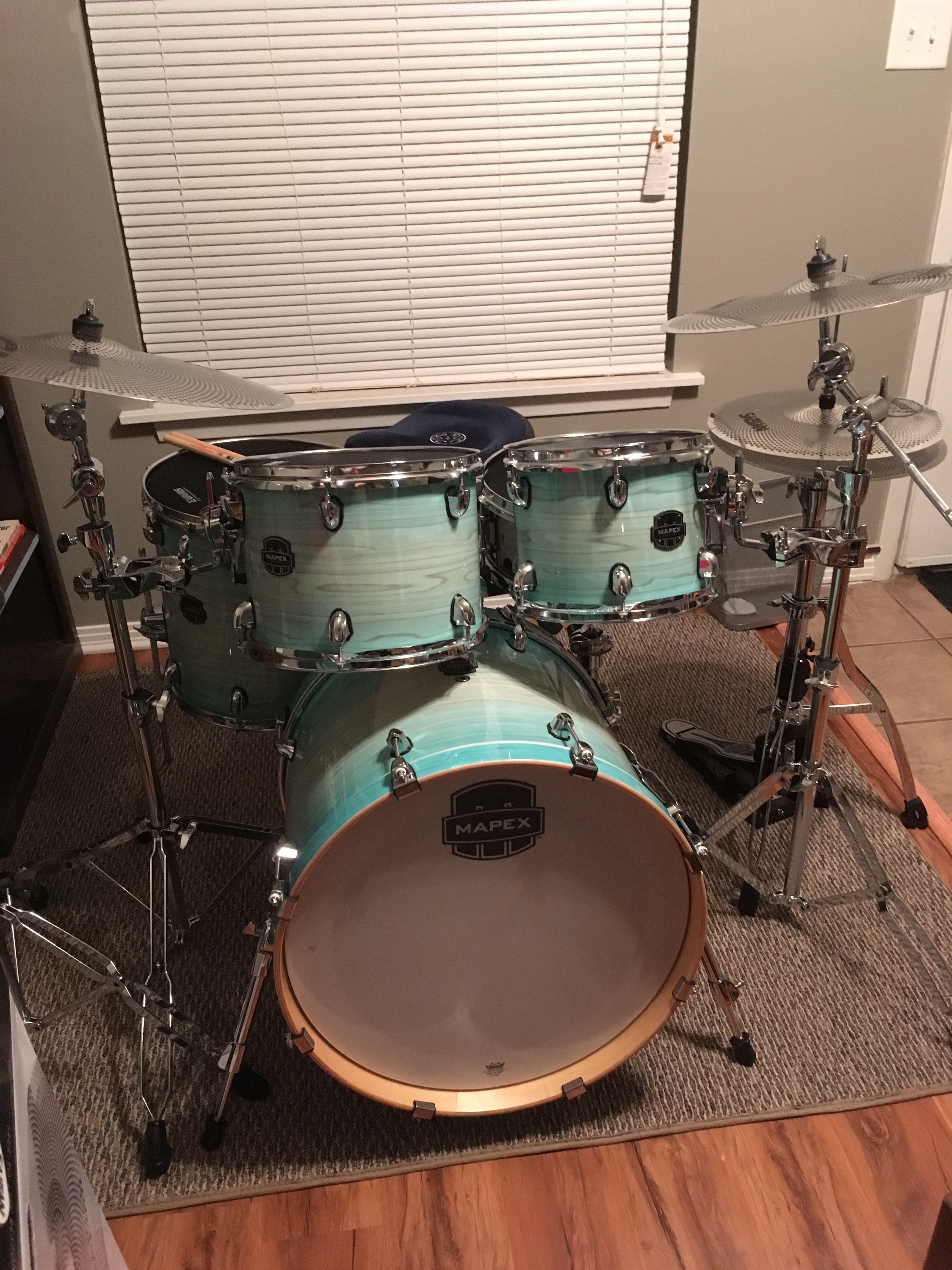
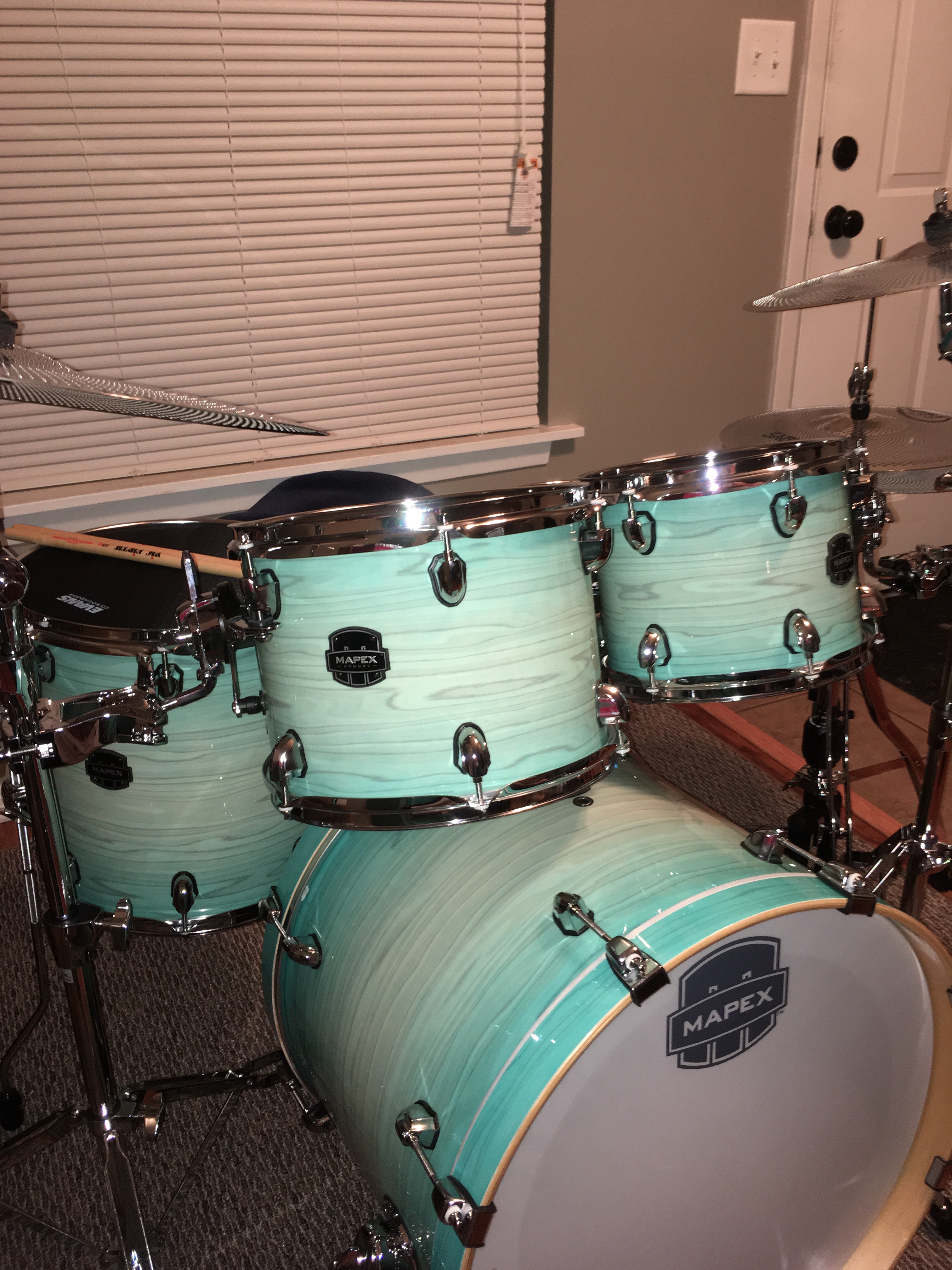
There is nothing quite like coming home and opening new toys. Even when you’re almost 30.

My new practice and teaching kit arrived today, and I could not be more thrilled.

Your time or your money?

40 hours is a lot of time, and this doesn’t even include the time spent getting to and from work; on a good day, it takes me 30 minutes one way to get there – on a bad day, more than an hour.

How much of that 40-hour block is spent actually producing work or making a profit for your company? How much of it is spent staring at a clock?

At what point does making more money become less valuable than having more time?

Can you be satisfied, temporarily, by only making enough to get by while you create and ship something that truly matters to the world?

Teaching how to fail

What did you learn about failure in school?

I learned to avoid it at all costs – if it wasn’t a good sentence, don’t write it. If you weren’t sure if the answer you just worked out in algebra was correct, you should probably go back and rework the whole thing. If you can’t draw very well, you just shouldn’t draw anything, because it won’t be good enough for anything.

You see where I am going with this; our educational system is so caught up in compliance, with getting the correct answer, with mastering the test, that the experience of failure is drilled out of us. Better not to do anything than to do something incorrectly.

So we have students going to college that can’t write well because they never learned how to write. They never learned how to write because they were too afraid of doing it badly, which is exactly what you have to do to get better. Start by writing poorly until you get better.

We have adults that cannot draw because they’ve told themselves they are bad at it, so they quit drawing. In actuality, everyone has the potential to learn to draw, you just have to get the right teacher (as an aside, not every artist knows how to teach someone how to draw well).

We have students who are so afraid of getting the wrong answer in a math class, or writing a bad line of code in a coding class, that they don’t put anything down – they don’t even try to work it out and get partial credit because it isn’t the right answer. If they only started, if they only put down the code that might work, they would eventually work it out until they got the right answer.

Leonardo da Vinci, arguably the greatest genius to ever live, failed at so many projects, works of art, and inventions that if you held up his successes next to his failures, we would probably classify him as a failure. But that’s not why we remember him, and that’s not how we measure success and failure.

He persevered and kept trying.

He knew that failure was the best teacher of all, which led him to create some of the greatest works of art in history and to imagine ideas and inventions centuries ahead of his time.

We don’t need to teach our students how to find all the right answers; we need to teach them to try to find an answer to an interesting problem, not the answer a test problem. It might be the wrong answer; that’s okay – just keep working to solve it.

Keep writing bad stuff until the good ideas start to come out.

Keep drawing until your left brain gets out of the way of your right brain, and you start to draw better.

Don’t teach the test; don’t teach the correct answer.

Teach how to ask better questions, how to analyze, how to lead others.

Teach perseverance in the face of adversity and failure.

You can’t always do what you want.

Sometimes all of your available time is taken up by getting things done that have nothing to do with your passion, your dream job, or anything else you are pursuing

The laundry has to be done; the home can’t be left unclean and disheveled; dinner must be cooked. Every artist, writer, musician, every genius in every field…they still have to eat, sleep, and live.

Do what must be done so that you can later do what you want done.