Unknown's avatar

Posts by Nathan Coumbe

My mission is to learn, inform, inspire, and improve. I am a passionate teacher, an avid writer, a leader of people, and a strategic thinker. Wherever I am, whatever the work I am called to do, my goal is the same: make my little corner of the world better for everyone in it. To do this, I ask better questions and solve more interesting problems for those I serve. Think deeply. Think often. Keep exploring. Always be curious.

Rules for politics

Rules for politics I wish more of our elected members would follow:

(These come from Harry S. Truman)

“In all this long career I had certain rules I followed win, lose or draw.

I refused to handle any political money in any way whatever.

I engaged in no private interests whatever that could be helped by local, state or national governments. 

I refused presents, hotel accommodations or trips which were paid for by private parties…I made no speeches for money or expenses while I was in the Senate… 

I lived on the salary I was legally entitled to and considered that I was employed by the taxpayers, and the people of my country, state, and nation.”

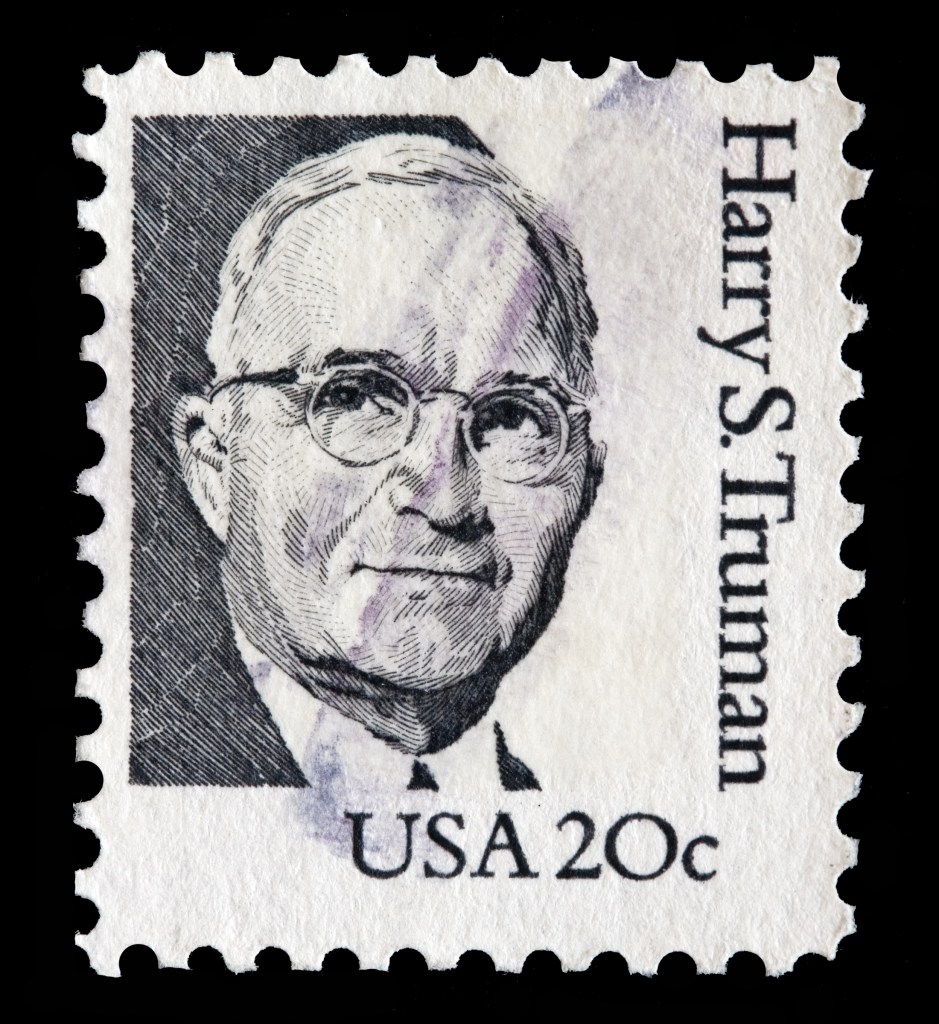
USA 20 cent stamp with a picture of Harry Truman

Truman wasn’t perfect by any means. But the rules he set for himself would go a long way to making our political leaders more effective… And less corrupt.

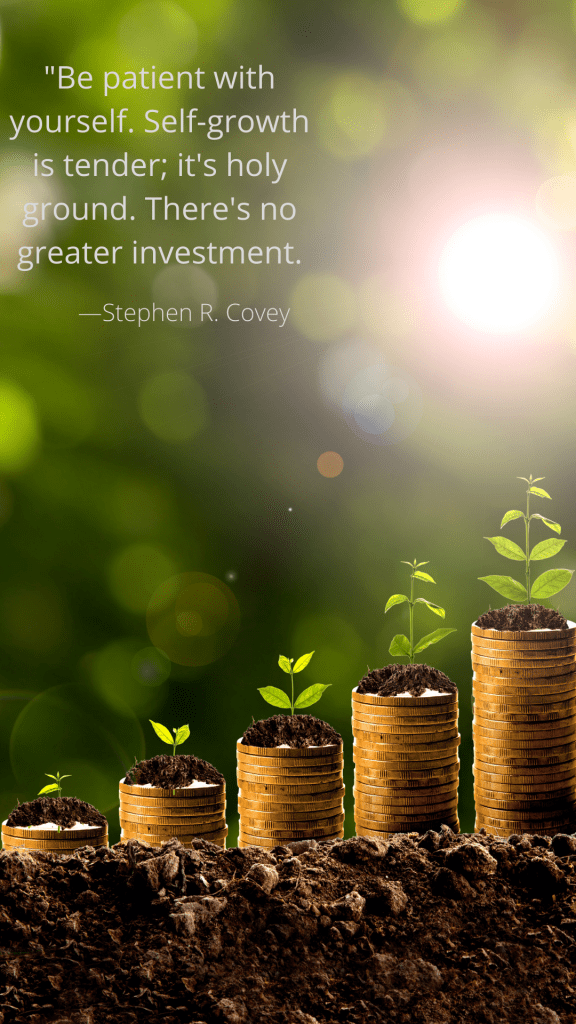
Self-growth is tender

A person of character

Character is an unchanging foundation that supports everything else. 

It’s much more important to be a person of character than it is to be successful.

(And the latter is more likely if you are the former…)

You’re an imposter! (And so am I)

When you feel your imposter syndrome kick in, run towards it. Don’t run away from it.

That feeling means you’re doing something right—something worthwhile.

By definition, we are all imposters when we do something new. Because we’ve never done it before…

Of course we’re imposters!

A growth mindset requires us to embrace imposter syndrome. The only way we can grow is to put ourselves in situations that we’ve never been in.

But it hurts! A life full of growth will naturally have some pain points, just like the growing pains a child feels in her growing body.

It’ll hurt a little bit to reach our full potential. But there’s no better way to live.

Consistency is key

“If you want to change your body, being consistent is more important than anything else.”

Precision Nutrition, “Prepare for liftoff”

This is wonderful advice. But it doesn’t just apply to your body.

With anything you pursue, consistency is the key factor that will determine success or failure, change or stagnation.

If you want to be a writer, showing up to the page consistently—upon waking for Morning Pages or each evening on a blog—is the most important thing you can do.

If you want to start a business, showing up to work on it every day—writing copy, sending emails, building an offer—is the way to do it.

Aristotle said, “We are what we repeatedly do.” To be the thing you want to be, you have to do it day after day.

What do you want to become? What do you need to do consistently to become that?

Collective action, taxes, & plastic

How do we discourage the plastics companies—and all of the companies that use their products—from creating and using MORE plastic? Without the burden of cost ending up on the consumer?

Seth Godin mentions that the only real change will come through collective action on the part of us as citizens or via the government through taxation. (Check out his great podcast episode on the topic here.)

It worked for cigarettes; I assume it would work for plastic reduction as well.

But I feel that, in the short run, it would hurt all of us as consumers… because we really don’t have a choice. And you’d better believe that the people with money invested in plastic will make sure WE feel it before they do…

Individual Action

A couple of years ago, my wife and I went on a no-plastic, “reduce our waste” crusade.

We stopped buying drinks in plastic bottles…

We only used reusable grocery bags at the store…

We severely cut back on food and packaged goods…

We went to a more whole-foods diet (good for our health AND for the environment)…

We started using compostable garbage bags that we could compost ourselves.

My wife even persuaded a local restaurant to start selling glass bottles for to-go sauces that people could bring in and refill for a reduced price.

This is only a smattering of what we did to reduce waste…

The problem that we ran into was no matter what we did, we couldn’t get most of our food without massive amounts of plastic.

Our stores didn’t sell eggs in cardboard cartons. Nor did any of the local farmers we knew.

Every single piece of meat that we bought was wrapped in a pound of plastic. They wouldn’t allow us to bring in containers of our own… Or even follow our request for it to be wrapped in paper instead.

We couldn’t even go vegetarian—getting our protein through beans, yogurt, and other non-meat sources—without having it packaged in plastic bags or plastic cartons. All our stores had also gotten rid of the giant dispensers for grains and such… So we couldn’t bring our own bags for that either.

The Nail in the Coffin

The futility of it all became clear when I saw what a major corporation (which will remain nameless) was doing with plastic.

They were shipping tiny pieces of hardware—each of which was about the size of a pencil tip…

Each wrapped in plastic… Each sealed in its own plastic, Ziplock bag…

Mailed in its own bubble-wrap-lined mailing envelope.

And they were shipping hundreds of these to hundreds of locations around the world… On a regular basis.

I knew then and there that our individual action wouldn’t make even the tiniest of dents in the waste problem we faced.

Individual Action vs. Systemic Problems

We’ve continued our personal waste-free crusade, simply because it makes US feel better about our actions. But the discouragement is real.

I don’t really have any answers today. Because taking individual action to solve systemic problems doesn’t make much of a difference…

So I pose the question again: how do we dissuade these companies from using plastic without the burden of the cost—and all the work—ending up on consumers?

We aren’t creating the waste—those are the massive corporations who save money by using it. And who are doing it without thinking of the second- and third-order consequences of their actions.

There aren’t many alternatives for individual consumers… And the plastic is being created ANYWAY. So it feels like we don’t have a choice.

And when we have no choice, there’s nothing that we can do, and it doesn’t look like there will be better choices for quite a while.

Would you do it for $10 million?

What would you do if you had $10 million dollars?

Would you really want to be the CEO of a major corporation?

Or a doctor? Lawyer? Or any of the other things we’re supposed to want to be when we grow up?

Because of our obsession with making and having more, we chase job opportunities and career paths that seem to “guarantee” a lot of money (even though there is no such guarantee). And often, that’s the sole purpose for pursuing such roles.

Not because we want to make hard decisions (that’s what the CEO does)…

Or because we want to spend countless hours expending the intense, exhausting, emotional labor required to help people survive and thrive (the doctor)…

We pursue them because of the ones and zeroes (supposedly) attached to the titles.

Now—making a living, on the other hand, is absolutely necessary. If you’re living on the verge of homelessness (or actually homeless), you might not have the luxury of saying no to “big money” opportunities.

But that’s not the conversation we’re having here.

When the wolves have backed away from the door—when your kids are fed and the light bill is paid—it’s a good idea to consider why you’re chasing whatever “big money” career you’re thinking of doing.

A great question to ask yourself when considering career paths, educational opportunities, certifications, or whatever else, is this:

“Would I still want to do this if I had $10 million dollars in the bank?”

Are you doing it because you want the money? Or are you doing it because you actually want to put in the time and effort to become a master at the craft?

If you wouldn’t do it if you already had $10 million in the bank, you might want to reconsider whether it’s worth doing at all.

Getting paid for what’s easy

It doesn’t happen. At least, not in the ways or amounts we want it to.

People don’t want to have to think for a living. They want to make money for easy work…

And thinking, making decisions, being creative—none of that is easy.

But those are precisely the things that people get paid the most for. They’re the only things that’ll help us survive in the modern economy.

The easy work is disappearing… We must embrace the hard work—the work that isn’t easy to measure.

Avoiding tension

Perhaps that’s what’s got you stuck… For humans are born for tension.

It’s only by overcoming strife and difficulty that we figure out who we are.

“What man actually needs is not a tensionless state but rather the striving and struggling for a worthwhile goal…”

—Victor Frankl, Man’s Search for Meaning, p. 105

The tension in our lives gives us something to pull or push against. And thereby a way to become who we’re capable of being.

Perhaps that is who we are meant to be.

What’s it for?

A great question I learned from Seth Godin is asking: what’s it for?

The book you’re buying—what’s it for?

That certification you’re trying to earn—what’s it for?

Is it the credibility that goes with having read this or obtained that? If so, that’s just a signaling strategy—though possibly a necessary one.

What about going to medical school and getting an MD—what’s that for?

Is it to get the credibility and authority that goes with the letters after your name? Is it to keep the generational legacy going…even though you’d rather be teaching?

Or is it to actually learn how to help people lead healthier lives?

Back to buying a book—what’s it for? What am I hoping to get out of it? An answer to what I’m supposed to do with my life? Knowledge that I can use to help myself or other people?

Or that certification I’m thinking about. Am I doing it because it actually helps me get where I want to go? Or am I doing it because it’ll look good on a resume?

Begin with the end in mind. That’s where this question leads you.

Begin with the end in mind.

If you don’t know what you want or where you’re going, how will you know what that “thing” is for?