

Role-playing games vs. doing hard things

I like role-playing video games. In fact, they’re one of only two types of video games I like to play (the other being strategy games).

In only an hour or so, with the only effort required being time and learning a few button combinations, you can take a character from a complete newbie to a superpowered, super-skilled demigod who can conquer the world.

It’s quite satisfying.

You can watch this character of yours grow, develop new skills, conquer increasingly difficult challenges, and know for certain you’ll reach the apex if you just put in enough time.

This could not be more different from the real world.

Learning new, meaningful skills requires a massive amount of time along with physical and mental energy you may or may not have, especially if you’re working all day or raising a family (or both).

You could spend years mastering something rather than a few hours in a game. And there’s never any guarantee that what you learn will pay off—or that you even can master it.

So you spend your time playing the game rather than doing the hard thing in real life. And each time you make that choice, it gets harder to make the opposite choice next time.

Doing hard things in real life is a muscle that must be exercised regularly, lest it atrophy.
Reward the effort, not the outcome

Children flourish if parents reward their efforts rather than outcomes.

Annie Duke’s decision-making education makes it clear that good decisions don’t always result in good outcomes. All decisions involve luck to a certain degree, so neither we nor our children can control how things might turn out.

Sometimes, a good decision leads to a bad outcome, and other times, a bad decision leads to a good outcome. This means we must reinforce good decision-making first and foremost, not just praise decisions that lead to results we like.

This is not to say that all children deserve a participation trophy. It means that we should appropriately reward good effort (i.e., good decisions) and discourage bad decisions, even if they lead to a positive outcome.

The “how” of achievement matters as much, if not more, than the “what.”

Receive the blog directly in your inbox!

Want to Be Successful? Be Consistent.

Consistency is the key to success.

“Improvement is a battle that must be fought anew each day.

Your next workout doesn’t care how strong your last one was.

Your next essay doesn’t care how popular your last one was.

Your next investment doesn’t care how smart your last one was.

Your best effort, again.”

—James Clear, “3-2-1 Newsletter”, Jan 28, 2019

If you haven’t signed up for James’s newsletter, do it today. It’s one of the most insightful (and shortest) on the internet.

Sign up here.

Coincidence on MLK Day

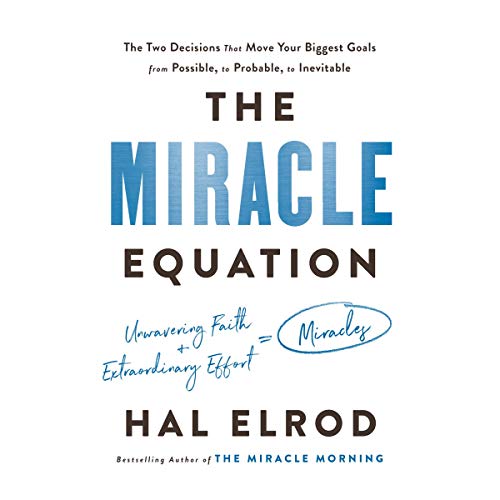
I bought an audiobook through Audible and started listening to it today. (It’s called The Miracle Equation if you’re curious.)

In the second chapter, the author Hal Elrod talks about how anyone who’s contributed something great to society had two qualities: unwavering faith in their mission, and the willingness to put in extraordinary effort to achieve it.

What a coincidence that today on Dr. Martin Luther King’s birthday, Mr. Elrod used him as an example.

Dr. King had unwavering faith in his mission to achieve racial equality in the United States. And he most definitely put in extraordinary effort to achieve it. At the cost of his life.

Let’s remember Dr. King’s legacy today and continue to pursue his mission with the same effort he did.

Happy Birthday, Dr. King.

Get a daily dose of inspiration. Subscribe below