Who I learned from this week (July 23, 2021)

https://michaelhyatt.com/shave/

Michael Hyatt put together a crazy in-depth guide with four big parts. If you’re looking to up your productive and get more done while working less, I highly recommend you download this ebook.

An absolutely fascinating post by Seth Godin about reaching your audience organically.

Serve a handful of people well, be remarkable, and they’ll tell a few others. It starts small, but the results are exponential.

https://podcasts.apple.com/us/podcast/marketing-made-simple/id1569923210?i=1000526591946

Donald Miller’s “StoryBrand Framework” is the gold standard in effective marketing, especially for creatives, solopreneurs, and small business folks.

His team recently came out with a new podcast called “Marketing Made Simple” which I’m absolutely DEVOURING. Not only are the hosts incredibly engaging and funny, they give practical advice and step-by-step instructions on how to market your business from beginning to end.

There are five episodes so far, each with a call-to-action to fill out your very own StoryBrand Brandscript (which you can start for free right here).

A great article by Ryan Holiday that makes a compelling argument for anger being a primary cause of the Confederacy’s failure in the American Civil War.
I’d like to specifically draw your attention to his 3rd idea in this newsletter.

What’s the single tiny step you can do to move the needle on your project or goal? Even if it feels microscopic?

https://www.calnewport.com/blog/2021/07/21/on-pace-and-productivity/

Last, but not least, this article from Cal Newport shows us that how much time we look at collectively has a big impact on whether or not we look productive.

Scientists like Galileo and Newton had seemingly slow, unproductive days when looked at individually. But when you look at their accomplishments over the span of years, it’s mind-boggling what they did…

Subscribe below for daily insights, resources, and great content delivered directly to your inbox.


The messy middle

Any worthwhile pursuit has a messy middle. In his book A Million Miles in a Thousand Years, Donald Miller talks about what it’s like to cross a stretch of water. We leave the shore and eventually arrive on the opposite side.

But in between those two points, we have “the hard work of the middle.” That’s where the journey becomes a slog, the motions seem repetitive, and the effort seems useless.

Pursuing a goal, starting a business, losing weight… All of these pursuits have that same hard work to be done in the middle.

In almost every case, we start strong and make decent, even quick, progress. But soon after we hit a point where we lose focus and motivation.

“Why am I at the gym for the third time this week? I just want to go home…”

“I really just want to pig out on pizza, beer, and ice cream. I don’t feel like cooking…”

We get frustrated, hit plateaus, and our motivation wanes.

It’s when we hit that point we have to rely on our “why”.

Our reason for pursuing whatever it is has to be strong enough to get us through the messy middle. Seth Godin calls this “the dip” in his book of the same name.

Without a strong why, without a reason to keep pushing through, we burn out and quit.

Not only does our motivation have to be strong, but we have to revisit it every day. Zig Ziglar had a saying about this rule:

“Motivation doesn’t last. Well, neither does bathing. That’s why we recommend it every day.”

First, identify a strong reason why you want to pursue something.

Then make time every day to review it. Keep your motivation front of mind.

Subscribe below for daily insights and resources delivered straight to your inbox.

Do What You Love… or Love What You Do?

Two quotes came to mind while I was walking and thinking this morning:

“It’s easier to love what you do than it is to do what you love.”

—Seth Godin

Then, of course, my brain went to Dan Miller:

“Passion is more developed than discovered.”

—Dan Miller

Happiness is easier to achieve when we enjoy what we do.

But it’s not always easy to create an income doing something we already enjoy.

It’s easier to find a reason to like what you’re already making a living doing than to try to create a business around a passion or hobby.

That doesn’t mean you shouldn’t try—I’ve done it with lots of my passions.

Music…

History…

Personal development…

Philosophy…

But in nearly every case, depending on that passion to pay the bills robbed me of the very same enjoyment that drew me to it in the first place.

If you’re doing work that’s mind-numbing, agonizing, and completely without joy or merit, please find something else to do. This bundle will help you in your search.

But for many of us, we’re just spinning our wheels, trying to find ways to monetize a hobby. We’re telling ourselves we’ll never be happy until we’re working in this passion or that one.

If you think you can, try to find enjoyment in what you’re already doing. That’s one of the tenets of Zen, and it’s also a path to true happiness and contentment.

If you’ve read this and still feel it’s time to make a change in your career, I highly recommend you check out this career search bundle my coach Dan Miller created. It has everything you need to:

  • Discover your skills, passions, personality traits, and values
  • Learn a proven job hunt method guaranteed to land a better job with higher pay
  • Start your own business if that’s your path
  • Find a community of like-minded supporters to help you every step of the way

If it’s time for a change, Dan Miller can help you make it.

Click here to check it out.

What I Read This Week (July 9, 2021)

Here’s something new I’m trying out:

Every Friday, I’d like to update you, the loyal readers, on what I have been reading or listening to over the past week.

I’m hopeful that you’ll find awesome insights and new folks to follow who’ll help you level up your life.

Here’s this week’s first post!

Michael Hyatt is one of the foremost bloggers on the internet today. His five steps to avoiding burnout were simple and actionable. I’ll be working them into my routine from now on.
One of Seth’s longer posts, here he talks about how to find customers and the strategies you can use to grow your base. Definitely worth a read when you have the time.
Not sure why this one isn’t embedding correctly, but here’s a great article by one of my copywriting mentors on how to quickly and effectively learn ANY new skill.
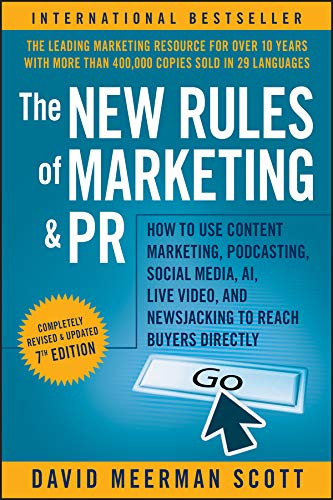
I mentioned David in an earlier post this week on blogging in community. I recently cracked this book back open to check out what he had to say about the best ways to blog, inspiring that previous post. If you do ANYTHING involving content, I highly recommend this book. Click the image to get a copy at Amazon.

Don’t forget to subscribe for daily insights delivered directly to your inbox!

Blog in community (and grow your blog fast)

One of the most helpful things I’ve learned as a blogger came to me from David Meerman Scott. There are two parts, and the first is this:

Before you start your own blog, follow other blogs and bloggers and engage with the ones that matter to you.

I’ve been an avid blog consumer for years, reading from great thinkers and companies like Seth Godin, Michael Hyatt, HubSpot, and Mr. Scott himself of course. They’ve shaped my own thinking and helped me figure out my path forward as a marketer.

This first step lets you figure out how you can contribute to the discussions and the questions being asked on the internet. This is a great starting point for creating your own content.

But the second part of what David taught me was the most profound: engage with their content, leave comments, start discussions. And when you do that, include a link to your own blog.

We often forget the “engagement” step. Don’t just consume—engage! And almost no one links back to themselves for follow-up.

Bloggers like to support other bloggers. They like to talk, discuss, disagree in a civil manner, and try to make the world a better place. By engaging with their content and leaving behind a link as a calling card, you’re encouraging this type of civil discourse.

Now, if you don’t yet have your own blog, you can do the same thing by linking to your LinkedIn profile. Or better yet (since people won’t be able to see your whole profile or its content without connecting), create a free, public about.me page to leave behind.

Think of it as your digital business card, a way for people to learn who you are and follow up with you if they’re so inclined.

Try it the next time you comment on someone’s blog or social media post. I guarantee people will want to hear what you have to say. And they might follow up as well.

(If you want to learn more about David Meerman Scott’s blogging strategies, check out his book The New Rules of Marketing & PR (7th Edition) wherever books are sold.)

Don’t forget to subscribe! Get daily insights to level up your life delivered directly to your inbox.

Who’s It For?

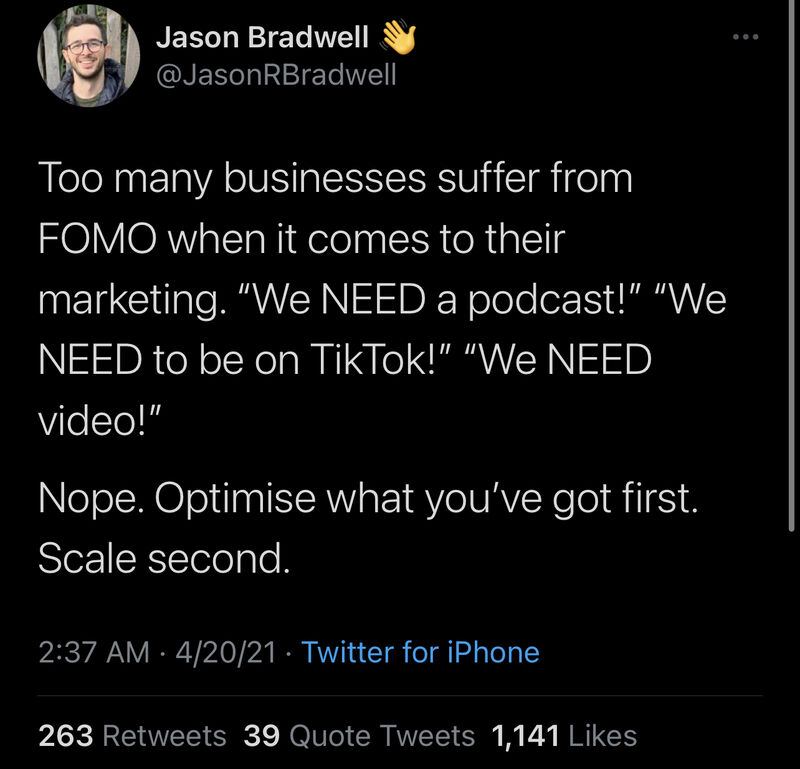
Jason Bradwell tweeted this a while back:

“Too many businesses suffer from FOMO [Fear of Missing Out] when it comes to their marketing. ‘We NEED a podcast!’ We NEED to be on TikTok!’

We’re all marketers now, trying to change the culture and influence others (hopefully for the better). But we have a problem: we get so caught up trying to figure out the tools and tactics, we stop focusing on the people!

What if your target audience isn’t ON TikTok?

What if your ideal customers don’t LISTEN to podcasts?

Why use those platforms if they aren’t helping you reach the right people?

“Who’s it for?” is the first question we should be asking.

H/t to Seth Godin for teaching me what’s most important in marketing.

(Here’s the original post if you’re interested.)

Learn how to make the world better. Subscribe today!

Are you using “someday” to procrastinate?

Seth Godin wrote a very short blog post today you need to read. (Click here to read it)

I taught a class on this very subject yesterday afternoon. 

The students all had these grand plans to accomplish big goals for their budding businesses. But I told them: without a deadline to meet, they wouldn’t succeed.

By the end of it, all 71 of my students had a date certain for when they’d accomplish their goals. And we worked together to develop daily action steps to get there, too. 

“Someday” isn’t a day on the calendar. Declare your date and make it happen. 

(It never ceases to amaze me how Seth’s shortest posts seem to be the most insightful and relevant.)

Make sure you read his post here. And subscribe to his newsletter—it’s the most insightful email you’ll read each day.

Life’s Too Short

Seth Godin’s blog this morning contained a statement that seemed to scream at me:

“If you’re simply speeding things up because you are in a hurry to get through it, it might be better to not do it at all.”

—Seth Godin, “Faster! Faster?”, 5/31/2021

If you’re rushing through something because you feel obligated to finish it, just quit!

No one says you HAVE to finish that book. Or that podcast. Or that online course.

We don’t have enough time to do everything we think we should do. We don’t even have enough time to do everything we want to do.

We have to pick and choose wisely so we get the most out of life we can. And if that means you’re three minutes into a podcast and lose interest, just turn it off. (Essentialism is a great book to help you make these decisions.)

My late uncle Alan thought the Compact Disk (CD) was the greatest invention in history, so much better than the cassette player.

When asked why, he said simply, “Life’s too short to waste on a bad song.”

If you feel this blog is an essential part of your life, subscribe below.

Thrive in All Weather—Think Like A Sailboat Captain

(HT to Seth Godin and the “EntreLeadership” Podcast)

If you’re piloting a sailboat, you don’t care in which direction the wind blows. All that matters is that the wind is blowing.

If you have wind, you can adjust your sails and steer the boat in the direction you wish to go. Only when there’s no wind are you actually stuck.

If we adopt this same thinking in our work and personal lives, we’ll thrive no matter what happens to us.

Technology changes in your industry? Embrace them and move forward. Your job becomes obsolete? Re-skill and do something else. (Both have happened to me.)

Circumstances will always be less than ideal. Sometimes they’ll be downright awful. But we can’t change which way the wind blows.

Don’t complain about its direction—adjust your sails and keep going.

Photo by Geran de Klerk on Unsplash

Learn more about succeeding in all weather. Subscribe today!

Are We Really “Born to Do” Anything?

It’s a question asked by lots of career counselors, coaches, and well-meaning advisors.

“What do you feel you were ‘born to do?'”

What if the honest answer is we aren’t born to do anything specific?

There is an entire area of philosophy dedicated to this idea that was first theorized by John Locke. (You can check out the basics here.) But I’m focusing on talents and passions today.

Was Van Gogh born to paint? Was Steve Jobs born to create the iPhone? Seth Godin would argue no. His answer to this question is simple. Here’s how I understand it:

No one is predetermined to use a certain medium for his or her art. We simply adopt the means and medium of whatever is available to us in our time.

In one of his podcast episodes, Seth says he doesn’t believe that Van Gogh would have painted with oils had he been born in the 20th century. Nor would Steve Jobs have created the iPhone had he been born in the 1700s (the resources and advancements in science were not available for that to have been possible).

And yet, each of us is genetically unique. You have never occurred before and will never occur again in this universe. Surely that means that we are born with innate talents and leanings.

Part of me thinks that’s true. And yet part of me also believes, as career coach Dan Miller says, “Passion is more developed than discovered.”

By this, he means we become passionate about things we engage with over and over again.

I find this idea incredibly liberating. Why? It means if we aren’t satisfied with what we are doing—if our passions are no longer feeding or fueling us—we can choose a new passion. We can develop it to something that feels like we were born to do it.

Maybe, in the end, it all comes down to choice and what’s available to us in our time.

What do you think? Were you born to do something? Leave a comment today!