Marketable skills

The Music School at University of North Texas has a list of what they call “marketable” skills that each of their degree plans develop. Skills include:

  • Performance communication
  • Excellent memory capability
  • Command of music computer programs
  • Pattern understanding
  • Improvisation and analytical capabilities

Now, as a former full-time musician myself and current corporate employee, I can safely say…

No one has ever paid me for any of this. Which is the supposed to be the definition of “marketable skills”—things worth paying for.

If you take Seth Godin’s definition of marketing to heart (which I do), then marketing means creating change in another person. And to take it a step further, it means creating a change in them that also prompts them to “pay” for your skills in some way.

You will then see that none of those skills do anything like that. However, they may give you the ability to accomplish that goal.

Those skills might allow you to:

  • Move another person so deeply that they become a raving fan of your music
  • Leave someone in awe of your stage presence and artistry (so they’ll come to more concerts and buy your albums)
  • Create a piece of music so astounding that someone tells 10 of their friends (and they tell 10 more…and on and on it goes)
  • Hypnotize an audience with intricate rhythms and on-the-spot creations so outrageous they beg to “know the trick”

All of these outcomes from your skill development lead to similar results: obsessed fans who tell other people and support your art because they can’t live without you.

The skills aren’t marketable.

But what you create with them and put into the world is.

If you want more daily musings like this, subscribe below:
We need the dreamers

A friend of mine wrote to me the other day telling me that my “realistic views” helped to balance out her “daydreaming” ideas. 

But we need the dreamers. 

Without them, nothing changes. Nothing improves. 

No new ideas means the world never gets safer, cleaner, healthier, or more just.

Without the imagination, suppositions, and oulandishness of some humans, we stagnate. 

Sure, we also (sometimes) need the realists and the doers to make the dreams come true. 

But without the people who are willing to say, “Is this anything?”, the rest of us have nothing to work with.

For more daily musings like this, subscribe below:
Artists Pay Attention. Are You an Artist?

What does an artist do? What makes her an artist? It’s simple: she pays attention.

I think I’ve been overwhelming myself with ideas, people, information, podcasts, audiobooks— too many different inputs to count. If we want to be creative, we have to shut out the noise, turn off the devices, and start paying attention to the world around us.

Paying attention might be something as simple as going for a walk outside. Head to the park, and be fully present in the moment. 

Paying attention means smiling at the people that walk past you and watching their entire demeanor change. They walk a little taller; they smile back; they pick up their pace. A smile generates energy.

Pay attention when you walk past two women speaking to each other in Spanish. What happens when you say in their native tongue, “Hello! How are you?” They chuckle, both pleased with your willingness to try and humored by your pained accent. 

Paying attention is noticing the difference in sound a few dozen yards can make. One side of a park is dead quiet, while the other—less than a football field’s length away and located close to a busy road—is roaring with the cacophony of motorcycles and sports cars. 

When you pay attention over a few weeks’ time, you notice the subtle change in attire worn by those walking around you as social and health issues become more prevalent. 

Perhaps you’ll notice two small children, obviously strangers and of wildly different cultures, run towards each other on the playground to touch hands, embrace, and play together as if they weren’t the least bit different. Afterwards, you might realize that it’s all invented, the differences we’ve created that cause such terrible strife in our world. 

If you listen closely, you’ll notice the gurgling, deep-throated rumbling of a large vehicle puttering past behind you. You’ll hear the sounds of leaves underfoot and voices across the fence. 

So this is what it’s like to pay attention. This is what we miss with our headphones in and our phones out, heads down and eyes fixed, always distracted and never present. 

We miss the face of a Star Wars alien created by a fortuitous arrangement of knots on a pine tree. 

We miss the sheer exuberance of a child as she first lays eyes on the playground and sprints past. We miss her zigging and zagging and the father’s apology for her child’s excitement. Why does Dad feels guilty? Why should he apologize for his child doing exactly what a child should do?

This is what we miss when we fail to pay attention.

Never miss an update. Subscribe below!

Artist-of-All-Arts

I don’t think I’ve ever met a single artist who was not a jack-of-all-trades in the arts and humanities–an “artist-of-all-arts” if you will.

It seems every artist is not only attracted to multiple forms of art but develops skill in multiple areas as well.

My late friend Michael McNally was a brilliant cellist and a gifted, passionate actor. My friend Lindsey is a skilled artist, photographer, designer, and also a singer with a beautiful voice. (You can see some of her work here and here.) Another friend of mine, Alden, is one of the best photographers I know as well as a talented artist and connoisseur of music.

It seems to me that anyone attracted to the arts and humanities is attracted to all of them. It’s as if once the right brain is fully engaged, it looks for beauty everywhere. 

Such is the life of an artist, and why, I suppose we can seem to others to be so scattered in our work and interests–and perhaps feel that way about ourselves. 

An artist is a lover of beauty no matter its form, so we chase it everywhere.

What about you? What forms of art are you attracted to or skilled in? Let me know in comments below!

Want more inspiration to pursue your creativity? Subscribe below!

An Artist’s Prayer

O God, the Great Creator,

You created me in your image,

Therefore I am to be creative like you.

I know now that I am simply a vessel

For your creative energy.

Help me each day to serve you,

To let this creative force flow

Through me,

So I can make the world

A better and more beautiful place,

For myself and all who inhabit it with me.

Lead me and let me,

Serve as a light,

A beacon to others who wish

To be creative themselves.

Let my artistry shine through

in all work in which I have a hand.

O God, the Great Creator, 

I promise to take care of the quantity.

I trust you to take care of the quality.

I know now that I am loved,

That I was created to live

A prosperous and creative life.

For the gifts of love, life, and creativity,

I thank you.

Reaping excellence

I came across a little maxim yesterday that got my mind going, so I wanted to share.

“Sow a thought, reap an action; sow an action, reap a habit; sow a habit, reap a character; sow a character, reap a destiny.”

There is also a quote that pairs nicely with this maxim:

“We are what we repeatedly do. Excellence, then, is not an act, but a habit.

– Aristotle

What is it that you repeatedly want to do? If you did it often enough, do you believe you would truly develop excellence in that habit?

Perhaps you should ask a related question: if what you are doing now isn’t something in which you want to develop excellence, what do you repeatedly think about? Once you have an idea in mind, you can then apply it to the maxim.

For example, let’s say that a person is constantly thinking about art, but only thinking, never creating any herself. We’ll start there.

“Sow a thought…” she is constantly thinking about and admiring the artistic work of others.

“Reap an action…” the aspiring artist decides to take drawing lessons and vows to draw a little bit every day, no matter how small it might be.

“Sow an action…” drawing each and everyday becomes second nature.

“Reap a habit…” she no longer even thinks about if she will draw today; the only thought on her mind is what to draw. A habit is developed.

“Sow a habit…” drawing has become second-nature to her now. It’s as habitual as brushing her teeth or eating.

“Reap a character…” she has become, intentionally or not, an artist. It is now who she is, a fundamental feature of her character. She is now one of the people she once admired.

“Sow a character…” you can see the rest. Her destiny is whatever she decides to make it at this point. She has already developed the skills and habits needed to carry her far down the path of artistic success, whatever she decides that looks like for her. Perhaps it is a career in art, or perhaps it is just a wonderfully enjoyable hobby. But it is now who she is.

So, what is it about which you constantly think? How can you turn those thoughts into action, and then practice those actions often enough until habits form and a certain character you want develops?

“We are what we repeatedly do…”

Decide and act on that in which you strive to be excellent.

New toys

There is nothing quite like coming home and opening new toys. Even when you’re almost 30.

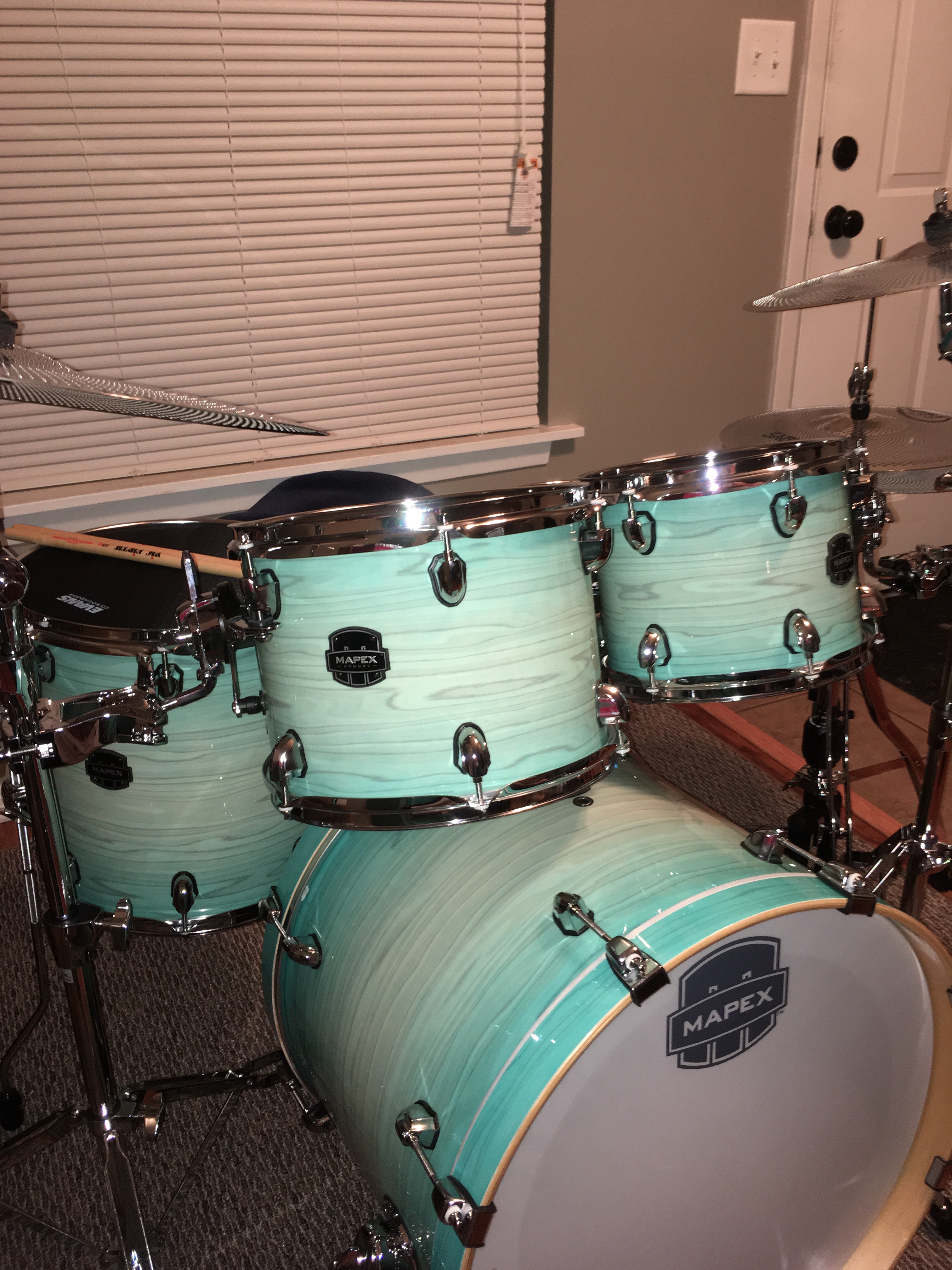
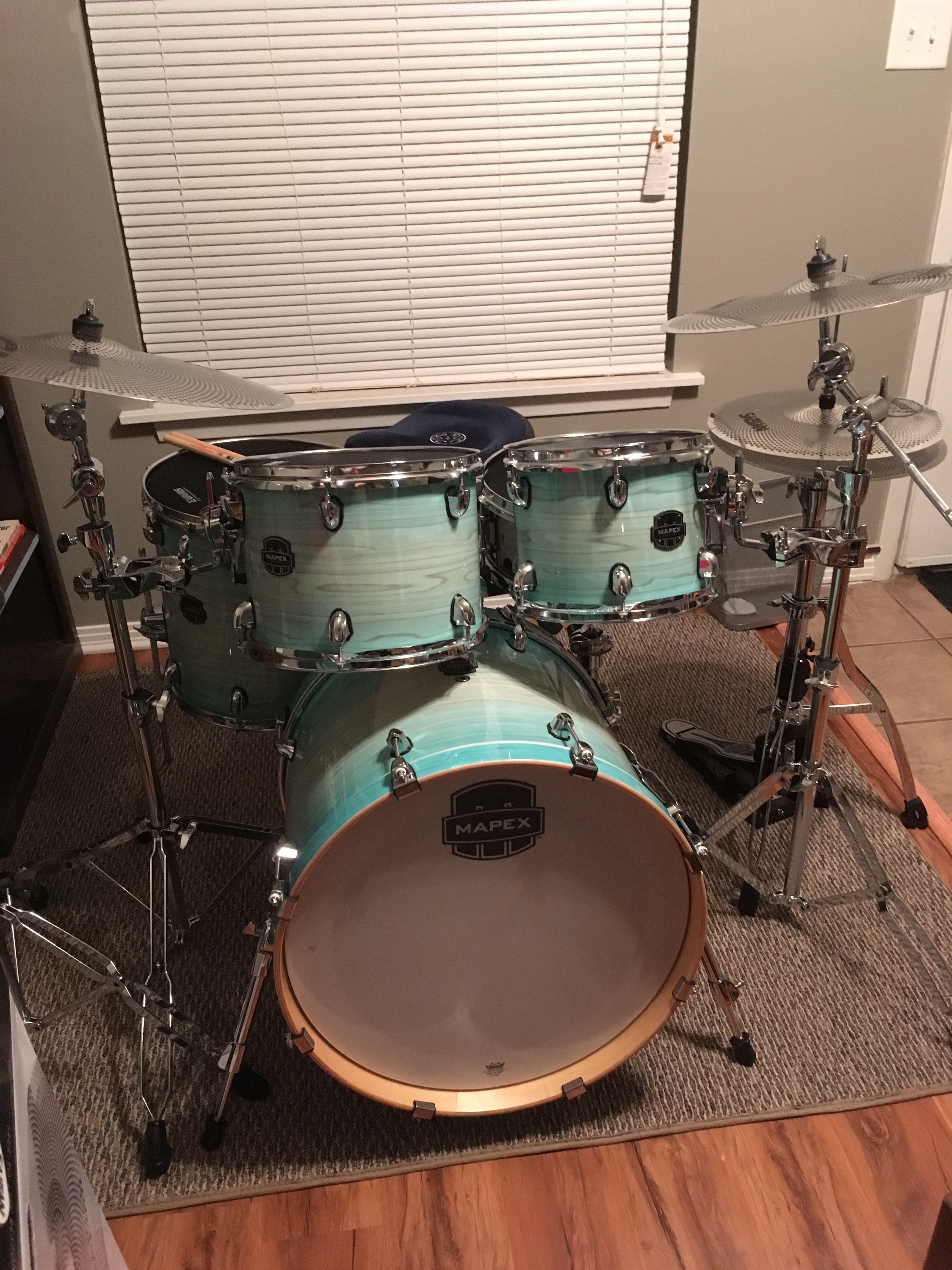
My new practice and teaching kit arrived today, and I could not be more thrilled.

How to learn anything

Do it.

The thing you want to learn how to do? Start doing it.

Start writing. Start playing the drums. Start drawing. Start reading the classics. Start creating a podcast.

How do you learn how to speak another language? Any teacher worth her salt will tell you that you have to immerse yourself in the language and start speaking it. All the books and college courses in the world won’t help you if you don’t do it.

This is scary, isn’t it? The resistance in your head is telling you that you don’t know where to start or that you can’t possibly learn how to do this or that without a rigorous amount of study. If you don’t know where to start, then yes – go and pick up a book. Watch a YouTube video or download an app. Hire a teacher. But all the reading about it, watching videos about it, being lectured to about it – that won’t get you anywhere until you take action. Once you have a grip on the basics, you just have to start doing.

Learning is easy once you start doing it. Taking action is what’s difficult.

You are a unique work of art

Have you ever copied something? For instance, if you were learning to draw, you probably traced or copied some other piece of art in order to practice. Or maybe if you are a musician, you have emulated or copied something that one of your favorite artists played on a record or put up on YouTube.

Here’s something to think about – even if you copied it “perfectly,” it still wasn’t exactly the same. The note you played was probably infintismally sharper or flatter than the note the musician played; the line drawn probably had one or two atoms difference in the width or the length. So, in a certain respect, the art was original – it was yours.

You are quite similar to these “copies” – similar in many ways to those that have come before you or to the people working in your same career. Even if you try to be exactly the same or to strive for perfection, you will be different in some minuscule, perhaps microscopic, way.

At the very least, genetically you are one of a kind. I am paraphrasing Robert Greene here, in a book he wrote called Mastery, in which he says that each one of us has never happened before and will never happen again. We are original works of art, no matter how similar we may feel to others.

This is wonderful, because it means that each one of us has the potential to become something great, something different, to bring something to the world that has never before existed.

So go ahead and copy, emulate the people you admire, and learn from as many different sources as possible; each time you do it, whatever you do will be ever so slightly different. Eventually you will become who you were uniquely made to be, and you will give your gifts to the rest of us.

P.S.

Mastery is one of my all-time favorite books. It studies the great masters of many different crafts in varying periods in history. I highly recommend it for those of you interested in finding some inspiration on mastering your creativity. Find it here.