Kramer is a genius

Okay. He’s an idiot, but I’m trying to make a point here. 

If you’re familiar at all with the TV show “Seinfeld”, you know all about Cosmo Kramer—the wacky neighbor who lives next door to Jerry. 

One of his quirks is his constant ideation around new inventions and business ideas. 

  • A giant rubber bladder on ships to contain oil spills
  • A periscope on the top of a car to see upcoming traffic
  • A tiny studio apartment full of “levels”
  • A pizza place where you make your own pizza

Okay, that last one is actually a brilliant idea, if you ask me. Who wouldn’t pay for that?

The problem with Kramer is that 1) he never executes on any of his ideas, and 2) most of them are completely unfeasible. 

But how is that any different from you or me? 

How many ideas have you come up with this week? This month? This year? 

Probably quite a few. And most of them are (forgive me) completely stupid. I know many of mine are. 

But a handful of them were (and are) not only feasible, but outright genius! 

This is the creative process at work. You have to come up with tons of bad ideas to make room for the few good ones. 

Volume is your friend here. Spending a little time each day asking yourself, “What about this? What if I tried this? What could I do with this? What if someone did this?”

Most of your ideas (like Kramer’s) will be completely useless. Throw them out—don’t give them a second thought. 

But when you find one (or two or three) that could actually be useful to the rest of the world, write them down. Better yet, do something with them!

I think it was Jim Rohn (but I might be wrong) who said something like, “Most people have 3 or 4 ideas every year that, if acted upon, would make them millionaires.”

So your obstacles here are two-fold: 

  1. You need to come up with LOTS of ideas (which means spending time getting bored and walking while thinking and not drowning out your thoughts with music, TV, podcasts, or books)
  2. AND you need to take a little action on the ideas that you think are winners

Keep a notebook nearby, or a note open on your computer. And just throw stuff into it. 

Later, go back and separate the chaff from the wheat. 

Who knows? You might have your million-dollar idea sitting on a sticky note on your desk. 
Consume or create?

Industrial manufacturing trained us to become consumers. Buying lots of things we once didn’t need… Or things we only needed small amounts of before mass production came about. 

Take shoes, for instance. Most people only had one or two pair before mass production. How many of us now have closets full of Nikes?

We became a society of consumers…

And now I worry that it’s carried over into our intellectual pursuits as well. All most of us do is consume, consume, consume. 

Podcasts. TikToks. Netflix originals. YouTube subscriptions. Live streaming. The amount of inputs is staggering.

But how many of us make stuff of our own? 

Have you considered starting a podcast? Creating a YouTube channel? Writing a blog? If not, why?

I think it’s because we’ve had it ingrained in us since childhood that we are meant to consume… Not create. 

We have so many inputs now that there seems almost no room for the outputs we could create. 

I suppose the only solution is to reverse it. And start making things.

Childhood inclinations

Don’t get in the way of your children’s natural inclinations.

If they want to write, encourage it. If they want to dance or sing, help them do it. If they want to play sports, give them the means to do so.

We all seem to be wired for different things. Trying to become something we’re not is the worst possible way to live.

Improvement is ugly

One of my favorite quotes from Julia Cameron’s The Artist’s Way is this:

“It is impossible to get better and look good a the same time.”

Often, how we think others view us stands in the way of making progress. 

If we’re worried about what others think, we’ll pretend to have expertise we don’t—and often make ourselves the fool we were so worried of being. 

Or we’ll fall to braggadocio instead of humility when faced with someone who can actually help us improve.

She continues:

“Give yourself permission to be a beginner. By being willing to be a bad artist, you have a chance to be an artist, and perhaps, over time, a very good one.”

Keep a beginner’s mind as much as possible. You’ll go much farther and faster if you do.

Start with a rough draft

It’s much easier to make your work better if you have something to work with.

You can’t edit your blog post if you haven’t written it yet.

You can’t make your new song swing if you don’t record the demo.

You can’t grow your business if you don’t start by landing one paying customer.

Trying to make things perfect before you put the work down on paper is futile.

Get the rough draft finished. Then go back and make it better.

Build your way forward

Imagine a web designer sitting at her desk.

There’s this nasty problem plaguing her current project. For the life of her, she can’t figure it out…

What does she do? She sits and thinks and thinks and thinks until she comes up with a solution.

Right?

Wrong!

She’s a designer—she builds her way forward. 

She writes a line of code and runs it. Does that fix the problem? No. Did she fail? NO! She just learned something about her code. 

So she writes another line and tries again. She builds her way past the problem one line of code at a time. 

Maybe we should approach more of our problems like designers. 

Instead of trying to think our way forward, we build.

Rockstars are rare (and they probably aren’t you)

The idea of being a “rockstar” is a relatively new phenomenon. Flying around in a jet, playing music in packed out stadiums for millions of dollars a year—that really only started in the 1960s. 

For most of human history, artists created simply to create. They weren’t seeking fame or fortune. The cavemen who painted the walls at Lascaux didn’t get paid for it…

As time went by, certain arts became trades—skills performed in exchange for money or goods. 

J.S. Bach was a musician, a brilliant and talented one at that. But he was a musician because his father was a musician. He went into the family business. 

Leonardo da Vinci—magnificent genius though he was—was a tradesman. He was NOT our idea of a superstar artist.

These artists were creating to create. It was their day job, but it was also what they wanted to do.

I think the “Rockstar Era” warped our understanding of what being an artist is like for most people… And what it’s supposed to be about.

And that same “Rockstar Era” has fast come to an end. It’s harder and harder for someone to become Taylor Swift or Ye. There was a window to make that happen, and it looks like it’s over. 

There will always be outliers—the artist who sells 10 million records or the TikTok influencer with 1 billion followers.

But it probably won’t happen to you. 

That doesn’t mean you shouldn’t create art. It just means you need to focus your efforts on the act of creation and on service, rather than seeking fame and fortune.

Creativity and permission

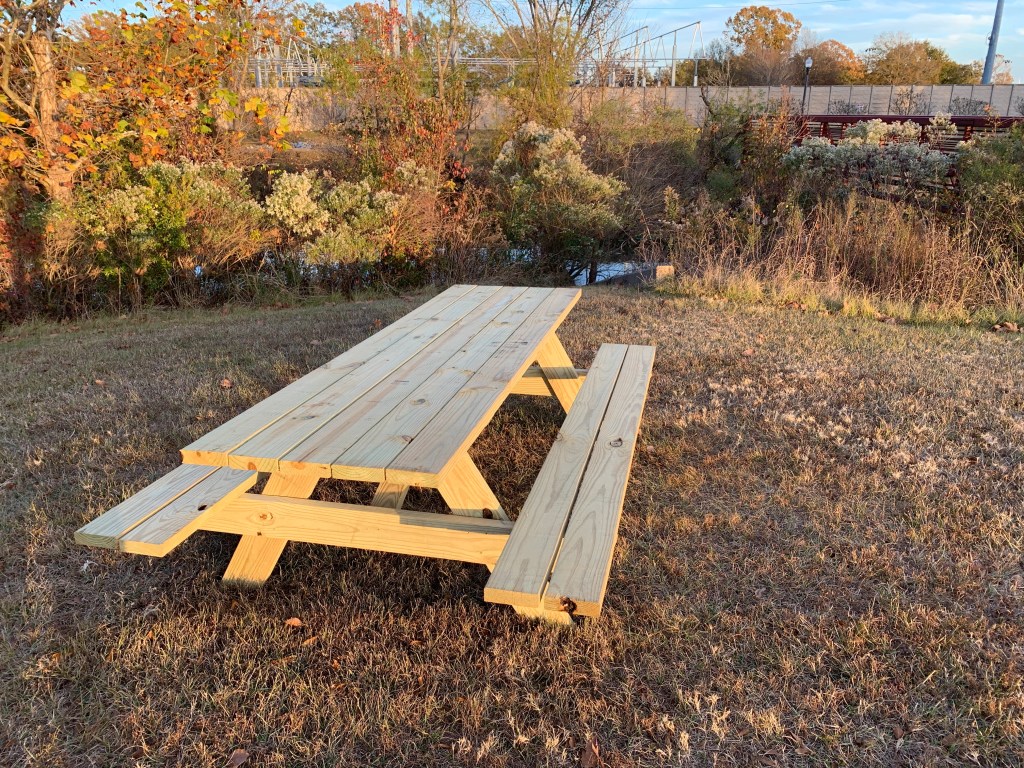
I was walking at the park near my house this afternoon. And when I crossed the bridge, walking the well-known paths I’ve memorized, I saw a picnic table next to the river where no table had ever been before. 

It’s at the perfect place where you can hear the water splashing over the tiny spillway under the bridge—a light, pleasant gurgling and rushing sound that’s quite pleasing to the ears.

From the looks of it, somebody went out and bought treated pine from a home improvement store, built it themselves, and set it up in this spot. 

They didn’t ask permission. They simply thought that this little neck of the woods would benefit from having a place for people to sit… A place to gather and eat next to the water with family and friends in peace and near-quiet.

This was a small, brave, creative act. They didn’t ask permission from the Parks Department to let them do it. They saw a way to make something a little better for other people, and they did it. 

They took a small creative risk. That’s what we were asked to do on a daily basis. 

No one ever gives us permission to be creative. No one will ever give us permission to make things better. 

Because the way things are right now is the status quo. And people don’t want the status quo to change. So we have to create—to make things better—without asking if it’s okay. 

It takes a little bit of courage, the tiniest amount of risk, and the will to act.

You’re an imposter! (And so am I)

When you feel your imposter syndrome kick in, run towards it. Don’t run away from it.

That feeling means you’re doing something right—something worthwhile.

By definition, we are all imposters when we do something new. Because we’ve never done it before…

Of course we’re imposters!

A growth mindset requires us to embrace imposter syndrome. The only way we can grow is to put ourselves in situations that we’ve never been in.

But it hurts! A life full of growth will naturally have some pain points, just like the growing pains a child feels in her growing body.

It’ll hurt a little bit to reach our full potential. But there’s no better way to live.

Anything you do will be criticized

Creators will be judged no matter what they do. 

Writers…

Musicians…

Entrepreneurs…

Anyone who creates anything for a living faces judgement. And usually criticism

But you’ll also get judged for doing nothing. 

“If you could have, why didn’t you?” is the other question we all face. 

You’ll get judged for doing nothing. You’ll get judged for doing something. 

So you might as well do SOMETHING.